

Quick Summary
HMS software ROI is measured by tracking fewer billing errors, less supply waste, and better staff productivity. Hospitals typically see a return of 3-4 times their investment within three years. The real financial impact comes from stopping revenue leakage and reducing operational costs through automation and centralized data management.
Table Of Contents
Introduction
When hospitals, no matter the scale, implement the right choice of HMS software ROI, they can see a great improvement and increase in their bottom line. However, many administrators struggle to calculate the actual returns, as all they see are the upfront price tag but miss the long-term gains. The real question is not just about spending less, but about earning more through smarter operations. In this blog post, we will break down how to measure the true financial return.
Key Takeaways
Track denial rates and accounts receivable days to measure HMS software ROI.
Most hospitals get 3-4 times return within three years.
Automation stops revenue leakage from manual handoffs.
First six months show losses, savings start after training.
Operational savings come from less waste and fewer errors.
Understanding True Cost of Setting Up Your HMS
Before calculating the ROI, you need to first understand the full cost of setup. Most buyers only look at the software license fee. That is a mistake. The real cost of hospital management system includes three hidden expenses: training staff, moving old data to the new system, and upgrading hardware.
The training takes time and pulls staff from their daily work. Data migration often reveals missing or messy records, and the hardware upgrades may be needed if your current computers or servers are old.
The 3-6 Month Adjustment Phase
During this phase, your staff works slower because they are learning new screens and steps. This dip is normal, and accepting it helps you measure true hospital software implementation ROI later. After staff gets comfortable, speed returns and errors drop. This phase also creates a path for hospital administration cost reduction because routine tasks become faster.
Hidden costs to track:
Hidden costs to track
Staff overtime during training
Lost productivity in the first 90 days
External help for data cleanup
Stopping Financial Loss from Department Handoffs
Hospitals can experience financial loss when information does not move correctly between departments. For example, when the pharmacy sends a bill that does not match the patient’s record, or when the emergency room admits a patient but the billing team never gets the note.
A good system fixes this by tracking every service and item automatically. This helps improve revenue cycle management and leads to a strong HMS software ROI of 3–4 times your investment within a few years.
Common Points of Revenue Loss
Pharmacy charges not added to patient bills
Emergency room supplies not recorded
Lab tests ordered but never billed
How Central Tracking Helps
A single system records every consumable and service at the point of use, which also reduces missed charges and gives you a clear view of all hospital income.

The Hard Savings: Managing Labor, Inventory, and Supplies
By automating daily tasks, hospitals reduce overtime for administrative staff and lower the need for extra hires. Automation also tracks inventory levels in real time, which stops items from expiring or going missing, and these improvements add up to real savings.
Staff Productivity Gains
When nurses and clerks spend less time on manual entry, they finish work faster, which is a clear result from using hospital staff productivity software.
Inventory Waste Prevention
Tracking expiry dates and usage patterns helps stop theft and spoilage. These actions create hospital inventory management savings. The total from both areas gives you a clear hospital management system ROI and builds long term hospital management software cost savings.
Know more about Hospital Inventory and Procurement Management.
5 Metrics That Define The Financial Impact
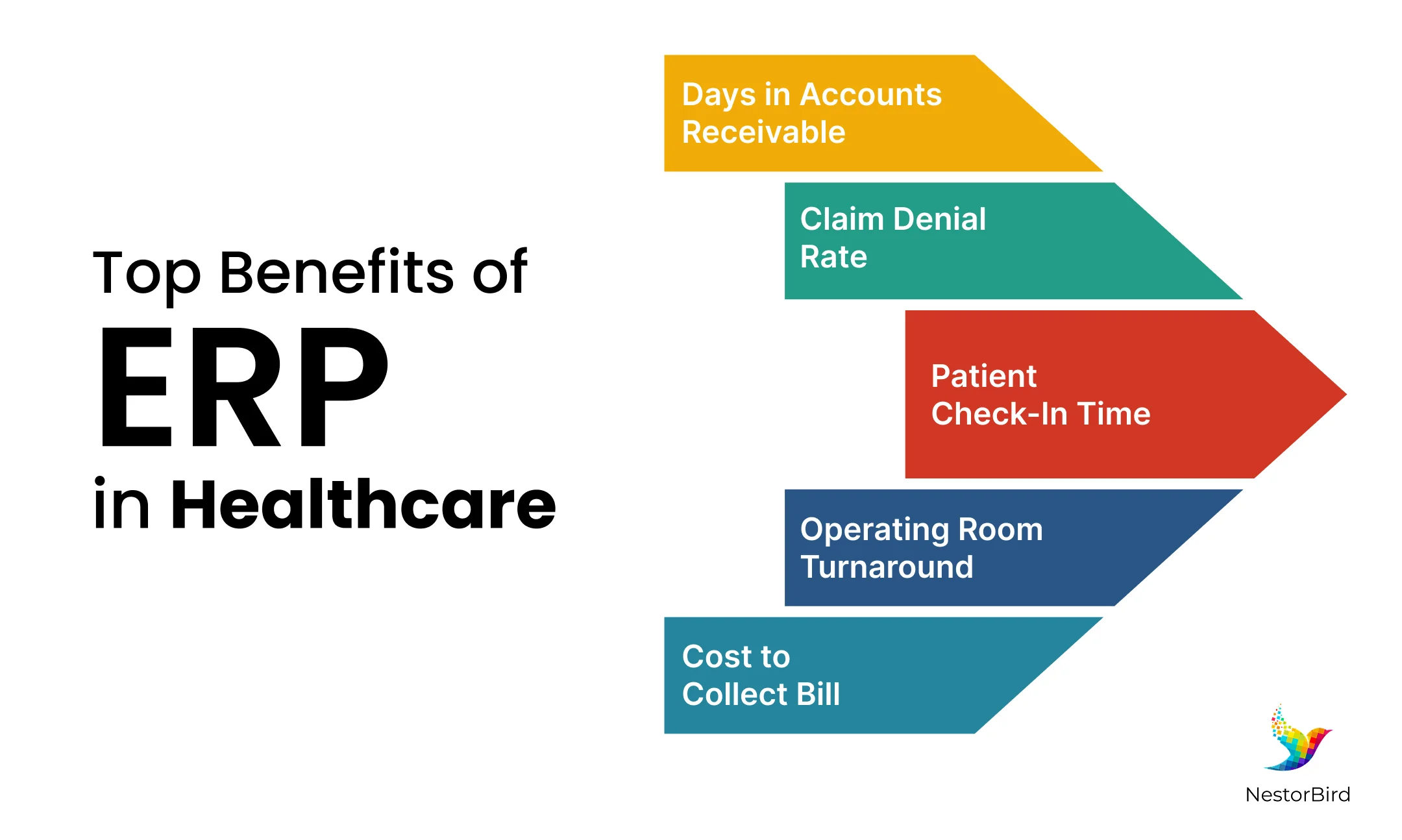
Here are five specific numbers you must track to measure financial results. These are not guesses, but direct indicators of how well your system performs.
Days in accounts receivable: This is the average time between sending a bill and getting paid. Lower days mean faster cash flow.
Claim denial rate: This is the percentage of bills rejected by insurance companies, where every denial costs time and money to fix.
Patient check-in time: Faster check-ins allow more patients per day, which directly increases hospital income.
Operating room turnover time: Shorter time between surgeries means more procedures daily, and improves room usage and revenue.
Cost to collect: This measures how much you spend to receive payments, so reducing this gives you hospital billing automation savings.
NestorBird Pro tip: Remember, tracking these five metrics helps you complete a proper healthcare software ROI calculation. You will also see the patient management system cost benefit clearly when these numbers improve month after month.
Strategic ROI: The Enterprise Resource Planning View
By implementing a full hospital Healthcare ERP, you connect clinical activities with financial records. This gives you a complete view of how every department affects overall costs and revenue. Unlike standalone software that works in isolation, an ERP links pharmacy, lab, billing, and administration together.
Using Data to Plan Better
With connected data, you can predict how many staff members are needed based on expected patient volume. This prevents overstaffing or understaffing. You can also see which departments need more resources and which have waste. This approach helps you reduce hospital operational costs without cutting care quality. Measuring hospital ERP ROI becomes easier when you track inter-departmental savings over time.
Profit Timeline by Month - When Your Hospital Starts Saving Money
To be able to make profits from your HMS investment, you need a realistic timeline.
Months 0 to 6: During the first six months, your staff is learning the new system, so productivity will drop, and your returns will be negative. This phase is completely normal and happens in every hospital software implementation.
Months 6 to 12: Here, your hospital processes become stable, and daily errors decrease significantly. You will start seeing a clear reduction in lost charges across billing and pharmacy departments.
Months 12 to 24: Now your operational savings begin to cover your upfront costs, which means you have reached your break even point.
Months 24 to 36: After two full years, your system delivers a hospital management system ROI of 2-3 times the initial cost. Using hospital staff productivity software correctly helps you reach this return faster. The total return on investment hospital management software becomes completely clear after year two when you compare your savings against your spending.
Check out the TOP Hospital Management Software in India 2026.
Conclusion
To get the full financial value from your hospital software, you must track the right numbers and wait through the initial learning phase. The real gain comes from fewer billing errors, less waste in supplies, and faster work from your staff. If you choose a system that is built for practical use, you will see a clear return on investment hospital management software within two to three years. For hospitals that want a system designed to reduce lost revenue and improve daily operations, the solutions from NestorBird and Swanity offer a practical and reliable choice that aligns directly with these financial goals.

Frequently Asked Questions
Most hospitals see positive returns within 12 to 24 months after implementation, once initial training and workflow adjustments are complete.
The average payback period ranges from 12 to 18 months for small hospitals and 18 to 24 months for larger facilities.
You need to subtract total costs from total benefits, divide by total costs, then multiply by 100. This gives your ROI percentage.