
Quick Summary
This post explains how AI in ERP systems changes daily business work. We cover five ways AI helps, from predicting stock needs to automating data entry. Read on to understand how to move from slow, manual processes to faster, smarter operations with AI.
Table Of Contents
Introduction
Many businesses are still thinking if they should implement or use AI in their daily software and are yet not aware of its many capabilities. This is because modern companies are discovering that traditional ERP systems often just store data instead of actively using it to help the business run better. In this blog post, we will explore how AI in ERP systems is changing this dynamic. We will look at how AI moves these tools from simple record-keeping to becoming an intelligent assistant that improves decision-making, automates monotonous tasks, and ultimately transforms how business operations function every day.
Key Takeaways
AI in ERP systems automates manual data entry and paperwork.
It provides real-time insights to predict stock shortages and cash flow dips.
AI connects sales, support, and logistics data to improve customer experience.
It lets any employee ask questions and get answers without IT help.
Moving to AI-powered ERP helps businesses grow faster.
The Main Challenge Why Traditional ERP Falls Short
When businesses use the traditional ERP systems, they often face the same set of daily frustrations. The biggest issue is that these systems rely almost entirely on people to enter data by hand. An employee must type in every sales order, manually match purchase orders with invoices, and export data to spreadsheets for basic reporting. This slows everything down. Because data entry takes so long, reports are always late. A manager might only see last month’s numbers two weeks into the new month, making it impossible to fix problems while they are happening. Additionally, these systems cannot read emails, scanned invoices, or supplier messages, so valuable information gets lost in the shuffle.
This lack of speed creates a real cost for the business. When reporting is delayed, leaders are forced to make guesses instead of data-backed decisions. This hurts operational efficiency and puts a hard limit on how fast the company can grow without hiring more people. To fix this, companies are now turning to AI-Powered ERP systems. AI removes the bottleneck by automating data entry and reading unstructured documents instantly. This shifts the ERP from being a simple digital filing cabinet to a proactive tool that delivers the right information when it is actually needed.
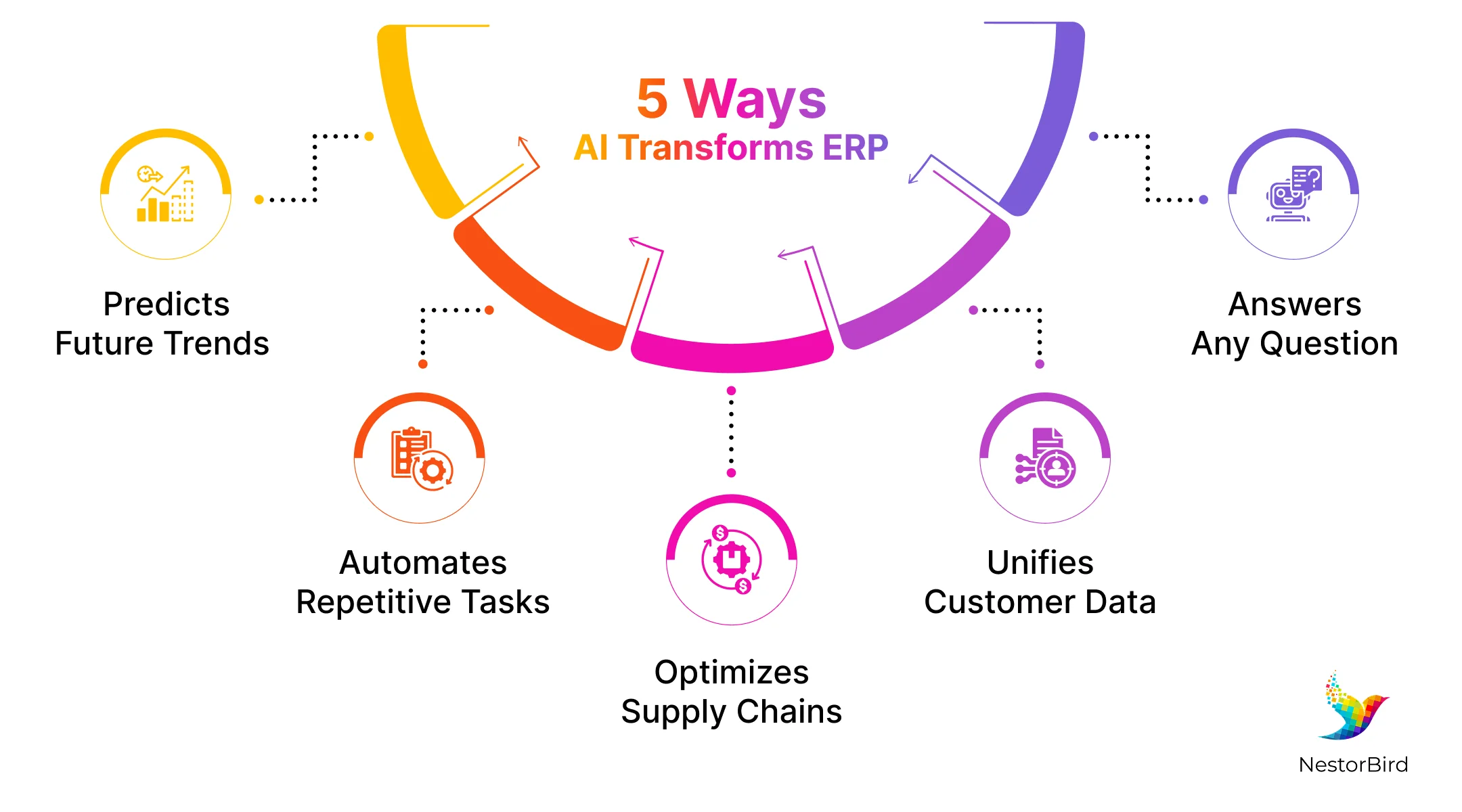
5 Ways AI in ERP Systems Transforms Business Operations
To understand the real impact, here are five specific ways AI changes daily work. Each point shows a clear shift from old problems to better, faster outcomes for the business.
1. Stop Guessing, Start Knowing What Comes Next: AI-powered ERP
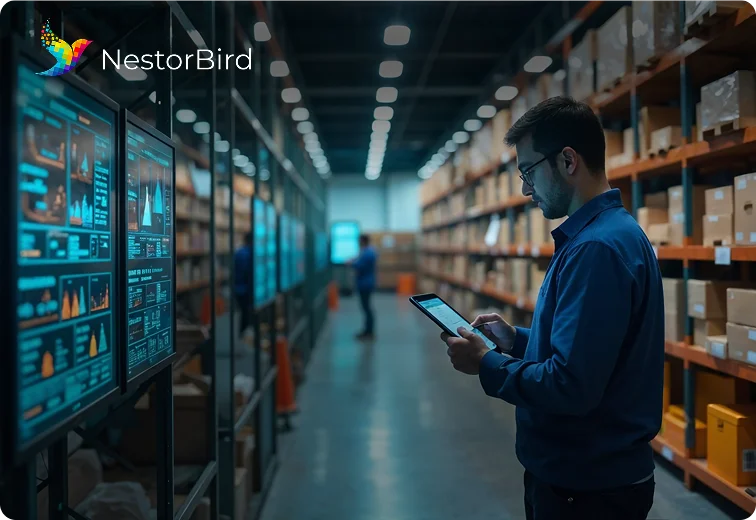
Old reports only tell you what happened last month. looks at past sales and patterns to predict what will happen next week or month. It provides real-time data insights so a manager can see a possible stock shortage before it happens and order more stock early.
2. Let Software Handle the Boring Paperwork
Employees waste hours matching invoices to purchase orders and filing expense reports. ERP automation takes over these repetitive tasks instantly and without errors. This business process automation lets your finance team stop doing data entry and instead spend time on finding ways to save money and grow the business.
3. Make Your Supply Chain Smarter and Stronger
Delays from suppliers can stop production completely. AI helps by watching supplier delivery times and data to spot problems early. This leads to better supply chain optimization because the system can suggest switching orders to faster suppliers, building real supply chain resilience against unexpected market changes.
Get some custom AI solutions for your business.
4. Give Customers Better Service with Connected Data
Sales, support, and shipping teams often work in separate systems. ERP system integration brings all this customer data into one place. AI uses this to give a complete view, allowing staff to solve issues faster, which directly improves customer experience management without needing extra effort from the customer.
5. Let Anyone Get Answers Without Asking IT
In the past, getting a simple report meant waiting days for the IT team. Now, anyone can ask the system a plain question, like what is our current stock level, etc. This makes business intelligence available to all employees, not just data experts. It gives everyone AI-driven insights to make quick, informed decisions.
Know more about ERP Automation.
The Strategic Advantage of ERP and AI Synergy
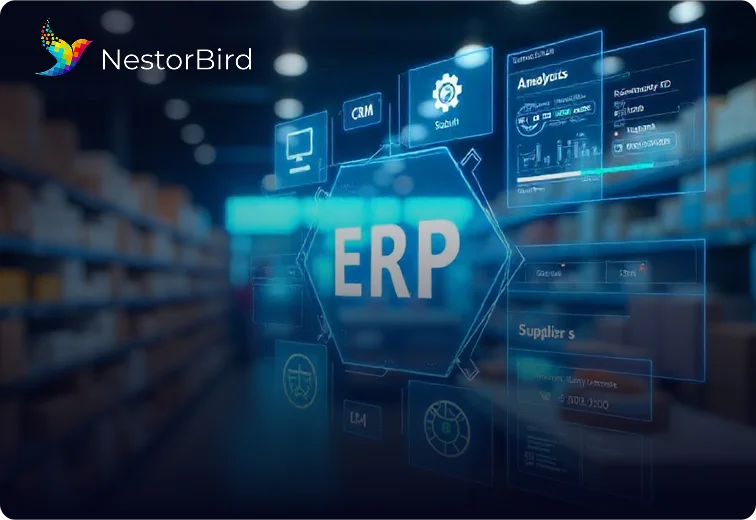
When your ERP system is powered by AI, it becomes more than just a place to store data. This is not about adding a simple chatbot on top of old software. True digital transformation with AI happens when intelligence is built directly into the core of the system.
It starts by learning how your team works. Instead of paying for expensive code changes to customize the software, the AI adapts the workflows itself based on user behavior. This creates truly intelligent ERP systems that fit your business naturally. The result is higher AI for business efficiency because the software adjusts to people, not the other way around.
Find out why Artificial Intelligence in ERP is right for you!
Conclusion
Moving to an ERP with AI is not just about buying new software. It is about changing how your entire business works every day, which leads to better decisions, lower costs, and smoother operations. To get these benefits, you need a system built for modern challenges. Solutions from NestorBird are designed specifically to bring this intelligence into your daily work. We help you move past old system limits and give your team the tools to work faster and smarter, making sure your business is ready for what comes next.
Frequently Asked Questions
A normal ERP mostly stores data and requires people to enter information. An AI-powered ERP can read data automatically, predict future trends, and automate repetitive tasks like matching invoices.
Yes, if the vendor follows strict rules. Your data should not be used to train public AI models. Look for vendors with clear policies and security certifications like ISO 27001 to ensure your information stays private.
No. AI is designed to handle boring, repetitive tasks like data entry. This lets your team focus on more important work like planning, strategy, and solving problems that need human judgment.