
Quick Summary
ERP retail software fixes daily store problems like wrong stock counts and slow manual data entry. You get one system that manages inventory, sales, and customer orders across all locations. Stop guessing your numbers. Stop retyping information between different software. Start making faster decisions with real time data that you can actually trust.
Table Of Contents
Introduction
The everyday retail operations for your store can take a lot of time. Manual stock counting, billing errors, and mismatched data across locations slow you down. These small problems grow into big losses if you ignore them. You need a central system to manage everything from purchase to sale. That is where ERP software for the retail industry makes a real difference. It connects your inventory, sales, and accounts in one place. In this blog post, we will show you how the right ERP retail software removes daily friction. You will learn to fix operational chaos without waiting months or spending a fortune on complex tools.
Key Takeaways
Manual stock tracking causes lost sales and wasted money.
ERP software for the retail industry connects all your store data in one place.
Real time inventory updates stop overselling and stockouts.
You can check store performance from your phone anytime.
A simple checklist helps you pick the right system without confusion.
Stop Guessing Your Stock Levels
For retail stores, bad inventory data is the root of most money losses. You order too much of one product that does not sell. You run out of another product that customers actually want. You have no clear view of what is in your back room versus what is on the shelf. This happens when your systems are not synced and work separately.
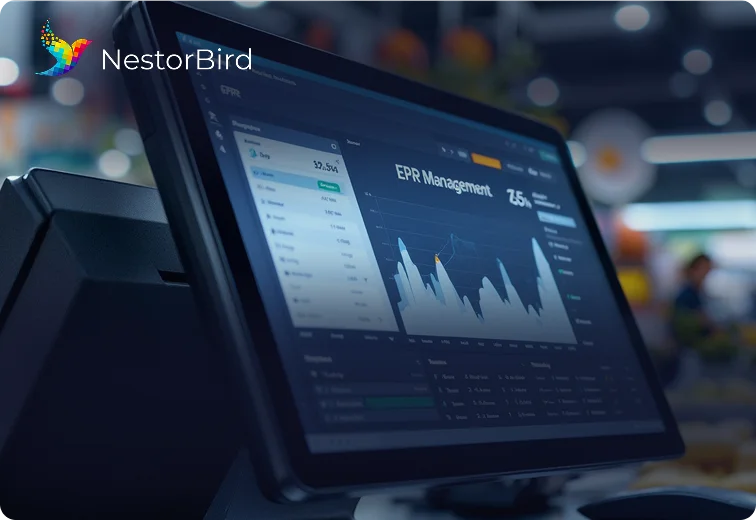
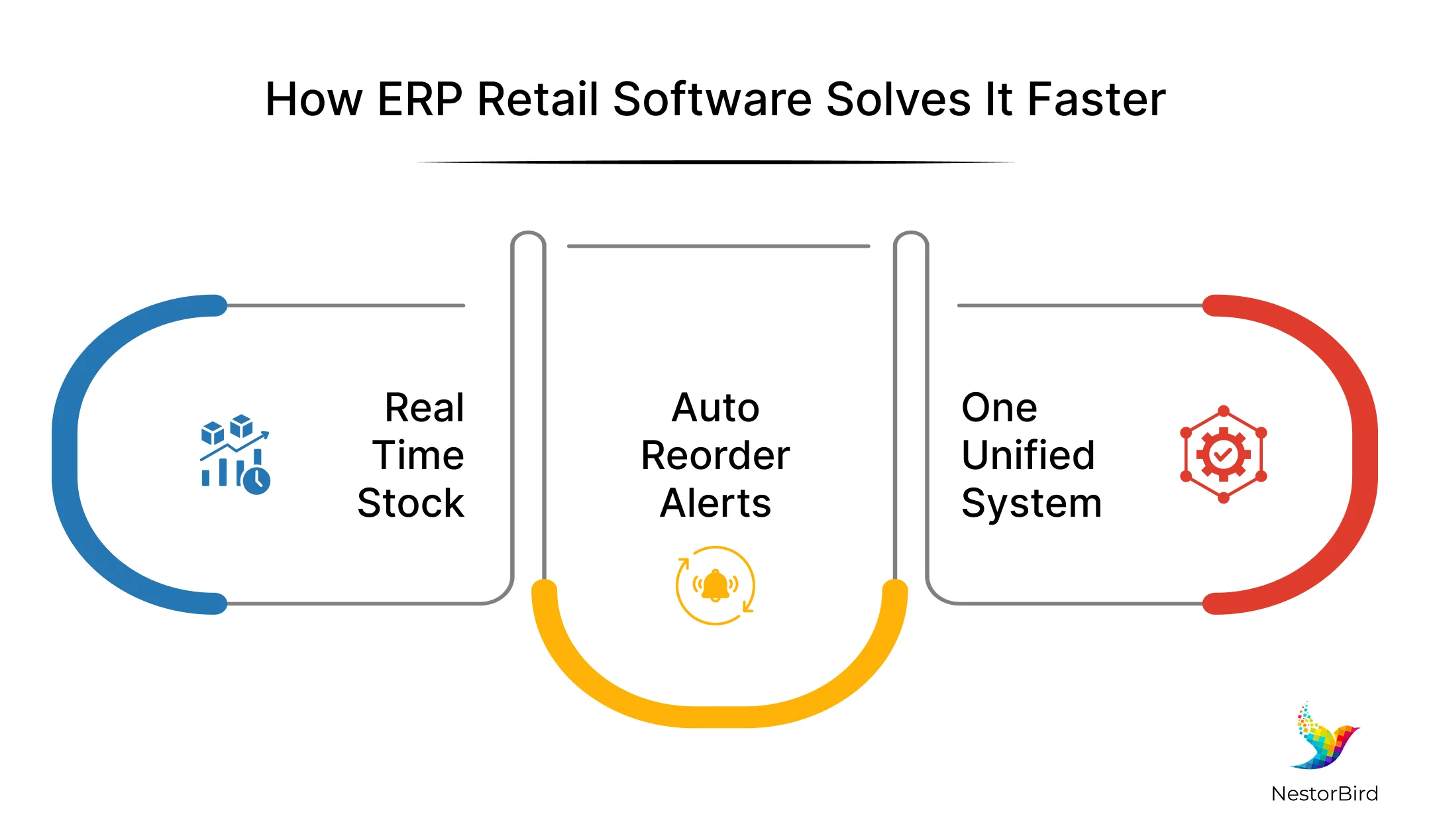
Here is the fix, retail inventory management software powered by an ERP creates one single source of truth. This means every sale, return, or stock movement updates across all locations at the same moment. When a customer buys something online from your website, your physical store inventory drops instantly. When a store sells an item at the cash counter, your warehouse sees it immediately.
You also stop guessing when to reorder. The ERP retail software automates reorder points based on past sales data. This removes human errors like forgetting to order or ordering too much.
An inventory management system for retail goes deeper. It tracks every SKU by size, color, and variant. It gives you clear data on what actually sells and what just sits there. You no longer guess what to buy next season.
Choose this ERP software for retail industry
Connect Your Online and Offline Sales
Business owners who implement and use cloud ERP for retail stop wasting hours on manual data entry. The common problem is simple. A customer orders online. Your staff types that order into the POS system by hand. The finance team then exports CSV files from one software and imports into another to match payments. This takes hours every day and creates typing mistakes.
The solution is retail store management software that puts everything in one dashboard. Your POS, customer records, and online sales all live in the same system. When an online order comes in, it appears in your store system automatically. No need for retyping or exporting the files.
With cloud ERP for retail, a store manager can check profit and loss numbers right from a phone while walking the sales floor. You do not need to sit at a back office computer. Customer returns also become simple. A buyer purchases from your website and returns the product to your physical store. The system updates inventory and payment records instantly.
Know more about cloud retail ERP features and adoption
One Dashboard for All Sales Channels
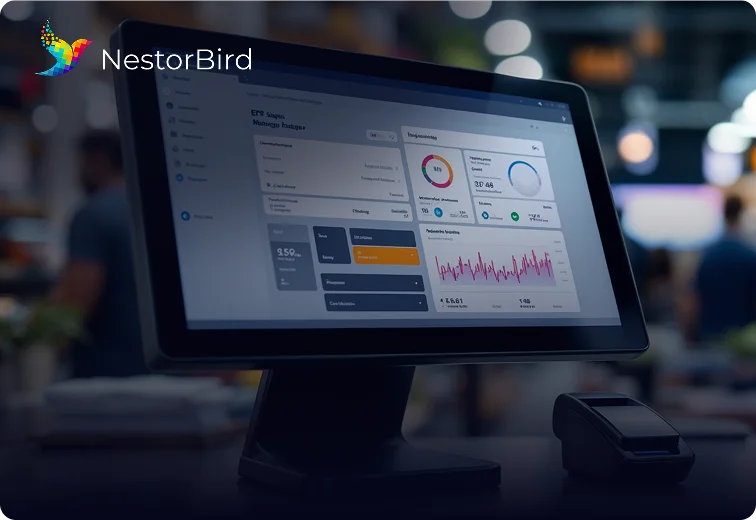
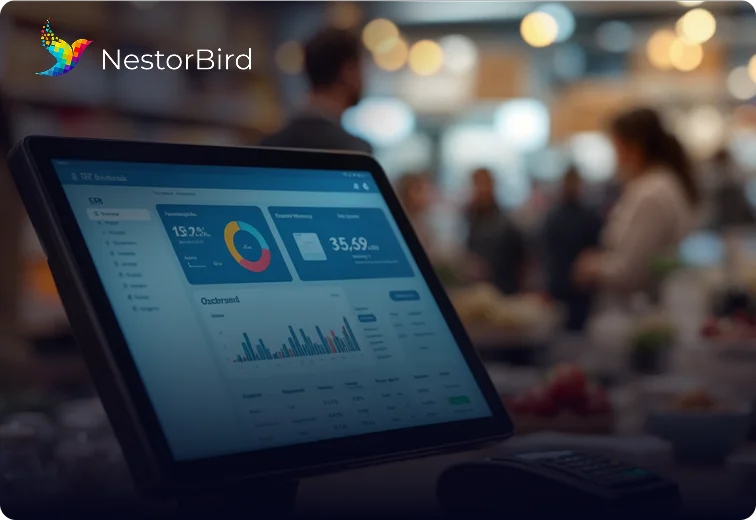
When you make use of the analytics and retail analytics and reporting tools inside a retail ERP, you stop guessing about your business. Most store owners look at last month’s sales report sometime in the middle of the current month. By then, the data is old and not useful.
The better way is real time dashboards. You can see what is selling right now. You can check which promotion worked yesterday, not last quarter.
You can also go deeper and look at sales trends across all your stores. Then zoom in to see one cashier or one product line. This helps you find exactly where the problem is.
Using past sales data inside your ERP helps you prepare for seasonal busy times. You know how much to order before the holiday rush.
Retail analytics and reporting turns your daily transaction data into clear answers. You will quickly find your top twenty percent of products that bring the most profit.
Check out how to make ERP implementation successful
A Simple Way to Compare Retail ERPs
If you are considering a new system, you must learn how to choose ERP software the right way. The market has many options. You will see long lists of features. But most of those features will not matter for your specific store.
Start by writing down what you absolutely need. For example, do you sell to other businesses or directly to shoppers? Do you manage your own delivery trucks or use third party shippers? Follow a proper ERP selection guide for retail. Focus on finding a system that fits your store type. A system built for a car parts warehouse will not work for a small clothing boutique. Do not get distracted by shiny features you will never use. When you do an ERP software comparison for retail, pay special attention to supply chain management retail ERP abilities.
Checklist
First, you must see stock levels across all your stores from one screen with a retail operations management software.
Second, the system must connect easily with your current payment processor.
Third, ask your staff for their opinion. If your team is not comfortable using it, the system will fail no matter how good it looks.
Stay updated on the latest trends in retail software
Conclusion
The best ERP for retail business fixes these issues at their root. You get one system that manages your stock, sales, and customer data without extra work. A retail automation software gives you clear visibility and faster decisions. If you want a solution built specifically for retail stores without unnecessary complexity, the team at NestorBird provides practical systems that match how your store actually works.
Frequently Asked Questions
Most stores see initial improvements in stock accuracy and billing within 4 to 8 weeks after going live with the system.
Yes. A proper best ERP for retail industry shows real time stock levels across all your stores and warehouses from a single dashboard.
No. Most employees learn daily tasks like sales and stock lookup in less than two hours of hands on practice.