

Quick Summary
This blog post lists top 5 ERP for hospitals that fully integrate OPD counters, IPD wards, and diagnostic labs. Separate software creates data gaps and billing errors. A single system removes manual work. Read to find which hospital software India matches your needs for smooth daily operations across all departments.
Table Of Contents
Introduction
When it comes to managing OPD as well as IPD in hospitals, it usually is a big headache when you use separate software for registration, billing, and lab tests. In this blog post, we will explore the top 5 hospital software options in India that offer full integration for IPD, OPD, and lab services. These platforms serve as a comprehensive ERP for hospitals, ensuring everything is interconnected. If you are fed up with data discrepancies and manual errors, you need a single platform that oversees OPD queues, IPD billing, and lab reports seamlessly without extra hassle.
Key Takeaways
Separate OPD, IPD, and lab software creates data gaps and billing errors.
Full integration means one database for all departments, not just basic connections.
ERP for hospitals removes manual data entry across registration, wards, and labs.
Choose software that scales from 50 beds to 200 beds without changing systems.
Always verify local India support for GST, state schemes, and compliance rules.
The Real Cost of Using Different Systems
Since various departments and software are not connected properly or do not interact, hospitals face daily data gaps. Many vendors claim their systems are connected. But basic interfacing only lets two systems share small pieces of information. Your OPD software still does not know what happened in the lab. Full integration means one common database for everything. When a patient gives a sample, the result appears directly inside their OPD file, and the IPD billing software automatically updates the charges.
The main problem this solves is manual re-entry. Your staff does not need to type lab rates into bills again. This stops typing errors and lost charges. A true integrated HMS India keeps every department on the same page. The advantage of using IPD OPD management software with one database is clear. You never miss a medicine charge or a lab test fee. Double-billing stops because the system knows what was already paid. Your hospital finally runs without constant data fixing.
Top 5 Hospital Software with Full IPD, OPD & Lab Integration in India
Now, let us look at five software options that truly combine OPD, IPD, and lab functions under one system.
1. Swanity by NestorBird: Best ERP for hospitals for real-time operations
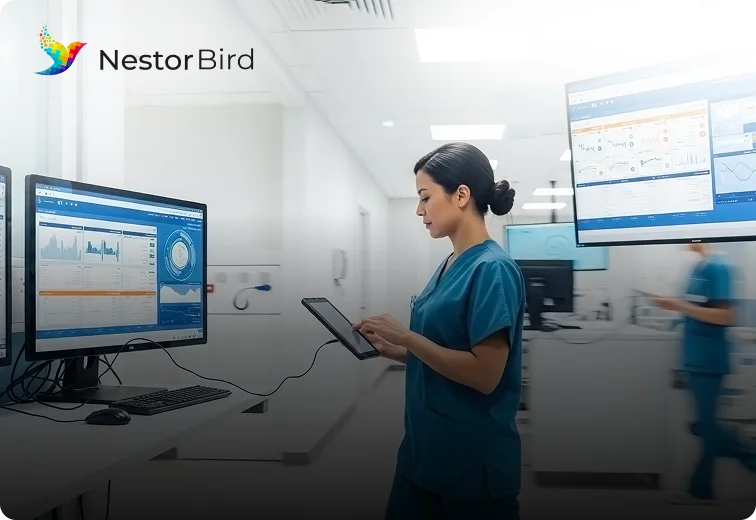
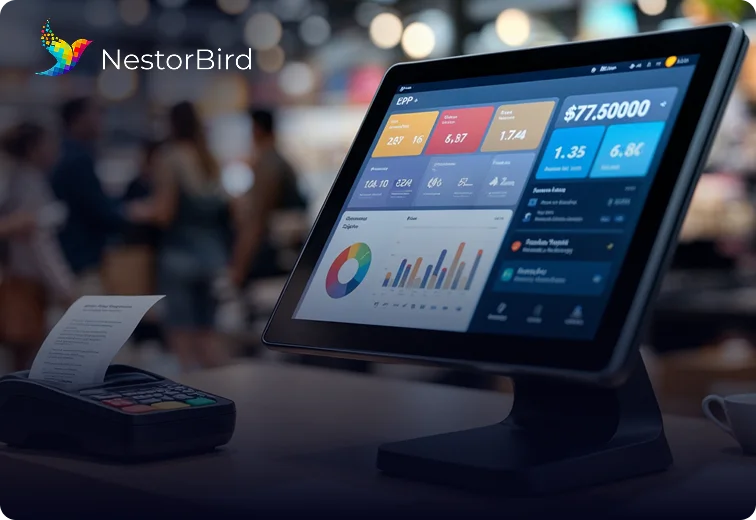
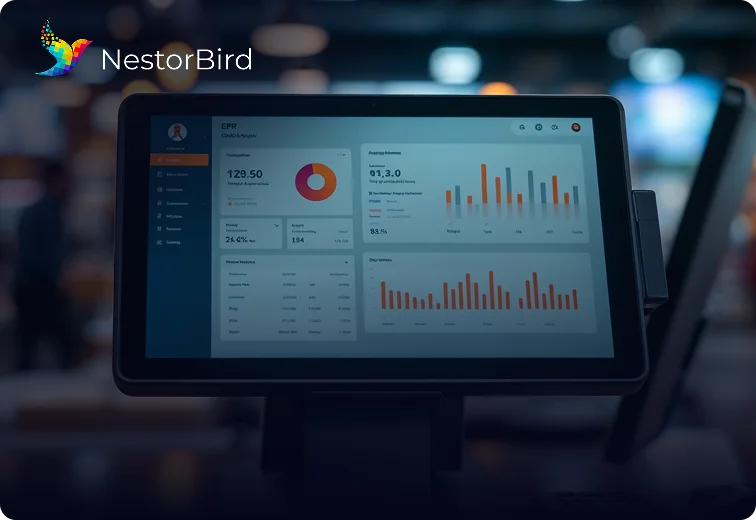
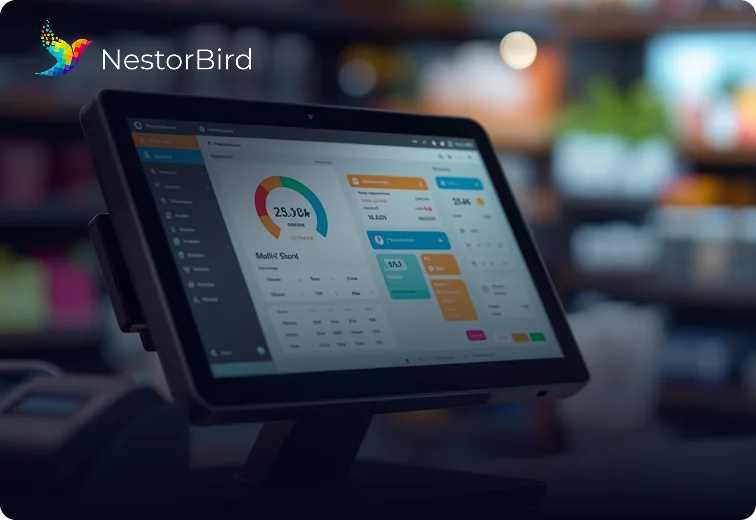
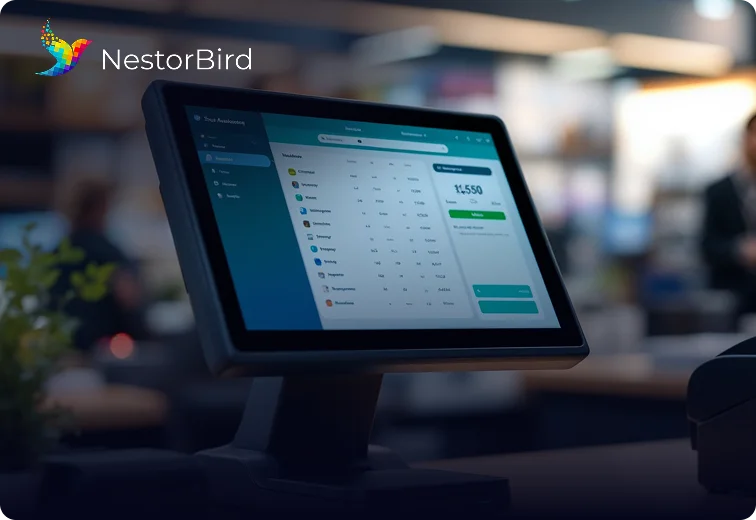
Swanity works as a complete ERP for hospitals that connects OPD registration, IPD admission, lab tests, pharmacy, and billing in one place, and unlike older systems where departments work separately, Swanity gives live data on bed availability, patient census, and revenue. Your front desk sees empty beds instantly. Your billing team gets lab charges automatically. The system goes live in about two weeks. For hospitals wanting to stop manual data entry and end-of-day report delays, this Healthcare ERP is a strong choice.
2. eHospital by NIC: Free hospital software India for government hospitals
This is an open-source system developed by India’s National Informatics Centre. It covers OPD clinics, IPD admission and discharge, lab, pharmacy, radiology, and billing. More than 1000 health facilities across India use it. The system is ABDM compliant and works on the national cloud. Best for government hospitals and those with a limited budget.
3. PurpleIPD: Paperless IPD for NABH compliance
PurpleIPD focuses strongly on making IPD completely paperless. It helps hospitals get and keep NABH accreditation through time-stamped clinical records and digital audit trails. The system works on Android tablets and keeps data secure within your hospital. If your main challenge is messy inpatient files and passing accreditation audits, this solves that problem directly.

4. MocDoc: Complete HMS with ABDM compliance
MocDoc is a cloud-based best hospital software in india option that manages OP, IP, laboratory, pharmacy, billing, and compliance workflows in one platform. It has a full Laboratory Information Management System with barcode workflows and automated result flow. It is also NABH accredited for HIS and EMR, making it suitable for hospitals that want structured operations without high complexity. Strong laboratory information system integration is what makes this difference.
5. SoftClinic GenX: Multi-location support for hospital chains
SoftClinic GenX works well for hospitals with multiple branches or units. The software allows each facility to set its own tariff, billing rules, and configurations while keeping centralized control. It supports CPOE, insurance services, lab services, and IPD workflows separately for each location. Best for growing hospital groups that need consistency across sites but flexibility at each branch.
Always choose the Best Cloud-Based Hospital Management Systems.
How to Choose the Right ERP for Your Hospital
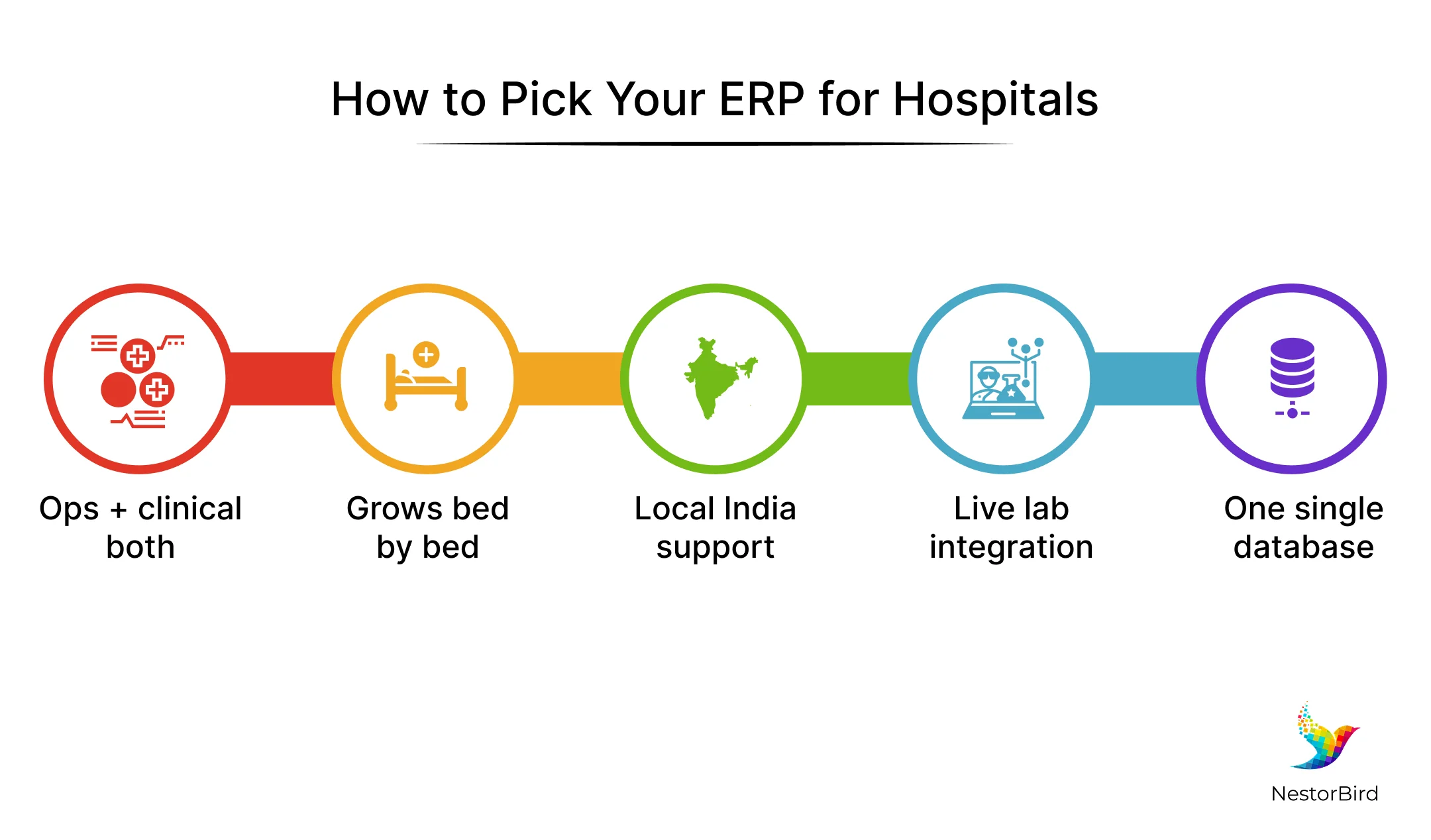
When picking an ERP for hospitals, keep these checks in mind:
Check if it handles both operations and clinical work
Your software must manage registration, billing, and appointments (operations) as well as doctor notes, nursing records, and discharge summaries (clinical). Many systems only do one side well.
Ask about bed growth
If your hospital grows from 50 to 200 beds, will the same software work? Some systems slow down or crash with more users. Get written proof from the vendor.
Verify local India support
Your vendor must understand GST billing, state health schemes, and local compliance rules. A foreign software without India support will create daily problems for your accounts team.
Test lab integration before buying
Ask for a live demo where a lab result automatically updates the patient’s OPD file and the IPD billing software. If the staff has to type anything twice, it is not real integration.
Demand a single database
True integrated HMS India keeps all data in one place. OPD, IPD, pharmacy, and labs should share the same patient record. Separate databases connected by cables will break often and leak revenue.
Conclusion
Managing a hospital is hard when your software works in pieces. You want one system that handles OPD queues, inpatient beds, and lab reports without repeated data entry. The options listed above show what is available in the market. But the right choice must work as a true ERP for hospitals, not just a billing tool. That is exactly why the best HMS software in India solutions like Swanity from NestorBird are built differently. They connect every department live. Book a demo to see unified OPD, IPD, and lab integration working together without any manual fixing.

Frequently Asked Questions
OPD manages patients who visit without staying overnight. IPD handles admitted patients, including bed assignment, doctor rounds, nursing notes, and discharge, so both must work together.
Lab integration sends test results directly to patient records. Your IPD billing software automatically adds lab charges. No manual entry means no missed revenue or lost reports.
It displays token numbers on a screen, calls patients one by one, and sends SMS alerts. Patients wait anywhere. Staff workload reduces because crowd management becomes automatic.
Yes, good software includes TPA modules. It generates pre-auth requests, tracks claim status, and creates final bills as per insurance rules, which speeds up claim approvals.