
Quick Summary
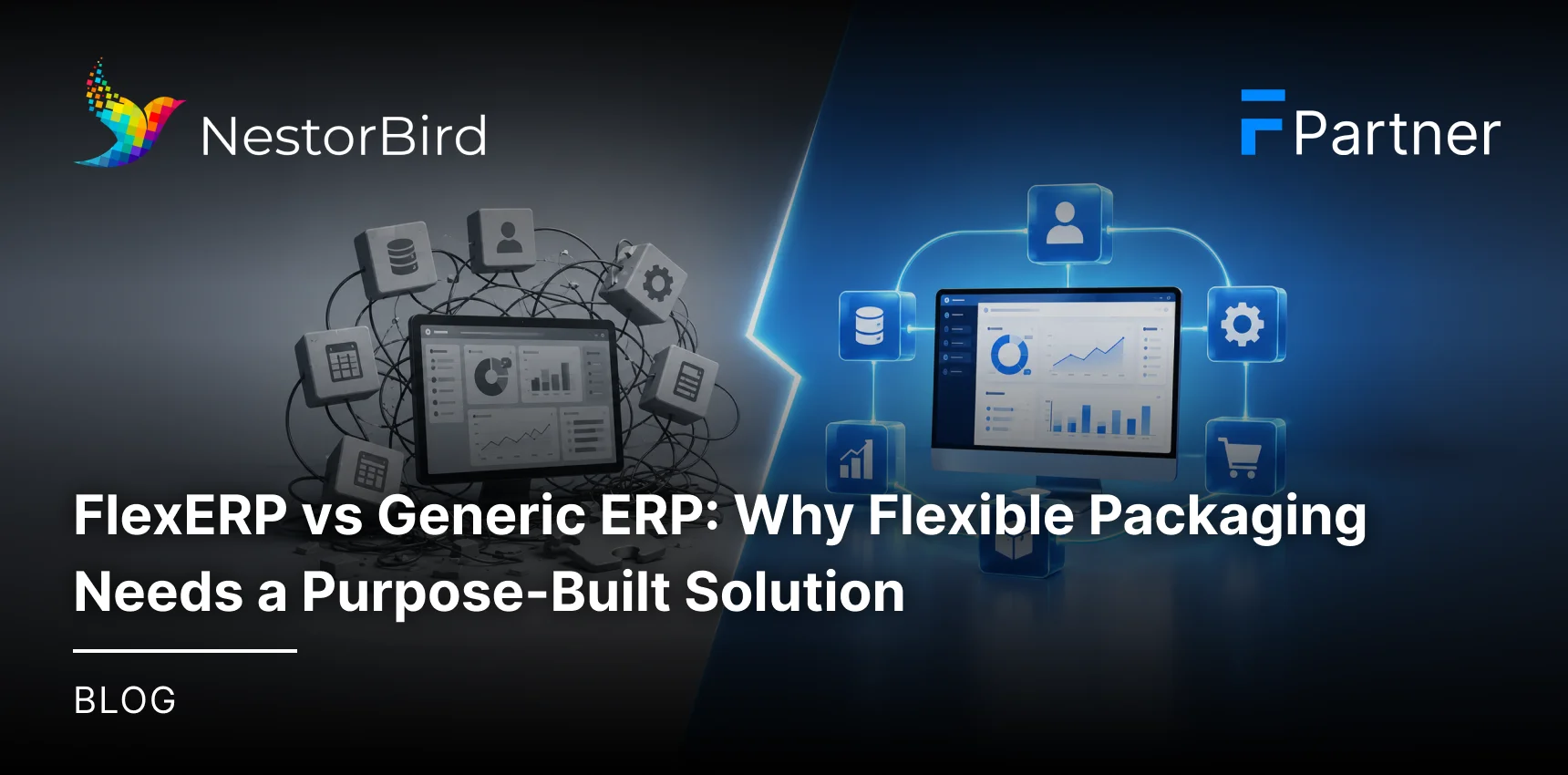
FlexERP vs Generic ERP is a critical choice for packaging manufacturers. Generic systems lack the features needed for multilayer BOMs, reel tracking, and batch traceability. A purpose-built flexible packaging ERP software handles these challenges directly, giving you accurate costing, better schedules, and full compliance without manual workarounds or data silos.
Table Of Contents
Introduction
Though the flexible packaging industry is growing fast, it even now has to deal with few challenges when businesses adopt the old traditional systems. The enterprise resource planning tools simply don’t understand how the shop floor actually works. The core decision often comes down to FlexERP vs Generic ERP and choosing between a system built for everyone or one designed specifically for your unique production needs. In this blog post, we will explore why a purpose-built flexible packaging ERP software delivers better results compared to generic solutions.
Key Takeaways
Generic ERPs fail at multilayer BOMs and micron calculations.
Specialized ERPs give real-time production visibility.
Batch traceability is vital for food and pharma compliance.
Accurate costing needs substrate-specific logic.
Purpose-built solutions reduce manual workarounds.
What Makes Flexible Packaging Different from Standard Manufacturing
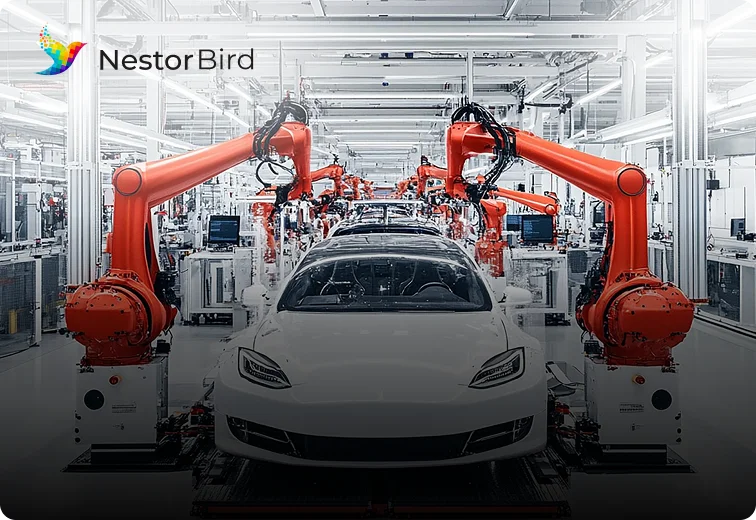
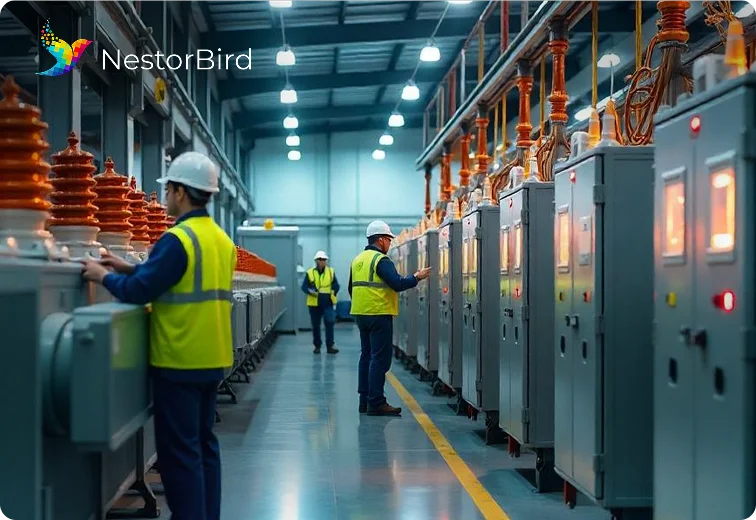
With flexible packaging, there is a big difference from standard manufacturing. Your work involves continuous processes like printing, lamination, slitting, and pouch-making. These steps happen in a sequence, not in separate, discrete assembly lines.
You also manage multi-unit inventory, films in microns, inks in kilograms, adhesives in litres, and finished goods in running meters. This creates high SKU variation with multilayer laminates and reel-based workflows. These realities expose the limits of standard manufacturing ERP and general ERP software.
They cannot handle the constant changes in materials, measurements, and production flow. The flexible packaging industry has grown to represent 20% of the U.S. packaging market, yet many companies still rely on systems not built for their specific needs.
Where Generic ERP Falls Short – The Real Operational Gaps
If businesses use the generic ERP for manufacturing, they often hit operational gaps that slow down their entire workflow.
BOM Complexity
Generic systems fail with layered or multilayer BOM structures. They cannot handle GSM and micron-based calculations needed for flexible packaging production.
Production Scheduling Breakdown
These systems lack understanding of cylinder availability, web widths, or curing times between stages. This makes production planning and scheduling nearly impossible to execute correctly.
Inventory Blind Spots
Standard inventory control systems do not track shelf-life variances or multiple units of measure. They also miss reel remainder quantities, leading to inaccurate stock levels.
Costing Errors at Quotation Stage
Margin leakage happens because standard ERP software does not account for cylinder amortization. Substrate-specific cost logic is also missing from these generic tools.
No Batch Traceability
For food, pharma, and FMCG clients, this is a critical gap. They rely on proper batch tracking software to maintain safety and compliance standards.
What a Purpose-Built FlexERP Actually Delivers
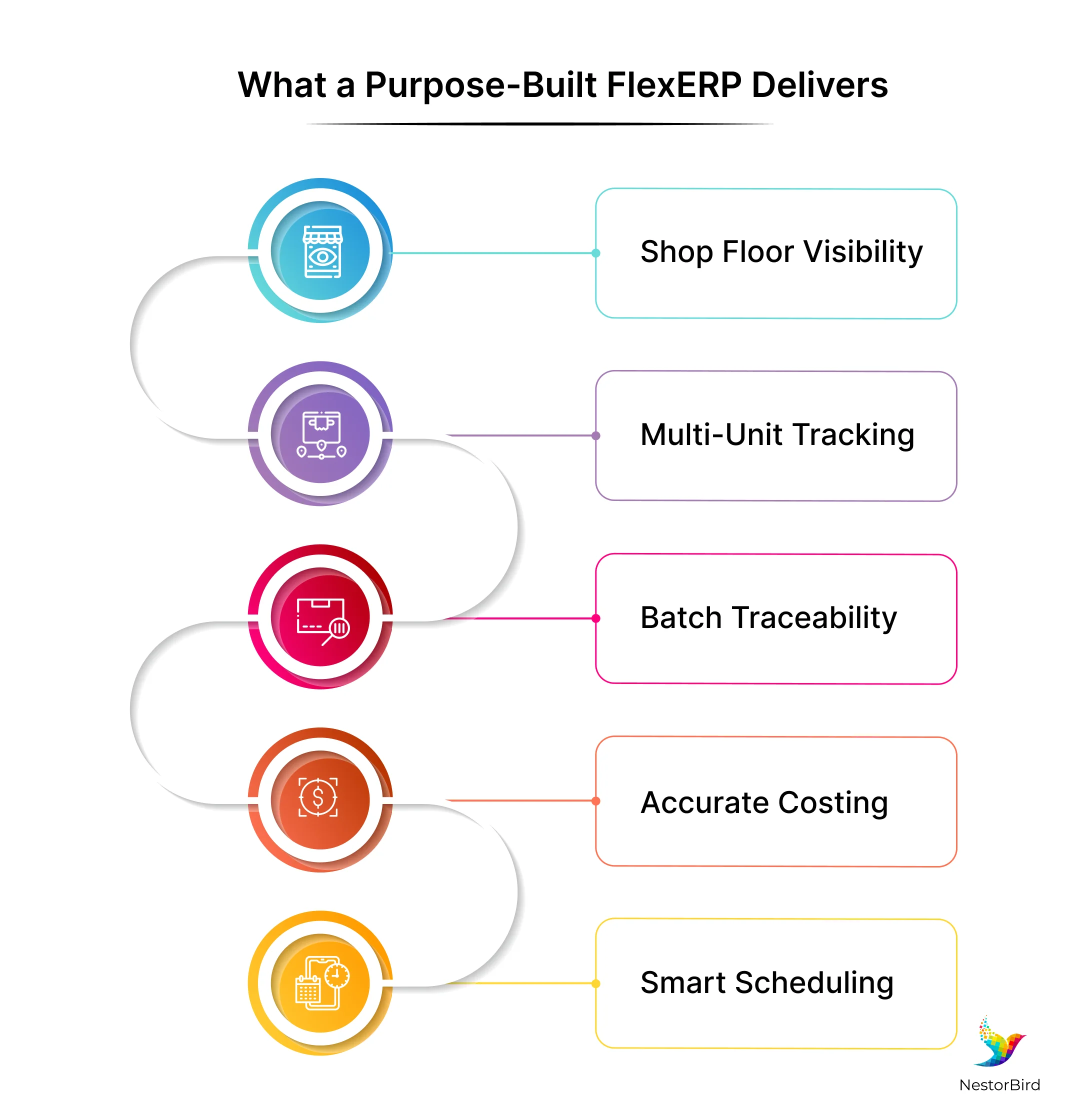
Using flexible packaging ERP software solves these problems by building features specifically for your workflow.
Production Planning Software
It maps continuous process stages with real dependencies. The system does not treat jobs as simple linear queues but understands the actual production sequence.
Manufacturing Execution Systems Integration
This gives you real-time visibility on the shop floor. You can see what is happening at every machine and stage without delays.
Inventory Management Software
It tracks reels, films, and adhesives in their native units. The system also sends expiry alerts so you never use outdated materials.
Order Management Systems
These connect sales commitments directly to production capacity. You know in real time if you can accept new orders based on available resources.
Supply Chain Management Software
This layer adjusts to raw material fluctuations. It helps you respond to resin price changes and film availability issues quickly. Strong supply chain management software keeps your sourcing aligned with production.
Custom ERP Software Solutions
These handle unique substrate combinations and customer-specific packaging specifications. You get flexibility without compromising on accuracy or efficiency.
Know What is batch processing in pharma manufacturing?
The Hidden Cost of Implementation with a Generic ERP
Teams rely on spreadsheet patches and manual data entry because their business management software cannot handle packaging workflows. This creates siloed departmental data and slows down decision-making. Without proper batch tracking software, you face recall exposure and compliance risks.
Inventory control systems that do not track reel remainders lead to material wastage. Missed delivery dates become common when schedules do not account for real production constraints.
Generic ERP systems struggle to scale for multi-plant or multi-substrate environments, forcing you to adapt your business to the software instead of the other way around.
Criteria When Evaluating an ERP Solution for Packaging
To make sure you choose the right, and best suitable ERP solution for your packaging business, use this practical checklist when evaluating options.
Roll and Reel Inventory
Check if the system handles roll and reel inventory natively. It should track remaining quantities and manage partial reels without manual calculations.
Production Scheduling
Verify that production scheduling accounts for print cylinder availability and curing time. The system must understand these real constraints.
Batch Traceability
Ensure there is built-in batch traceability for food and pharma compliance. This is non-negotiable for safety and recall readiness.
Connected Modules
Can the enterprise resource planning system connect estimation, production, and finance without custom middleware? Seamless integration reduces errors.
Multi-Unit Costing
Does the ERP solution support multi-unit costing out of the box? It should handle different measurement units automatically.
MES Integration
Check integration readiness with manufacturing execution systems. Real-time data flow between systems is essential for accurate decision-making.
Conclusion
The choice between a generic system and a purpose-built flexible packaging ERP software is clear. Generic tools cannot handle the complexity of multi-unit inventory, continuous processes, and batch traceability. A specialized ERP for packaging industry addresses these challenges directly, leading to better costing, scheduling, and compliance. To build a truly efficient and scalable operation, you need software designed for your specific industry. For a solution tailored to your manufacturing needs, consider exploring what NestorBird offers to help you manage your workflows effectively.
Frequently Asked Questions
Generic ERP systems are built for standard manufacturing. FlexERP is designed specifically for the flexible packaging industry, with features for roll tracking, multi-unit inventory, and complex production processes.
Standard systems cannot manage multilayer BOMs, micron-based calculations, reel tracking, or curing times between production stages. They lack the specific logic needed for this industry.
Batch traceability lets you track raw materials through every production stage to finished goods. This is critical for food and pharma compliance, helping with recalls and quality investigations.
It accounts for cylinder availability, web widths, curing times, and machine changeovers. This creates realistic schedules compared to generic systems that treat all jobs as simple linear queues.
Yes. It tracks films in microns, inks in kilograms, adhesives in litres, and finished goods in running meters within a single system, unlike generic inventory software that struggles with multiple units.