
Quick Summary
Flexible packaging ERP connects production planning, lamination, slitting, rewinding, inventory, quality checks, and job costing within a coordinated business system. For flexible packaging manufacturers, it helps teams track material consumption, record manufacturing wastage, maintain finished-roll traceability, and compare planned output with actual results. The right system provides better operational visibility by bringing production and business records together.
Table Of Contents
Introduction
Flexible packaging production involves multiple connected steps, from material preparation and lamination to slitting, rewinding, inspection, and dispatch. When each stage is tracked separately, teams can struggle to understand material usage, production progress, wastage, and job costs. Flexible packaging ERP brings these workflows into a shared system, helping manufacturers coordinate shop-floor activity with inventory, quality, and business records.
Key Takeaways
Flexible packaging ERP connects production, inventory, quality, and costing workflows.
Lamination and slitting records help teams follow job progress and material consumption.
Wastage tracking makes production losses easier to record and review.
Roll traceability links finished rolls with their production jobs and source-material records.
Job costing and reporting help compare planned results with actual production data.
The right ERP should reflect the manufacturer’s processes, reporting needs, and growth plans.
What Is Flexible Packaging ERP and Why Does It Matter?
Flexible packaging ERP is an enterprise resource planning system configured to coordinate the operational and business requirements of flexible packaging manufacturers. It can connect production orders with material availability, shop-floor reporting, quality checks, inventory movements, and job costing. Instead of relying on disconnected spreadsheets or isolated records, teams can work from a more consistent view of each order.
This is especially useful when jobs move through several processes and require different materials, specifications, and output formats. A connected system can help planners check material readiness, production teams record actual consumption, and managers review output and recorded losses. Manufacturers evaluating manufacturing ERP software should look for workflows that match their production environment, not just a generic inventory or accounting feature set.
Explore NestorBird’s manufacturing ERP software to understand how connected planning, production, and business operations can support manufacturing teams.
How ERP Manages Lamination, Slitting and Rewinding Operations
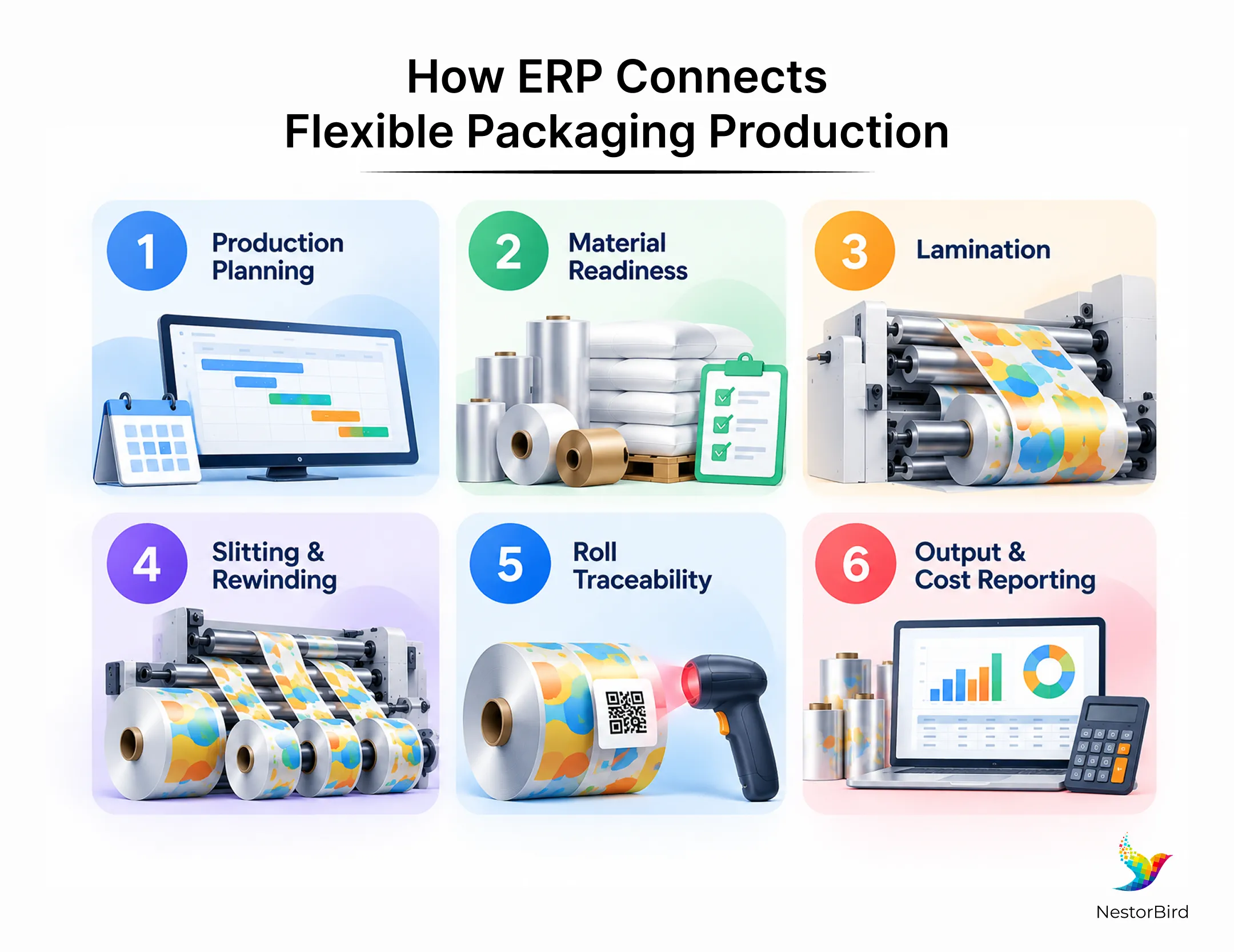
Lamination, slitting, and rewinding depend on clear job specifications, accurate material records, and timely updates from production. Packaging ERP software can help connect these steps to the original production order, giving teams a more consistent record of what was planned, what was used, and what was produced.
Lamination Production Management
For lamination jobs, teams need to know which materials and specifications apply to an order and whether the required inputs are available. ERP workflows can capture material issues, job progress, applicable process information, and quality checks. This creates a production record that can be reviewed alongside inventory and job details.
Slitting and Rewinding Process Management
During slitting and rewinding, parent rolls are converted into finished rolls with defined widths and dimensions. ERP records can associate parent-roll consumption with the job, finished-roll output, and recorded wastage. Consistent identification and reporting help teams reconcile material usage and maintain traceability across production stages.
Production Planning and Scheduling
Production planning software for manufacturing can help planners coordinate orders with material availability, capacity, priorities, and due dates. When shop-floor updates are captured in the same system, teams can compare planned and actual progress and identify jobs that need attention. Read more about improving production planning and scheduling with manufacturing ERP.
Essential ERP Features for Flexible Packaging Manufacturers
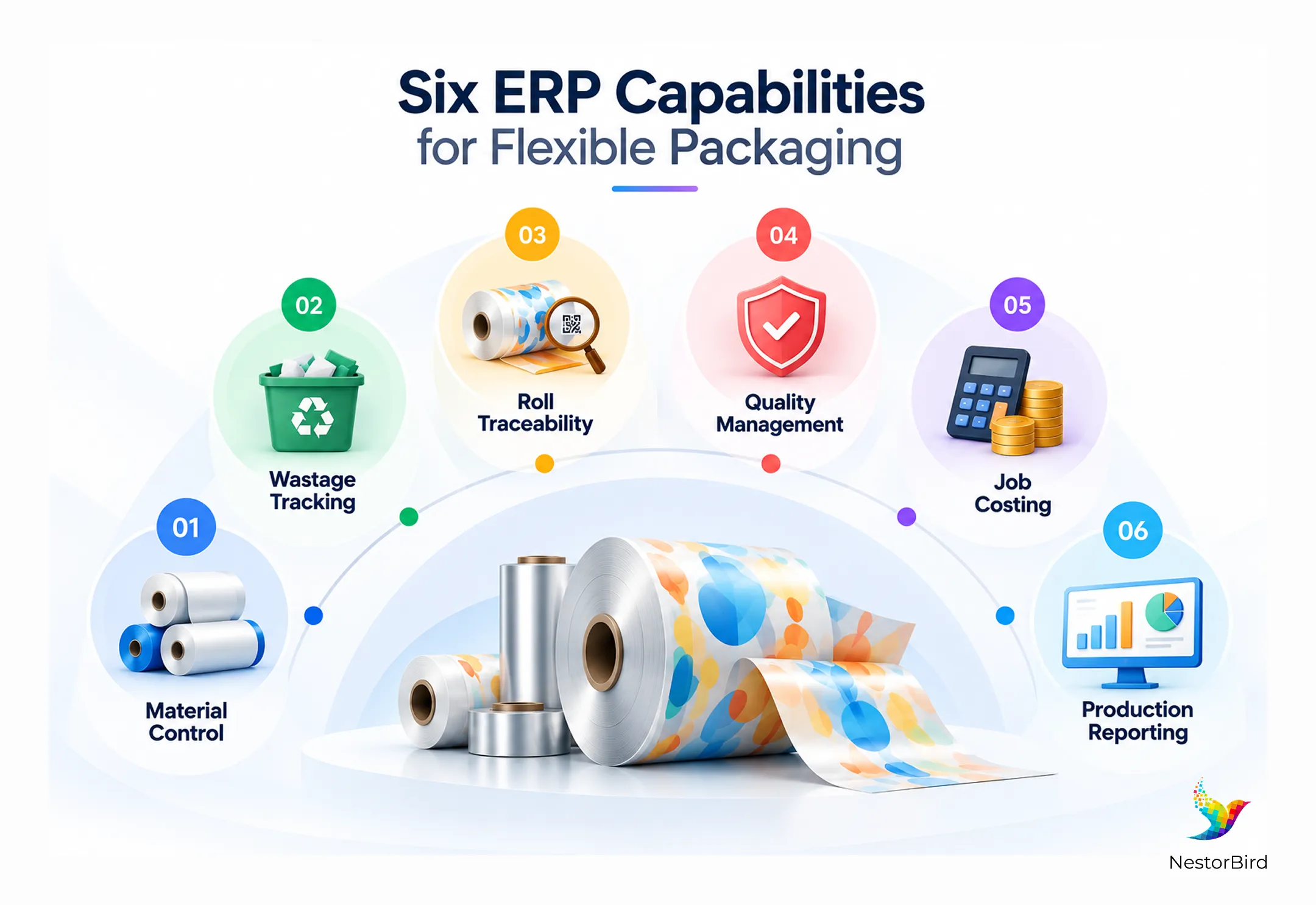
The most useful flexible packaging manufacturing software supports the records and decisions that matter throughout a job’s lifecycle. Feature priorities will vary by plant, product mix, and process complexity, but several capabilities are particularly relevant.
Material and Inventory Control
Track required and available inputs, including film, adhesive, ink, and other materials used in production. Clear material records help teams prepare for jobs and compare planned consumption with actual usage.
Manufacturing Wastage Tracking
Capture setup losses, trimming waste, rejected output, and other defined loss categories. Consistent recording gives supervisors a basis for reviewing wastage patterns and investigating differences between expected and actual output.
Roll Traceability and Quality Records
Connect parent rolls, material lots, production jobs, and finished-roll identifiers wherever the workflow requires traceability. Quality records can document inspections, defects, non-conformances, and approval status, making relevant information easier to retrieve.
Job Costing and Production Reporting
Bring captured material usage, production output, and applicable cost records together to support job-level review. Reports can help managers compare planned and actual results and understand where more investigation may be needed.
Connected Manufacturing Data
When production, inventory, quality, and finance records are connected, teams can reduce duplicate entry and work from a more consistent set of operational information. Review the essential manufacturing ERP features that align with your workflows before finalizing requirements.
How to Choose the Right Flexible Packaging ERP
Start by documenting how orders move through your plant, including material preparation, lamination, slitting, rewinding, inspection, and dispatch. Identify where teams currently record production progress, material usage, wastage, quality results, and job costs. These details will help you assess whether an ERP’s workflows match your actual processes.
During evaluation, ask vendors to demonstrate a representative production job from order creation through finished-roll reporting. Check how the system handles material traceability, user permissions, reporting, integrations, and changes to job specifications. Consider implementation support, training, and the effort needed to migrate existing data. The best ERP for the packaging industry is one that fits your operating requirements and can adapt as those requirements evolve.
Conclusion
Flexible packaging ERP can give manufacturers a more connected view of production planning, lamination, slitting, rewinding, material consumption, quality, and job costing. Its value depends on how well the workflows reflect the plant’s real processes and how consistently teams record production data. By defining requirements before selection, manufacturers can focus on capabilities that improve visibility and support practical operational decisions.
Talk to NestorBird about your manufacturing and implementation requirements: Explore ERP implementation

Frequently Asked Questions
Flexible packaging ERP is a business system that connects production, inventory, quality, and costing workflows for flexible packaging manufacturing.
It can connect job specifications with material issues, production updates, applicable process records, and quality checks.
It can record parent-roll consumption, finished-roll output, dimensions, and wastage against the relevant production job.
Yes, when configured for the plant’s processes, ERP can record setup losses, trimming waste, rejects, and other defined wastage categories.
Roll traceability helps teams connect finished rolls with production jobs and source-material records, supporting faster information retrieval.
It can bring captured material usage, production output, and applicable cost records together for job-level review.
ERP can help coordinate orders with material availability, capacity, priorities, and due dates, depending on the system’s capabilities and configuration.
Prioritize workflows for material control, production reporting, wastage, roll traceability, quality, job costing, and implementation support.
A suitably configured ERP can connect production transactions with inventory records, reducing the need to reconcile separate systems manually.
Document current workflows, define reporting and traceability requirements, and ask vendors to demonstrate a representative job from order to finished-roll reporting.