

Quick Summary
Garment manufacturing in India 2026 requires digital tools to stay competitive. Exporters need apparel ERP, production management, and inventory software to control costs, meet buyer demands, and follow new sustainability rules. This blog covers the essential solutions for modern garment exporters.
Table Of Contents
Introduction
For garment manufacturers, the way of doing business is changing fast. In 2026, buyers are not just looking for low costs, but also want proof of sustainability, faster deliveries, and full traceability of every product. This means old methods of managing production and exports no longer work. To stay competitive, exporters must adopt digital tools that bring transparency and efficiency to their operations. In this blog post, we will look at the essential software solutions that every exporter needs. From production tracking to inventory control and compliance, these tools are now a basic requirement for succeeding in garment manufacturing in India 2026.
Key Takeaways
Garment exporters must adopt digital tools to stay competitive in 2026.
Apparel ERP helps manage orders, inventory, and production in one system.
Real-time tracking reduces delays and improves on-time delivery.
Digital tools make it easier to follow new sustainability rules.
Start with basic modules and expand as your business grows.
Why India's Apparel Manufacturing Must Go Digital by 2026
There is a clear reason why garment exporters in India cannot keep using old methods in 2026. The industry is facing strong pressure from multiple sides.
Rising Costs and Buyer Demands: Raw material prices are going up. Labor costs are also increasing. At the same time, international buyers are asking for faster delivery and complete product traceability. They want to know exactly where every fabric and trim comes from.
New Rules from Europe: The European Union has brought new sustainability rules. Exporters now must provide digital product passports that show the environmental impact of each garment. Without this data, you cannot sell to many European brands.
Why Old Methods Fail: Using paper records and spreadsheets creates many problems. It becomes hard to track work in progress. Inventory counts are often wrong. Order delays become common. These issues hurt your reputation and lead to lost business.
The Opportunity: Modern garment manufacturing software solves these problems. An apparel manufacturing ERP brings all your data into one place. It gives you real-time visibility into production. This helps you meet buyer demands, control costs, and stay compliant with new rules.
Check out this comparison FlexERP vs Generic ERP.
Essential Digital Tools for Exporters
When you export garments, you need the right software to manage everything. Here are the key digital tools that help you run your business better.
Apparel Manufacturing ERP
A complete apparel manufacturing ERP connects all your departments. It handles orders, bills of materials, and style variations. This textile manufacturing ERP gives you one place to manage multiple factories and buyers.
Production Management Software
Garment manufacturing software helps you control the shop floor. It tracks job work, plans capacity, and sets quality checks. Apparel production management tools reduce delays and improve delivery performance.
Manufacturing Execution System
A manufacturing execution system connects your planning with actual production. It shows real-time output and helps you use resources better. This reduces waste and improves efficiency.
Inventory Management Tools
Inventory management systems track fabric, trims, and finished goods. Apparel inventory management gives you live stock updates. You avoid both excess stock and shortages.
Supply Chain Software
Supply chain management tools give you end-to-end visibility. Apparel supply chain software tracks materials from suppliers to shipment. You know the status of every order at all times.
Export Management Software
Export management software handles shipping documents and compliance. It tracks shipments and connects with buyer portals. This makes exporting smoother and more organized.
The Foundation
These tools work together on an enterprise resource planning base. They support garment factory automation and drive textile industry digital transformation. This is the core of digital transformation in the textile industry today.

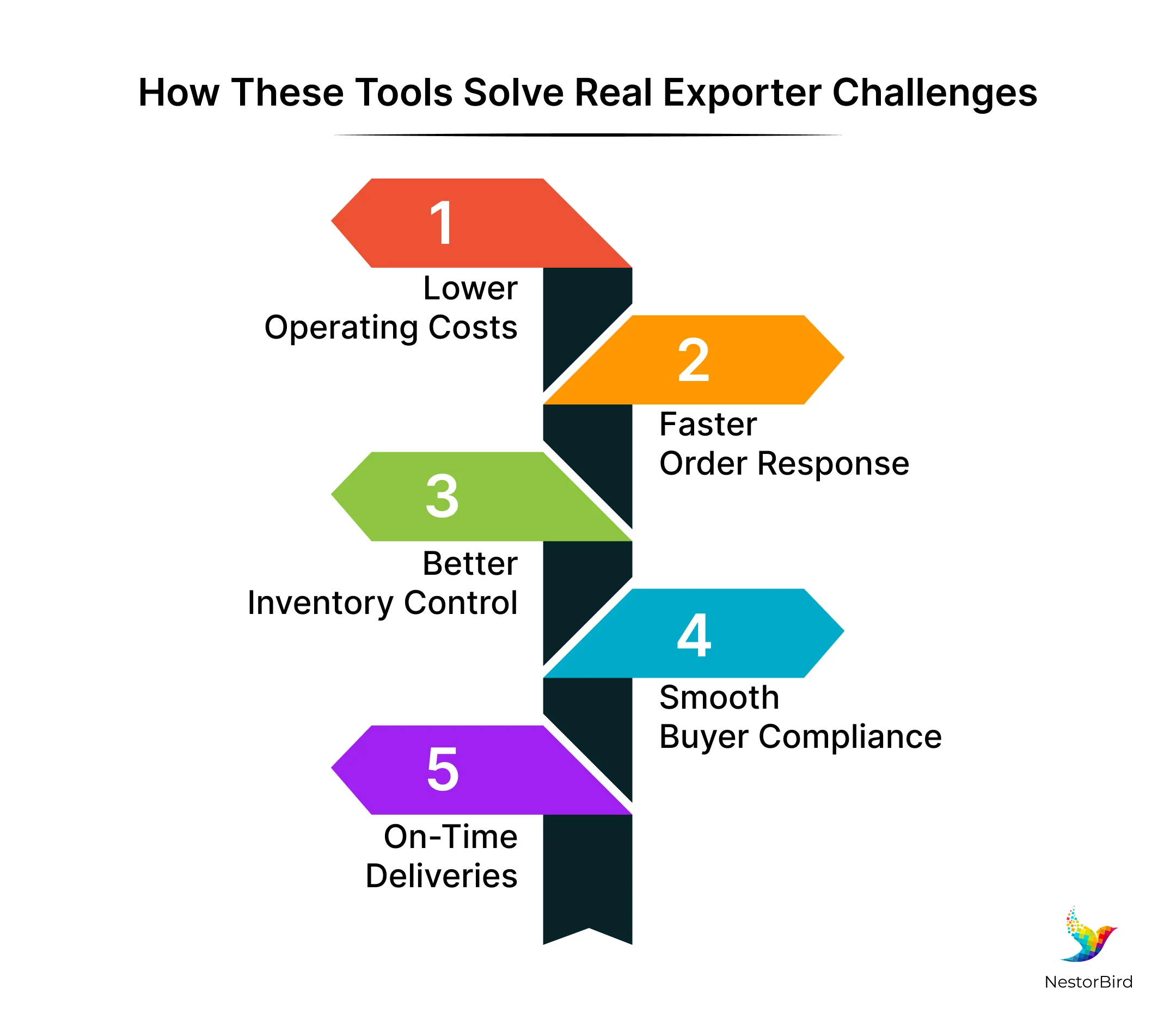
How These Tools Solve Real Exporter Challenges
These tools provide exporters with clear and measurable benefits. You will see lower operating costs because you reduce waste and avoid overtime. When buyers change order quantities or styles, you can adjust quickly with real-time data.
Lower operating costs
Faster order response
Better inventory control
Smooth buyer compliance
On-time deliveries
Now, demand forecasting becomes more accurate, so you buy only the fabric and trims you need. Compliance with global standards is smoother because all your production data is stored digitally.
For MSME and mid-size exporters, the key is to start with one module and expand gradually. Choose apparel manufacturing ERP solutions that are affordable and easy to implement. This practical approach gives you a strong return on investment without disrupting daily operations.
Learn more about ERP for Textile Industry.
Choosing and Implementing the Right Stack in 2026
For your unique business, you need to choose the right software carefully. Look for solutions with industry-specific modules that handle apparel styles and sizes. Cloud accessibility lets your team work from anywhere. Integration readiness ensures the software connects with your existing systems.
Scalability means the solution grows with your business, and local support is important for quick problem-solving. Start with high-impact modules like inventory and production tracking. Once these work well, expand to other areas.
A manufacturing execution system helps bridge planning and shop-floor activities. This step-by-step approach reduces risk and ensures smooth adoption. Proper production planning becomes easier with the right foundation in place.
Conclusion
Digital tools have become a basic requirement for garment manufacturing in India in 2026, as they help you control costs, meet buyer demands, and follow new rules from other countries. If you are looking for a reliable solution, NestorBird provides apparel manufacturing ERP systems made for the garment industry. Our experience with manufacturing businesses can help you automate your work and improve efficiency.

Frequently Asked Questions
Modern ERP software includes export management features. It generates packing lists, commercial invoices, and shipping bills automatically. This saves time and reduces errors in paperwork.
Yes, good apparel software tracks raw materials and finished goods. It updates stock levels automatically when materials are used. This helps avoid shortages and excess purchases.
Yes, ERP is very useful for small and medium garment units. It helps track inventory, reduce waste, and improve delivery. Scalable solutions let small businesses grow and handle more orders efficiently.
Yes, modern apparel ERP systems handle GST billing and tax calculations. They generate proper invoices and support e-invoicing. This helps you stay compliant with tax rules.