
Quick Summary
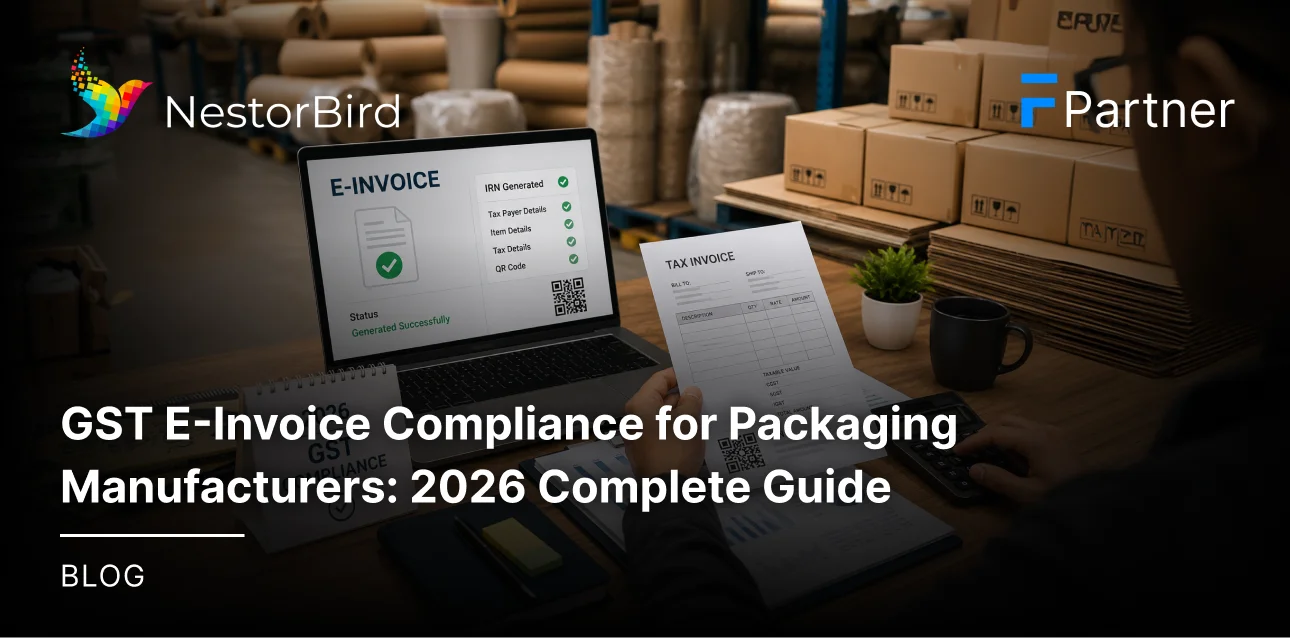
This guide explains GST e-invoice compliance for packaging manufacturers in 2026. It covers mandatory rules, common challenges, automation benefits, and practical solutions. Learn how to avoid penalties, protect ITC claims, and streamline operations using digital invoicing and ERP systems for seamless compliance.
Table Of Contents
Introduction
For packaging manufacturers, they may not realize, but GST e-invoice compliance for packaging manufacturers is very important in 2026. This system requires businesses to report every B2B invoice to the government in real-time and get a unique Invoice Reference Number and QR code. The packaging industry faces special challenges due to high volumes of B2B transactions and complex supply chains. This blog post explores how the packaging industry GST compliance can be simplified using automation. With GST e-invoicing in India becoming stricter, manufacturers must adopt modern solutions. E-invoice compliance 2026 demands accuracy and speed, which can be achieved through proper ERP systems.
Key Takeaways
E-invoicing is mandatory for packaging manufacturers with turnover above ₹5 crore.
Invoices without valid IRN are invalid and buyers cannot claim ITC.
The 30-day reporting rule applies for businesses with ₹10 crore turnover.
Automation through ERP reduces errors and ensures real-time compliance.
Non-compliance attracts penalties and supply chain disruptions.
Understanding GST E-Invoice Rules and Applicability for Packaging Manufacturers
The packaging industry must follow specific GST e-invoice rules under Rule 48(4) of the CGST Rules. These rules apply to all manufacturers whose aggregate turnover exceeds ₹5 crore in any financial year from 2017-18 onwards. Once a manufacturer crosses this limit, e-invoicing becomes mandatory for all future periods.
Transactions Covered and Exclusions
E-invoicing applies to all B2B supplies, exports, and deemed exports. However, B2C supplies are excluded from this requirement. For packaging manufacturers, this means all invoices to FMCG companies, pharma clients, and raw material suppliers must be reported to the Invoice Registration Portal (IRP).
2026 Specific Requirements
For businesses with turnover of ₹10 crore or above, invoices must be reported within 30 days from the invoice date. The IRP will automatically reject invoices uploaded after this window. Additionally, multi-factor authentication is now mandatory for accessing e-invoice portals.
Penalties for Non-Compliance
Invoices without a valid IRN are treated as invalid under the law. This means buyers cannot claim input tax credit, leading to disputes and potential loss of business. Monetary penalties include ₹10,000 per invoice or 100% of tax due, whichever is higher. E-invoice compliance 2026 is therefore critical for maintaining smooth business operations and strong client relationships.
Key Challenges Faced by Packaging Manufacturers in GST E-Invoice Compliance
Packaging manufacturers handle thousands of invoices monthly, making packaging industry GST compliance a significant operational challenge.
High Transaction Volumes
Processing hundreds of B2B invoices daily increases manual data entry errors, and the mistakes in invoice numbers, dates, or amounts lead to rejections and rework.
Legacy System Integration
Many manufacturers still use old accounting software that cannot connect with the IRP. This forces manual uploads, which are slow and error-prone.
This is the Best ERP for Manufacturing Industry in India.
HSN Code and Batch Details
Packaging products require accurate 8-digit HSN codes. And incorrect codes trigger immediate rejection. Batch numbers for pharma packaging add another layer of complexity. Understand What is batch processing in pharma manufacturing?
Portal Downtime Issues
The IRP occasionally experiences technical glitches, and during these times, manufacturers cannot generate IRNs, delaying invoices and shipments.
Supply Chain Reconciliation
Matching e-invoice data with purchase orders and delivery challans is difficult. Discrepancies lead to ITC disputes with buyers and delayed payments.
Multi-Location Manufacturing
Manufacturers with multiple factories face challenges in maintaining uniform compliance across all locations. Each unit must follow the same reporting standards.
Delays in generating valid e-invoices often result in shipment holds. This directly impacts delivery schedules and client trust. Proper GST e-invoice compliance requires proactive systems to address these challenges effectively.
Benefits of GST E-Invoice Compliance for the Packaging Industry
Digital invoicing for packaging industry solutions creates efficiency across the supply chain. A proper GST reporting and compliance system enables manufacturers to scale operations confidently.
Reduces Fake Invoices
Every invoice gets authenticated by the government portal. This eliminates the risk of fraudulent billing and builds trust with buyers.
Faster Input Tax Credit
Buyers can claim ITC instantly when invoices are valid. This speeds up cash flow for both sellers and buyers in the supply chain.
Simplifies Reconciliation
E-invoice data automatically matches with GST returns. This reduces manual effort and minimizes mismatches between purchase and sales records.
Improves Cash Flow
Quick ITC claims mean faster working capital availability. Manufacturers can reinvest funds into raw materials and production without delays.
Strengthens Audit Readiness
All invoices are stored digitally with valid IRNs. This makes tax audits smoother and reduces the stress of document retrieval.
Provides Data Insights
The system generates useful reports on sales patterns. These insights help in production planning and inventory management.
Know more about Production planning and scheduling.
How ERP Software for Packaging Industry Ensures Seamless Compliance
Technology is essential for packaging manufacturers to handle e-invoicing smoothly. Here is how the right systems help:
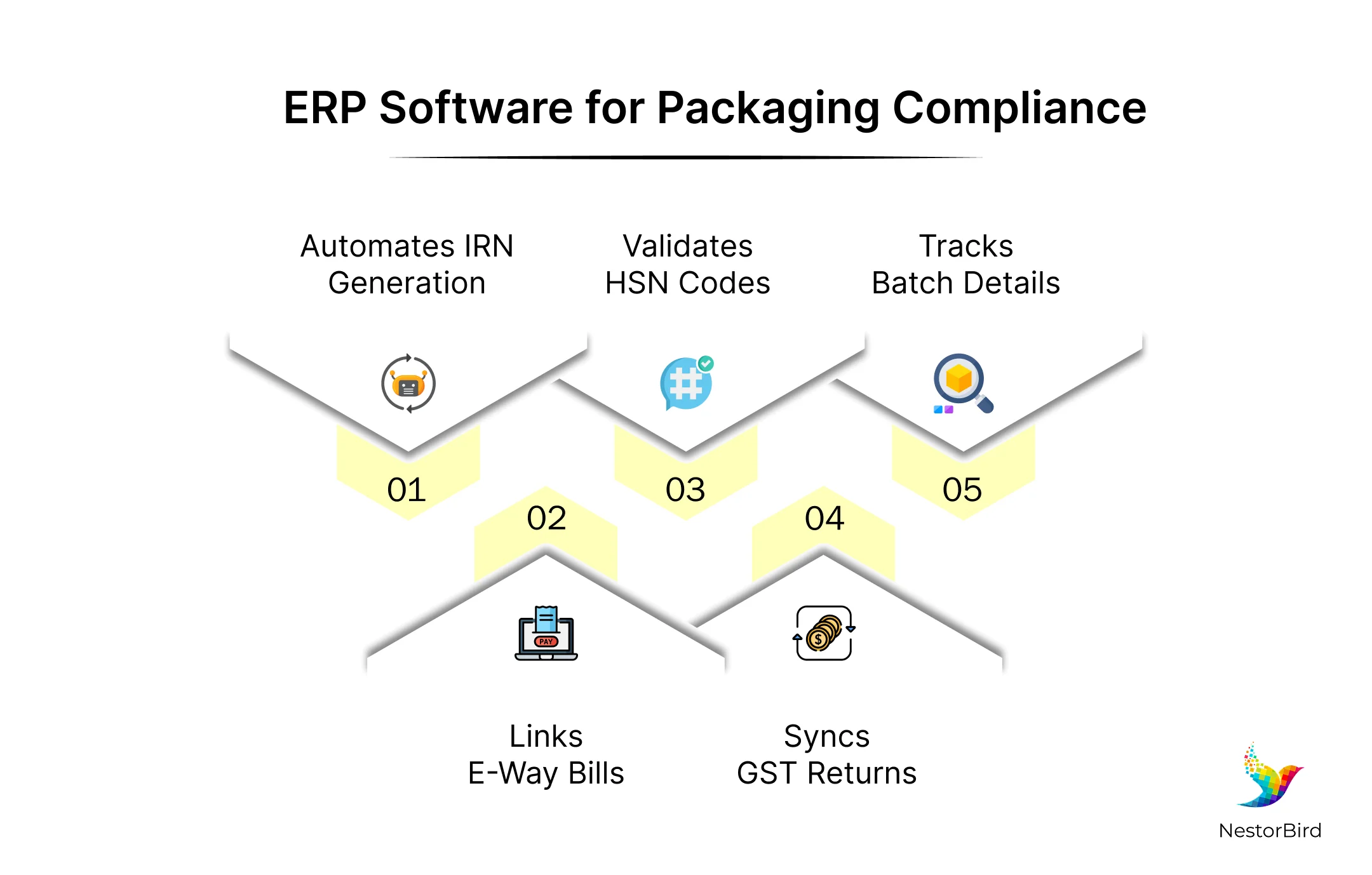
ERP software for packaging industry solutions automate IRN generation and JSON formatting, eliminating manual data entry errors completely.
Manufacturing ERP software with ERP for GST compliance features supports batch tracking, multi-location operations, and real-time e-Way Bill linkage for uninterrupted shipments.
GST e-invoice integration through GST automation software enables bulk invoice processing, automatic error correction, and seamless API connectivity with the IRP.
Conclusion
GST E-Invoice Compliance for Packaging Manufacturers is now a fixed requirement for packaging manufacturers in India. The system helps reduce errors, speed up ITC claims, and keep supply chains running smoothly. Investing in proper ERP systems is about building a more efficient and profitable business. Solutions like those from NestorBird help manufacturers automate e-invoicing, manage inventory, and stay compliant with minimal effort.

Frequently Asked Questions
E-invoicing is mandatory for businesses with aggregate annual turnover above ₹5 crore in any financial year from 2017-18 onwards. Once crossed, compliance continues even if turnover falls later.
E-invoicing applies to B2B supplies, exports, deemed exports, credit notes, debit notes, and reverse charge transactions. B2C sales, nil-rated supplies, and exempt supplies do not require e-invoicing.
Invoices without a valid IRN are treated as invalid. Buyers cannot claim Input Tax Credit, and sellers face penalties of ₹10,000 per invoice or 100% of tax due, whichever is higher.