

Quick Summary
Hospital information system implementation often fails because hospitals ignore people, skip data cleaning, and forget infrastructure checks. This blog shares four specific mistakes made during hospital information system implementation and gives practical fixes. Follow the simple three-phase plan to reduce errors, keep staff happy, and meet compliance needs from day one.
Table Of Contents
Introduction
Though hospitals spend on heavy investments for implementing a hospital information system, many projects still fail or underperform. This puts patient safety, daily operations, and budgets at serious risk. The gap between investment and results is wide. In this blog post, we will look at specific mistakes made during hospital information system implementation and give you practical fixes for each. Avoiding these errors is essential for any hospital pushing for digital transformation in hospitals. Getting it right means smoother workflows, fewer errors, and a system that staff actually wants to use every single day.
Key Takeaways
Treat HIS as a people change, not just a software install.
Clean and check all old data before moving it.
Test your WiFi, power backups, and devices before going live.
Fix your workflows first, then customize the software.
Plan in three phases: prepare, test, and launch safely.
Mistake 1: Treating It as an IT Project, Ignoring Organizational Change
One of the major mistakes that hospitals do when adopting a new hospital management system is treating it like a pure IT upgrade. Leaders focus only on servers and screens. They ignore the human side of change. This leads to staff rejecting the system.
In one real case, a large hospital in Australia turned off its $320M system because doctors could not find sick patients quickly. The system did not match their daily work. Research shows that lack of training and resistance to change affects nearly 67% of hospitals.
Solution: Work with people first
To avoid this, focus on stakeholder engagement from day one. Talk to nurses, doctors, and clerks before buying any software. Pick a few good users from each department and make them HIS implementation champions. These champions help other staff learn and share feedback with the tech team.
Mistake 2: Underestimating the Legacy Data Mess (Data Integrity & Migration)
Maintaining, analyzing, and using the data is very important for you to succeed with any healthcare ERP. Many hospitals make the mistake of moving old, messy data from legacy systems directly into the new one, which creates a big risk.
If the incoming data has errors, the new system will treat those errors as correct. This leads to regulatory compliance failures. For example, mismatched patient records can cause wrong treatment decisions. Another result is data silos, the emergency room cannot see what medicines the pharmacy has in stock.
Solution: Clean and check your data first
Before moving anything, use a simple ETL method. This means extract, transform, and load. First, audit your patient management system for duplicate records. Run both the old and new systems together for some time. Compare the results, and only turn off the old system when you are sure the data matches.
Learn about Top IPD OPD and Lab Management Software.

Mistake 3: System Installed But Not Usable
When implementing the healthcare information system, many hospitals forget to check their basic infrastructure first. Poor WiFi, old computers, and not enough technical staff create a big problem. The system gets installed, but nobody can use it for real work. Staff then complain that every task takes ten times longer than paper methods. So they quietly go back to pen and paper, and kills any chance of process automation working properly.
Solution: Check your setup before buying
Run a full technology check before you sign any contract. Make sure your WiFi reaches every corner of the hospital. Keep backup power and backup internet ready. Buy mobile devices that can handle daily drops and spills. This is a basic need for any serious digital transformation in hospitals.
Mistake 4: Rigid Customization vs. Workflow Standardization
You should implement the hospital management system according to your needs and requirements, but do not overdo it. Many hospitals make two mistakes. First, they change the software too much to fit old and broken workflows.
Second, they force a very rigid system on staff with no room for real work. Both lead to user errors. This can cause wrong medicines being given to patients, lost doctor referrals, and too many useless alerts on the screen that staff start ignoring.
Solution: Fix your workflow first
Before changing the software, write down how work happens today. Remove bad steps. Then see if the healthcare ERP already has a better way. If yes, change your hospital workflow to match the system. Only customize the software if patient safety is at risk. This is true process automation. Also involve nurses and doctors in this decision, which is stakeholder engagement.
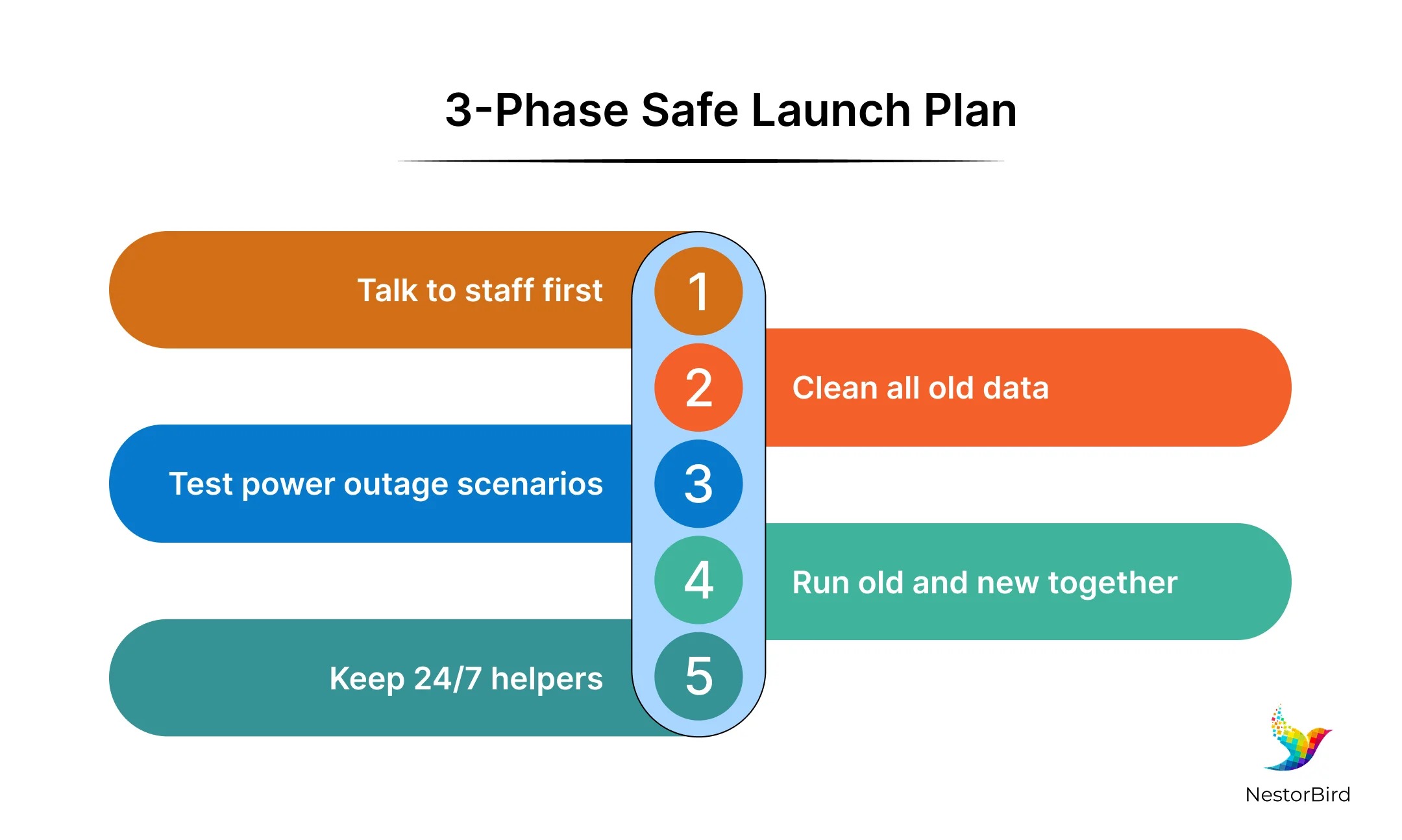
How To Prepare, Test, And Launch Safely
Building a strong hospital information system requires a clear step-by-step plan. Do not rush. Follow these three phases carefully.
Phase 1: Plan before you buy
Talk to your doctors, nurses, and clerks first, and find out what they need and what they fear. This early stakeholder engagement helps you spot resistance before it becomes a problem. List your people, processes, platform, and project tasks.
Phase 2: Test real situations
Do not just check if the software opens, and test what happens during power cuts, server crashes, or network failures. Practice the manual steps your staff will use when computers go down.
Phase 3: Launch with support
Check regulatory compliance at every data entry point. Keep healthcare ERP experts available 24 hours a day for the first two weeks.
Choose from the TOP Hospital Management Software in India 2026.
Conclusion
A hospital information system can either help your hospital run better or create endless problems. The difference comes down to avoiding the common mistakes we discussed. Follow a clear three-phase plan, and when you need a system that works the right way, look for solutions built with real hospital needs in mind. NestorBird offers healthcare ERP tools and hospital workflow management system that reduce these risks. Our approach helps you avoid data errors, staff resistance, and compliance failures from the very first day of hospital information system implementation.

Frequently Asked Questions
Implementation takes 6 to 18 months, depending on hospital size. Small clinics need less time. Large hospitals need more time for data migration and staff training.
Most fail due to poor staff training and resistance to change, not bad software, plus ignoring user needs and weak infrastructure also causes failures.
You can give role-specific training, not generic sessions. Nurses need different training than billing staff. Offer refresher courses after go-live.