
Quick Summary
Mid-sized packaging converters lose money on SAP because the system does not fit their operations. The high SAP implementation cost and hidden fees eat into margins. Many firms wait years to see any returns. A purpose-built packaging industry ERP often delivers better value at a lower cost.
Table Of Contents
Introduction
If you are into the tier 2-3 packaging converters space in the US, you have likely seen it happen. Mid-sized converters sign up for SAP expecting a transformation. Instead, they watch their margins shrink. The system works well for Fortune 500 giants, but it quietly drains money from mid-market manufacturers. This blog post breaks down exactly where your money disappears. We will look at the real SAP implementation cost, the hidden fees no one mentions upfront, and why the total cost of ownership often exceeds the original budget by a large margin.
Key Takeaways
SAP implementation cost starts at $500K and often exceeds $2M.
Maintenance and upgrades double the total spend over five years.
SAP needs costly add-ons for packaging-specific tasks.
Most converters wait 4-5 years to see any ROI.
Purpose-built packaging ERP delivers faster, cheaper value.
SAP Was Never Designed for Mid-Market Packaging
Business owners should understand that SAP’s architecture was mainly built for large companies with big IT departments. These firms have dedicated consultants and can handle multi-year rollout cycles. For a typical mid-sized converter, this setup creates problems from day one. The system does not align well with the realities of flexible packaging, folding carton, or label production. You end up with a configuration mismatch that costs time and money. The gap between a generic system and a proper packaging industry ERP solution leads to operational friction. This friction shows up in lost productivity and higher expenses.
The Configuration Problem
The software expects certain workflows that do not match how packaging plants actually run. Your team spends hours adjusting settings and writing workarounds. This is not a one-time fix. It is a recurring issue that eats into your daily operations.
The Real Cost Range
For Tier 2 – 3 converters, the SAP implementation cost typically falls between $500,000 and over $2 million. This is just the starting point. Many firms do not realize that this number often doubles before the system goes live. The upfront price tag is only the visible part of a much larger financial commitment.
Know more about the Manufacturing ERP System Cost.
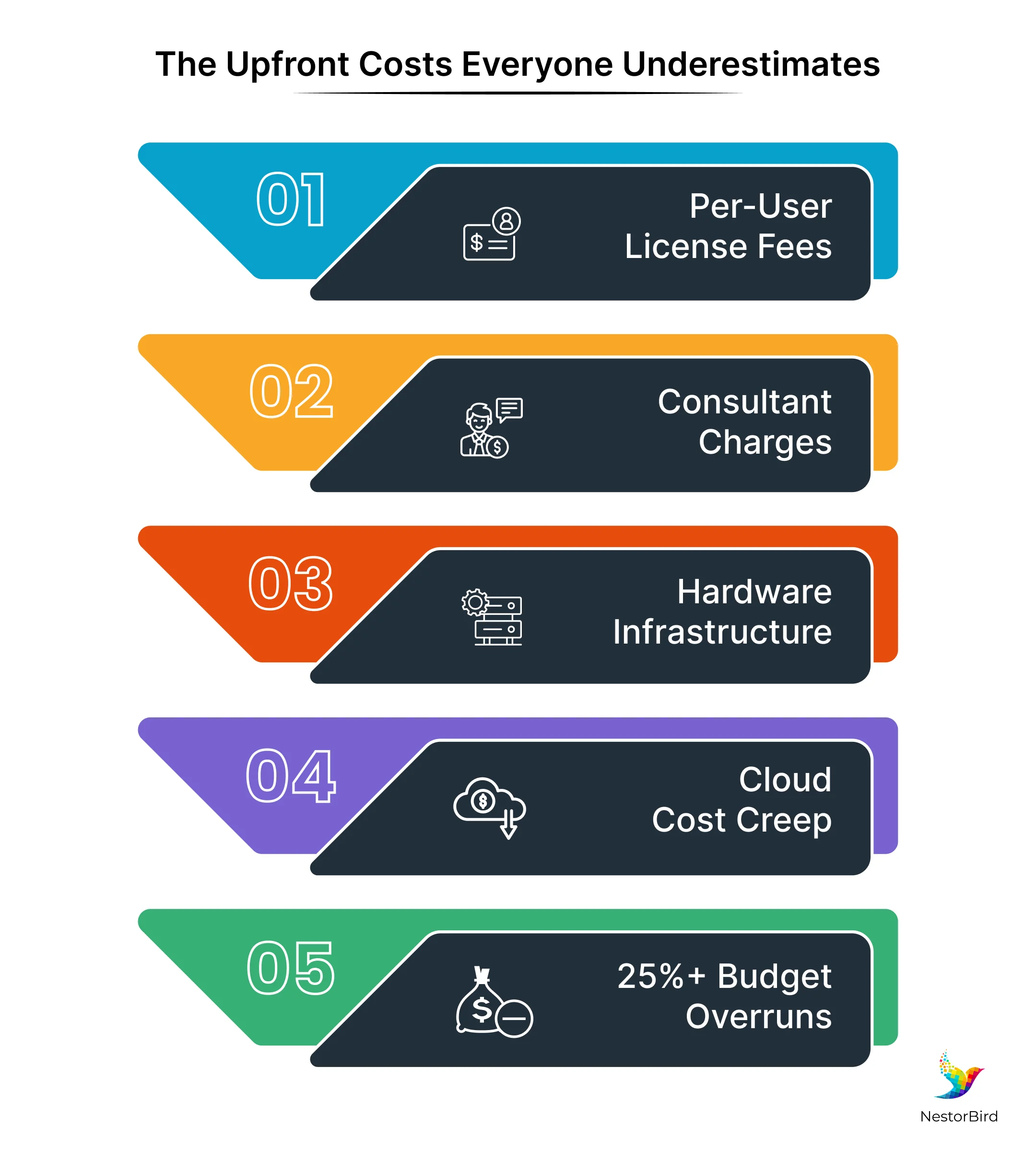
The Upfront Costs Everyone Talks About And Still Underestimates
There are some upfront costs that every buyer knows about. But most converters still underestimate them. The license fees for SAP S/4HANA or SAP Business One are based on per-user pricing. The final quote you receive is often much lower than what you actually pay after negotiations end.
Consultant and systems integrator fees typically run two to three times the license cost. This is where the real ERP implementation cost starts to hurt. For a 75 to 250 employee converter, realistic benchmarks show that the total upfront spend can cross seven figures quickly.
Infrastructure Choices
You also need to decide between on-premise hardware and cloud subscriptions. Cloud costs creep up each month as you add more users and storage. On-premise requires large capital expenses for servers and IT staff.
Budget Overruns
Research shows that 65% of these projects go over budget by 25% or more. At the Tier 2 – 3 scale, this overrun is especially damaging because margins are already tight. Every extra dollar spent on implementation is a dollar taken away from operations. The SAP total cost of ownership begins to look very different from the initial sales pitch.
What SAP Total Cost of Ownership Really Looks Like Over 5 Years
With the initial checks written, many converters forget about the years that follow. The SAP total cost of ownership goes well beyond year one. You pay annual maintenance fees that range from 15% to 22% of your license cost. Then come upgrade cycles that force you to spend again. Module add-ons for basic functions add more charges every year.
Comparing the Options
When you look at ERP total cost of ownership, Oracle NetSuite and Microsoft Dynamics 365 often show lower annual costs for mid-sized manufacturers. The difference becomes clear over five years. It is also worth reviewing how Oracle ERP vs SAP for manufacturing stacks up before you commit.
The Break-Even Problem
The real question is when your Manufacturing ERP ROI turns positive. For a $20M to $80M converter, the math is rough. A 150-employee firm spending $1.6 million on implementation may not break even until year four or five. That is a long time to wait for returns while your competitors move ahead.
Where SAP Fails Packaging Operations and How to Decide If It's Worth It
For your operations to run well, the software must handle daily packaging realities. Packaging industry ERP software should manage ganged press runs, substrate yield loss, roll-to-sheet conversion, and ink management. SAP does not handle these out of the box. Your team ends up maintaining spreadsheets alongside the system.
Production scheduling software for packaging is another pain point. The SAP PP module cannot sequence presses properly. You need expensive third-party bolt-ons to fix this. Now you are double-paying. You pay for the SAP license, plus specialty add-ons, plus integration costs.
Before you commit, look at your revenue size, workflow complexity, and IT team capacity. Your Manufacturing ERP ROI comes from improvements in OEE, scrap reduction, and order-to-cash cycle time. The SAP ERP cost makes sense only for very large companies with simpler production lines.
For most Tier 2 – 3 converters, a purpose-built packaging industry ERP gives faster value at a lower cost. Other options like Microsoft Dynamics 365, Oracle NetSuite, or industry-native platforms often fit your needs better. This is also part of why enterprises are moving from SAP to Odoo.
Conclusion
To sum it up, the SAP ERP cost is often too high for mid-sized packaging firms. The SAP hidden costs and long break-even time make it a risky choice. Most Tier 2 – 3 converters get better results with a packaging industry ERP built for their actual needs. Solutions from NestorBird are designed to fit your operations without the heavy overhead. They help you avoid the costly gaps that SAP creates. By choosing a purpose-built platform, you can protect your margins and get real value faster. The right system should save you money, not drain it.
Frequently Asked Questions
For a Tier 2-3 converter with 75-250 employees, the SAP implementation cost typically ranges from $500,000 to over $2 million. This includes license fees, consultant charges, and infrastructure setup. Most projects exceed this budget.
SAP loses money for packaging firms because the system does not handle industry-specific needs like ganged press runs or substrate yield loss out of the box. Converters then spend heavily on customizations, add-ons, and integrations.
The hidden costs include annual maintenance fees of 15-22% of the license cost, expensive upgrade cycles, and charges for module add-ons. You also pay for consultants, systems integrators, and ongoing customizations. These costs often double the initial investment over five years.