

Quick Summary
Many hospital nursing stations still run on paper and manual methods. This causes wasted time, high staff turnover, and lost money. Moving to digital systems helps nurses focus on patients and reduces hospital costs.
Table Of Contents
Introduction
For hospitals to be able to provide quality care, their internal systems must operate smoothly. Yet, many still use outdated techniques at nursing stations. This reliance on manual nursing workflows leads to hidden issues that can affect budgets and patient safety. The costs of this oversight go far beyond simple inconvenience. In this blog post, we will examine the real financial and operational impacts of continuing to use hospital nursing stations that depend on paper and manual processes, and why change is no longer a choice.
Key Takeaways
Manual nursing workflows cost hospitals money through overtime and staff turnover.
Slow nursing station management causes delays in patient admissions and discharges.
Paper-based systems create compliance risks and expensive fines.
Automating tasks helps nurses spend more time on patient care.
Digital tools improve hospital efficiency and reduce operational costs.
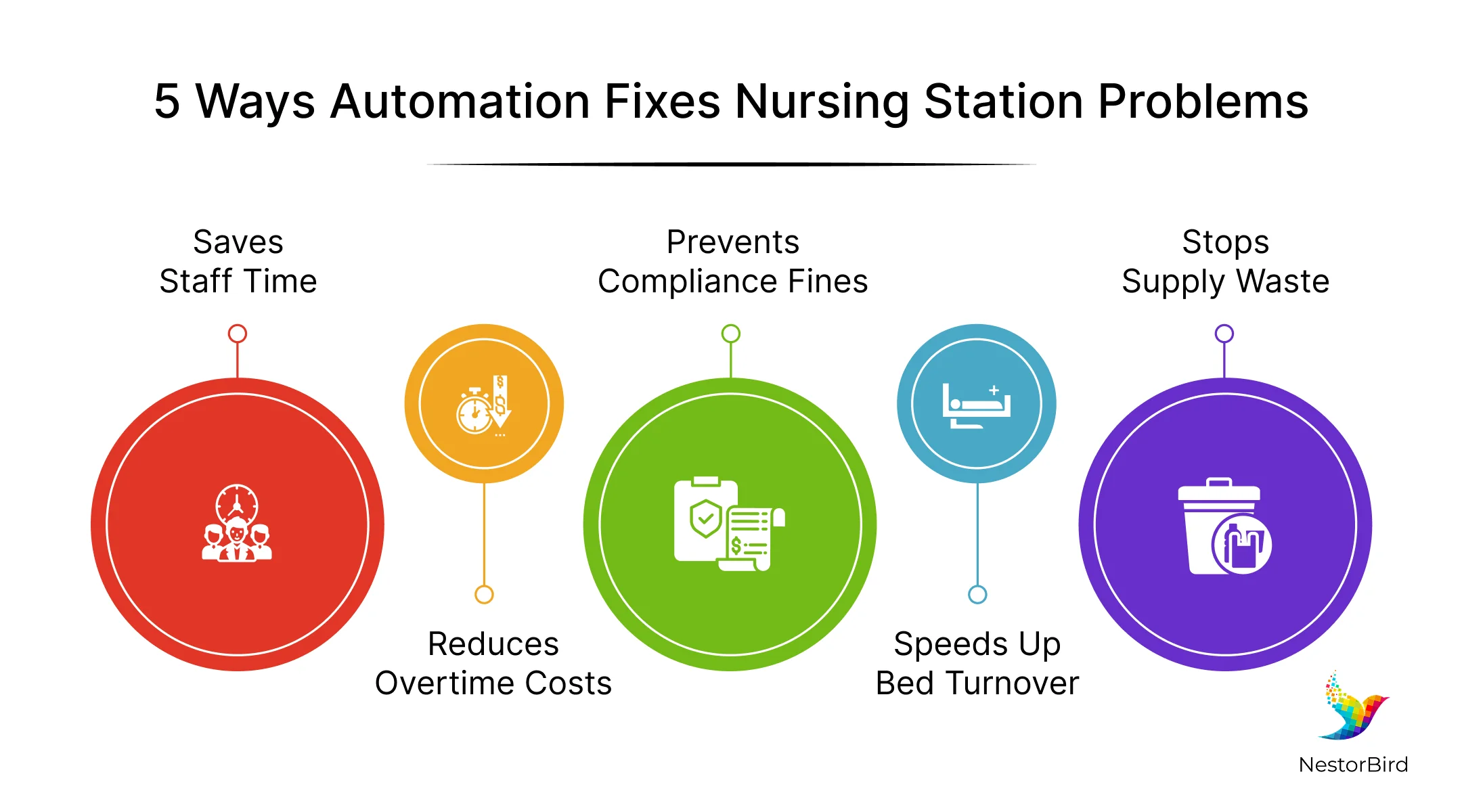
5 Ways Manual Workflows Cost Hospitals Money
So, when we say that almost 70% of the hospitals are still running the nursing stations with paper and manual methods, here is what it actually costs them.
Unpaid Overtime Adds Up
When nurses use manual nursing workflows, they often stay late to finish paperwork. This extra time adds up to large overtime costs. Hospitals pay for hours that do not involve patient care. It is a hidden expense that quietly grows every week.
Nurses Quit and Cost Money to Replace
Administrative chaos at hospital nursing stations makes nurses feel stressed and overworked. When they quit, the hospital must pay to hire and train new staff. Each nurse who leaves can cost the hospital between $40,000 and $80,000 in replacement expenses.
Choose this Healthcare ERP Software 2026.
Fines from Mistakes in Paperwork
Paper-based systems lead to lost forms and missing records. This creates serious risks for privacy rule violations. When an audit finds these errors, hospitals face heavy fines. These penalties are a direct result of not using proper hospital management software.
Slow Bed Turnover Means Less Income
When nursing station management is slow, beds stay dirty longer after a patient leaves. New patients wait hours to be admitted. This means fewer patients are treated each day, and the hospital loses the income those patients would have brought in.
Waste from Poor Supply Tracking
Without digital tracking, the staff does not know what supplies are already in stock. They order extra items they do not need. Supplies expire or get lost in storage. This waste costs the hospital over $100,000 every year in lost money, leading to more challenges.

How Automating the Nursing Station Helps
The better solution to all these challenges is to automate with healthcare ERP and move away from paper and scattered systems. A single digital setup brings everything together. This removes the confusion that comes with using multiple tools at once.
Use One System Instead of Many
Instead of using paper charts, whiteboards, and separate files, hospitals can use one digital platform. This brings all patient details, staff schedules, and bed information into a single place. Hospital automation helps nurses find what they need without searching across different places. Nursing station management becomes simpler and faster.
Staff Scheduling Made Easy
Making shift schedules manually can be time-consuming and frequently causes errors. Digital tools take care of scheduling automatically. They connect the right nurse with the right unit based on what patients need, which cuts down the time managers spend on paperwork. And the nurse workload management for hospitals becomes fair and balanced, improving hospital staff efficiency since no unit is left understaffed.
This is Why healthcare organizations need ERP system.
Automate Repetitive Tasks
Many regular and mundane tasks, like admitting a patient or coordinating discharge, can be done through digital forms and alerts. When these steps are automated, nurses spend less time on paperwork. Clinical workflow optimization happens naturally when delays are removed. Healthcare digital transformation allows nurses to focus on patient care instead of chasing signatures or forms.
The Financial and Practical Benefits of Automation
When this shift in automation happens, hospitals can see a steady and long-term increase in their financial health and daily operations.
Lower Costs and Faster Work
Hospitals that adopt hospital efficiency solutions see administrative costs drop by 30 to 50 percent. Processing tasks like admissions and discharges become 70 percent faster. This means staff spend less time on paperwork. Healthcare operational costs go down because fewer hours are wasted on manual steps.
Happier Staff and Better Care
When nurses are not buried in paperwork, they can focus on patients. This improves nursing staff productivity because their time is used well. Healthcare technology adoption reduces frustration. Staff feel supported and stay longer at their jobs.
Ready for New Improvements and Requirements
Rules and payment models in healthcare keep changing. Hospitals that adopt electronic nursing systems are better positioned to respond to new needs. This healthcare’s digital transformation helps facilities remain compliant with regulations without the last-minute rush to modify outdated practices.
Conclusion
Running hospital nursing stations with paper and manual ways costs hospitals real money and makes staff tired. Hospitals that make this change spend less and take better care of patients. Using the right tools helps nurses do their jobs without chasing papers. Solutions built for nursing station management make this switch easy and work well. NestorBird offers simple digital tools that help nursing stations run smoothly and save money.

Frequently Asked Questions
Manual workflows cost hospitals through overtime pay, high staff turnover, and compliance fines. One facility can lose over $100,000 yearly from wasted staff time and supply waste.
The paper documents can easily be lost or misplaced. A single HIPAA violation may cost a facility anywhere from $100 to $50,000, with severe cases exceeding $100,000.
Automation can cut administrative task time by up to 70 percent. Tasks like admissions and documentation that took 20 minutes can be done in about 13 minutes.