
Quick Summary
Integrating your manufacturing execution system with ERP creates a single platform for planning and production. This eliminates data errors, provides real-time visibility, and improves scheduling. Manufacturers can reduce downtime, lower inventory costs, and make faster decisions with accurate shop-floor data flowing directly to business systems.
Table Of Contents
Introduction
For decades, manufacturers have struggled with a fundamental disconnect. On one side, the enterprise resource planning system manages finances, procurement, and high-level planning. On the other, the manufacturing execution system tracks real-time production on the shop floor. These two systems often operate in silos, creating data gaps, manual errors, and costly delays.
But what happens when you bring them together into a single, unified platform? This blog explores how integrating MES + ERP transforms shop-floor management, turning disconnected operations into a streamlined, intelligent, and responsive manufacturing environment.
Key Takeaways
Integrating MES with ERP gives you real-time shop-floor visibility.
A unified platform reduces manual data entry and eliminates errors.
Better production scheduling leads to less downtime and faster delivery.
End-to-end traceability improves quality and simplifies compliance.
Smart manufacturers choose integrated solutions for long-term growth.
Understanding MES and ERP – Roles and Limitations When Separate
The two types of systems that manufacturers use, a manufacturing execution system and an ERP, serve different purposes and often do not connect well with each other.
A manufacturing execution system focuses on the shop floor. It tracks work orders in real time. It watches machine performance and captures quality data. It also records downtime and production counts. This system helps operators understand what is happening on the line right now.
The ERP system works at a higher level. It acts as production planning software for the whole business. It handles finances, purchasing, and inventory. It also manages high-level scheduling. The ERP tells the shop floor what to produce and when.
Why Separate Systems Create Problems
Without integration, these systems create many problems. Data must be entered twice, which leads to errors and wasted time. The ERP may show one inventory number while the shop floor shows another. Delayed feedback means managers do not learn about problems until it is too late. This limited visibility causes production bottlenecks and excess inventory. For modern ERP for manufacturing, this disconnect is a major weakness, so separate systems cannot keep up with today’s production speed and complexity.
The Power of MES + ERP Integration in One Platform
With the proper MES + ERP Integration, manufacturers can connect planning and execution into one smooth workflow. The ERP system pushes production plans and schedules down to the floor. The manufacturing execution system then carries out those plans and sends real-time data back up. This creates a closed loop where both systems stay in sync at all times.
Better Shop Floor Control
This integration brings major improvements to shop floor management. Managers can see what is happening instantly. They can spot machine problems early and reduce down time. They can also track every batch of products from start to finish. This makes it easier to respond when orders change or issues arise.
Unified Platform Works Best
A single unified platform works better than connecting two separate systems with custom code. It simplifies the overall setup. It also reduces errors and speeds up implementation. This is what good factory management software should do. The integration also enables industry 4.0 manufacturing process automation, which reduces manual work and improves production scheduling accuracy. For modern ERP for Manufacturing, this unified approach is the smartest choice.
Choose the Best ERP for Manufacturing Industry in India.
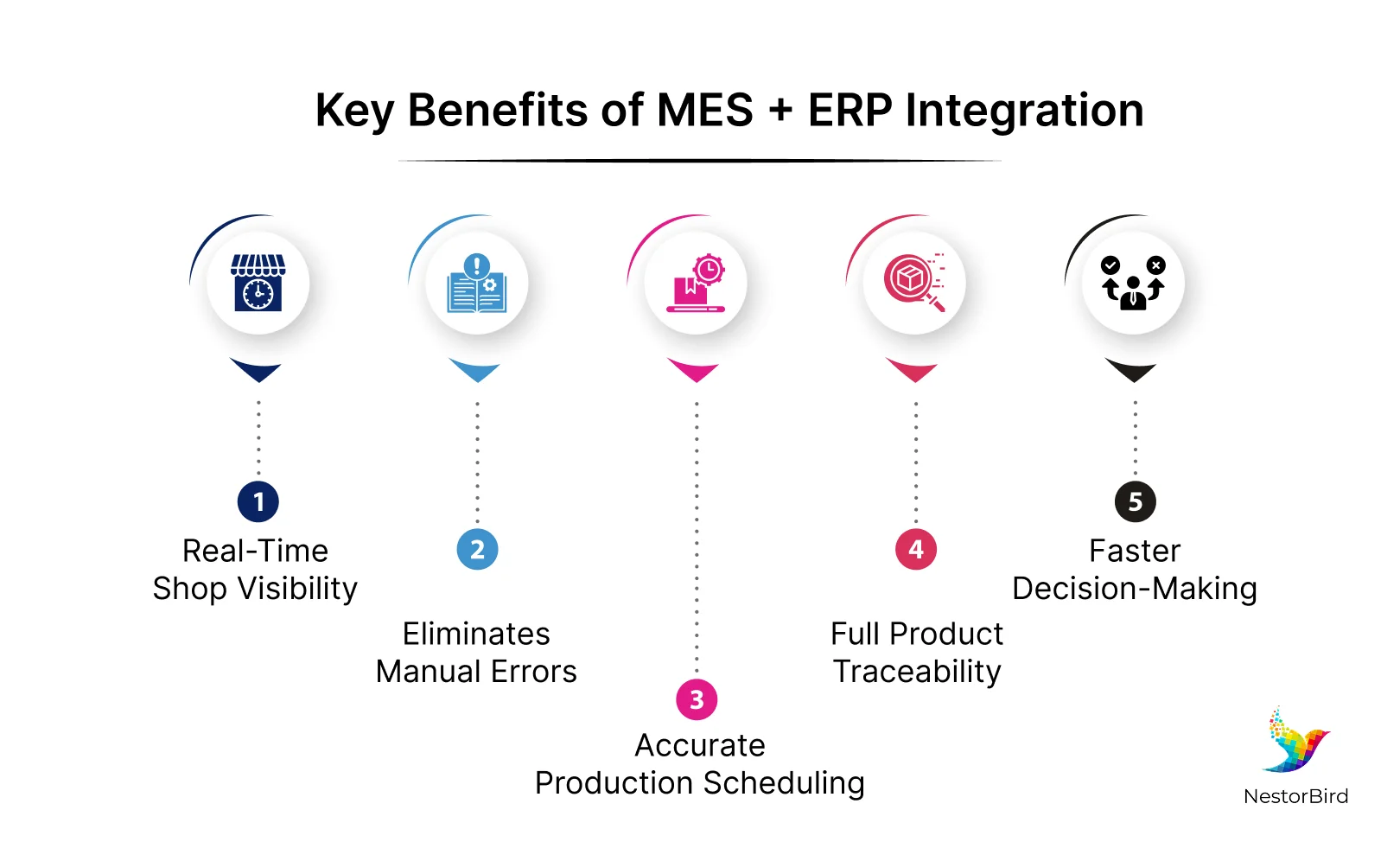

Key Benefits and How It Solves Real Customer Challenges
There are many benefits of bringing these systems together. Here are the key advantages that solve real problems for manufacturers.
1. Lower Costs and Better Efficiency
Real-time data removes the need for manual data entry. This saves time and reduces errors. It also improves inventory management by keeping stock levels accurate. Less waste means lower material costs. Equipment runs better with fewer unexpected stops.
2. Clear Visibility for Better Decisions
Live insights from the shop floor help managers make smarter choices. They can see problems as they happen. This supports better production scheduling because plans are based on actual conditions. Forecasting also becomes more reliable with accurate data.
3. Better Quality and Full Traceability
The end-to-end tracking improves manufacturing operations management. Every product can be traced from raw material to finished goods. If a quality issue appears, it is easy to find the root cause. This helps meet compliance requirements and maintain high-quality standards.
4. Fast Response to Changes
Integrated systems help manufacturers adapt quickly. When customer orders change, the shop floor adjusts without delay. This supports digital manufacturing transformation by making the whole business more flexible. The system can also connect with sensors and IoT devices.
5. Supports Growth and Modernization
The unified platform scales with the business. It handles more products, more machines, and more data as the company grows with manufacturing process automation. This is what smart manufacturing solutions provide. Manufacturers can adopt new technology without replacing their core systems.
Implementation Considerations and Best Practices
You should assess your current systems first and understand what data you have and what gaps exist before choosing any new platform.
Plan for a gradual rollout, and then start with one production line or facility before expanding to the entire operation.
You can involve the cross functional teams early. Include people from production, IT, and finance to cover all needs.
Focus on clear ROI metrics. Track reduced downtime, improved on time delivery, and lower inventory costs.
You should train your people properly. Even the best manufacturing execution system fails without skilled operators who understand it.
Conclusion
Bringing your manufacturing execution system and ERP together into one platform solves many everyday problems. It removes data errors, gives you real-time visibility, and helps you make better decisions. This integration makes your shop floor more efficient and your business more responsive to change. If you are looking for a reliable solution, consider NestorBird. We build unified platforms that connect production, inventory, and quality control in one place. Our systems are designed for complex manufacturing operations and help businesses streamline their workflows effectively.

Frequently Asked Questions
ERP manages business planning, finances, and inventory at a high level. MES focuses on real-time shop floor execution, tracking work orders, quality, and machine performance.
Integration eliminates manual data entry and errors. It provides real-time visibility from the shop floor to the office, enabling faster decisions, better scheduling, and accurate inventory tracking.
The integrated system uses real-time machine and material data to create achievable schedules. It adjusts plans instantly when delays or changes occur, reducing downtime and improving on-time delivery.
Manufacturers see reduced manual work, lower inventory costs, better quality, and improved on-time delivery. Many companies recover their investment within 12-18 months.