
Quick Summary
Pharmaceutical batch release confirms that a manufactured batch meets its defined quality requirements and has the required records and approvals. The process includes reviewing production documentation, checking quality-control results, resolving deviations, and completing quality-assurance review. Pharmaceutical manufacturing software can help teams organize batch records, track status, improve traceability, and make review workflows easier to manage.
Table Of Contents
Introduction
A pharmaceutical batch is not ready for distribution simply because production is complete. Before release, the manufacturer must confirm that the batch meets its specifications, required testing is complete, records are accurate, and authorized personnel have reviewed the evidence. A clear batch release process helps teams protect product quality, maintain traceability, and avoid preventable delays. This guide explains the key checks, documentation, approvals, and ways pharmaceutical manufacturing software can support the process.
Key Takeaways
Batch release confirms that a batch meets applicable quality requirements before it is released.
Quality Control (QC) checks test results against approved specifications.
Quality Assurance (QA) reviews records, deviations, and required approvals before making or authorizing the release decision.
The Batch Manufacturing Record (BMR) and supporting documents must be complete, accurate, and reviewable.
Digital workflows can improve visibility into batch status, missing records, review progress, and traceability.
Software supports the process, but it does not replace qualified personnel, approved procedures, or regulatory obligations.
Understanding the Pharmaceutical Batch Release Process
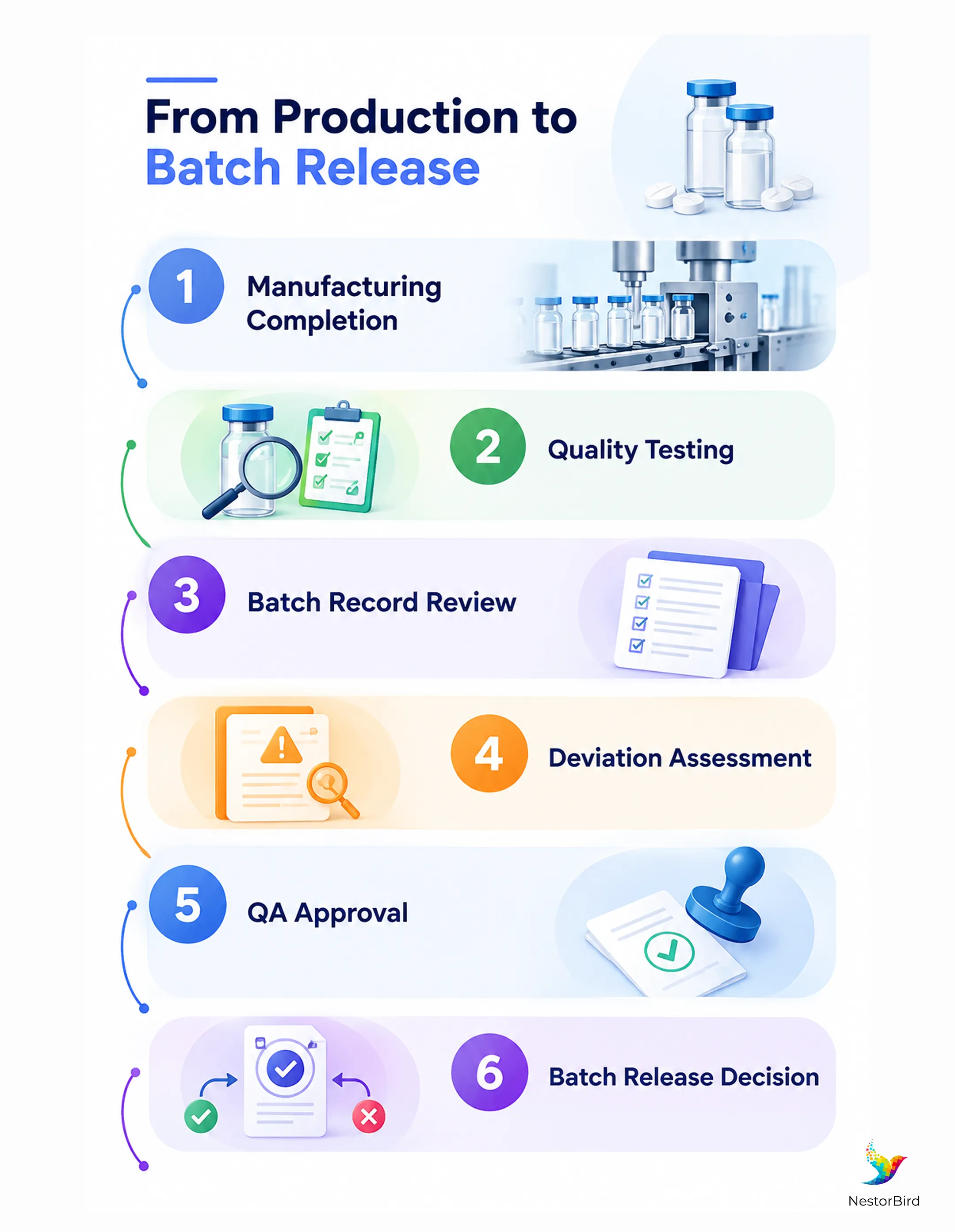
Pharmaceutical batch release is the controlled review and approval process used to determine whether a manufactured batch can move to the next stage, such as distribution. The precise steps depend on the product, manufacturing process, quality system, and applicable regulations. In general, the process includes the following stages: For related context on pharmaceutical production management, see how production workflows can be organized.
Complete manufacturing: Production activities are finished and the relevant process information is recorded.
Complete testing: Required in-process and finished-product tests are performed, and results are checked against approved specifications.
Review batch records: The BMR and supporting records are checked for completeness, consistency, and required entries.
Assess deviations: Discrepancies, deviations, and investigations are reviewed and handled according to approved procedures.
Complete QA review: Authorized quality personnel confirm that the required evidence and approvals are in place.
Record the release decision: The batch status and final decision are documented. A batch should not be released until applicable requirements have been met.
Essential Quality Checks in Pharmaceutical Manufacturing
Quality checks help establish whether a batch conforms to its approved requirements. The exact checks vary by product and process, but commonly include:
In-process checks: Confirm that relevant process parameters and manufacturing steps were monitored and recorded.
Laboratory testing: Review required test results for raw materials, in-process samples, and finished products, as applicable.
Specification review: Compare results with approved acceptance criteria and investigate results that do not meet requirements.
Equipment and process records: Check that required equipment, calibration, cleaning, and process records are available and acceptable.
Deviation review: Confirm that deviations and unexpected results have been assessed and addressed through the quality system.
QC and QA have related but different responsibilities. QC performs or oversees testing and evaluates results. QA reviews the wider quality evidence, including records and deviations, and ensures the release decision follows approved procedures.
Batch Documentation in Pharma: What Needs to Be Reviewed?
Batch documentation provides the evidence that manufacturing and quality activities were performed as required. Incomplete or inconsistent records can delay review because the team may need to investigate gaps before a release decision can be made.
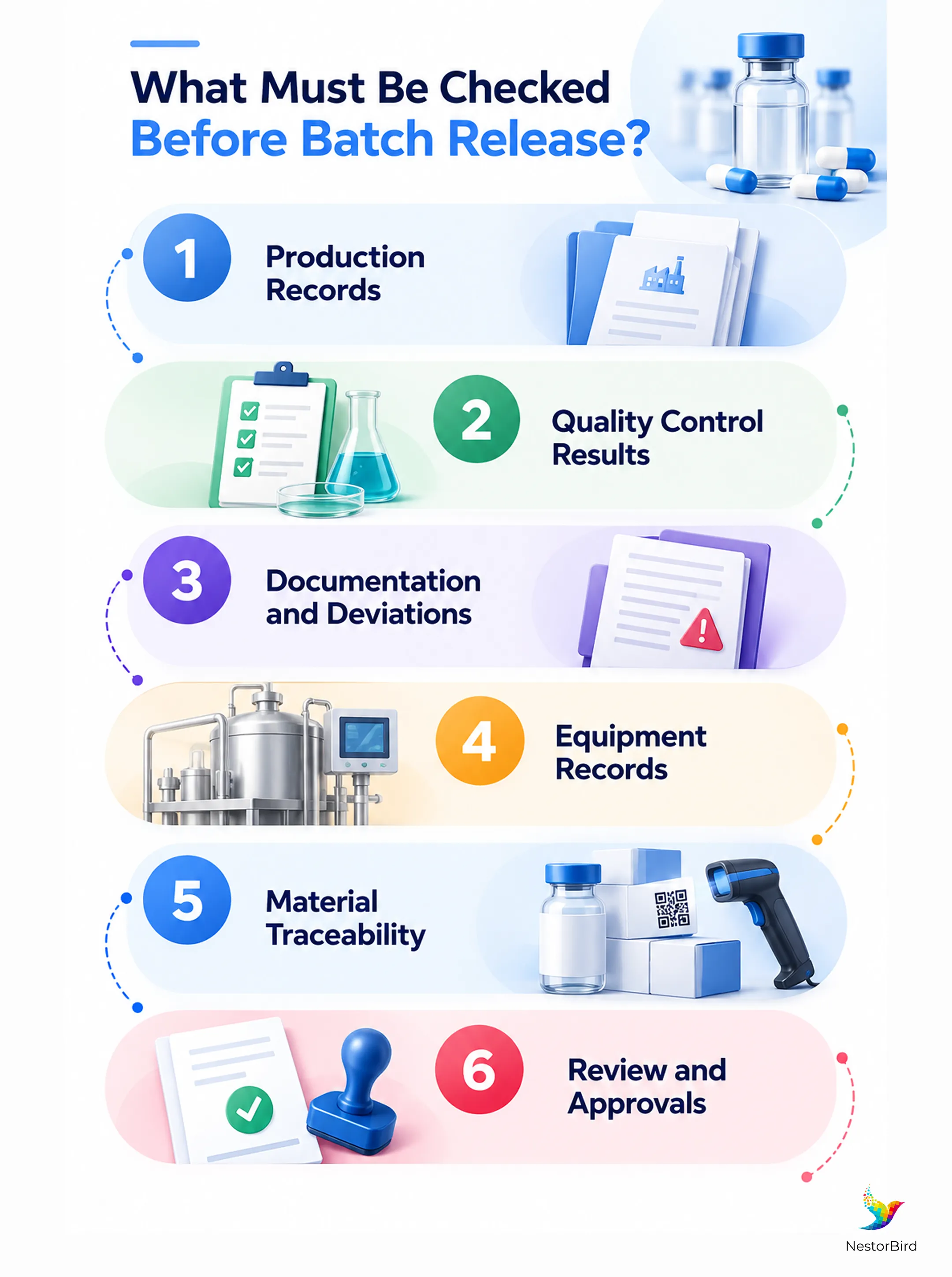
Key records to review
Batch Manufacturing Record (BMR), including required production entries and checks.
Material dispensing, usage, and reconciliation records, where applicable.
In-process and finished-product test results.
Equipment, cleaning, and relevant environmental or process records, as applicable.
Deviation, investigation, and corrective-action records, where required.
Review signatures, timestamps, approvals, and other required documentation.
A batch record review should check that entries are complete, legible, consistent, attributable, and supported by the relevant evidence. Any correction or missing information should be handled under the site’s approved documentation procedures. Records should not be completed retrospectively in a way that obscures what actually occurred.
The Role of Pharmaceutical Manufacturing Software in Batch Release
Pharmaceutical manufacturing software can help teams organize production information and make batch review status easier to follow. When configured to the organization’s approved processes, it may support: A suitable pharmaceutical ERP software solution may also connect manufacturing, inventory, quality, and reporting workflows. A suitable pharmaceutical ERP software solution can connect manufacturing, inventory, quality, and reporting workflows.
Centralized batch information: Bring relevant production, material, and quality records together for easier review. Teams can also compare pharmaceutical manufacturing software options against their specific operational requirements.
Record completeness checks: Make missing fields or outstanding tasks more visible.
Workflow visibility: Show which review or approval steps are pending, in progress, or complete.
Traceability: Help users follow batch-related records and relevant changes, subject to system configuration and controls.
Deviation tracking: Link deviations and investigations to the relevant batch records where supported.
Reporting: Provide a clearer view of batch status and recurring process bottlenecks.
Software capabilities differ by product and implementation. Teams should verify that the chosen system supports their actual workflows, access controls, audit-trail needs, validation approach, and applicable regulatory requirements. Digital tools support controlled processes; they do not automatically establish compliance. Teams comparing solutions can review pharmaceutical manufacturing software to understand the broader capabilities relevant to their operations.

Common Challenges in the Pharmaceutical Batch Release Process
Incomplete records
Missing entries, signatures, or supporting evidence can prevent reviewers from completing the batch review.
Delayed test results
Release can be held up when required laboratory results are not available or need further assessment.
Unresolved deviations
Open investigations or unclear corrective actions may require additional review before a decision.
Fragmented information
When production and quality records are spread across disconnected systems or files, reviewers may spend extra time gathering evidence.
Limited status visibility
Without a clear view of pending tasks and approvals, teams may struggle to identify the cause of a delay.
Best Practices for an Effective Batch Release Process
Define responsibilities: Make it clear who records production data, reviews test results, assesses deviations, and authorizes release. Well-connected pharmaceutical manufacturing workflows can support coordination when configured for the site's processes.
Use standardized procedures: Maintain approved procedures and consistent documentation practices across relevant teams.
Review records promptly: Check documentation and resolve gaps as work progresses instead of waiting until the end of the process.
Track deviations to closure: Follow approved procedures for investigation, assessment, and required corrective actions.
Make batch status visible: Use a consistent way to identify batches awaiting testing, documentation, review, or a release decision.
Train users: Ensure production, QC, and QA personnel understand their responsibilities and documentation requirements.
Assess digital systems carefully: Confirm that software workflows, permissions, records, and traceability features match the organization's quality-system needs.
Conclusion
An effective pharmaceutical batch release process depends on reliable testing, complete batch documentation, clear responsibilities, and a documented quality review. When records are scattered or review steps are difficult to track, release decisions can take longer than necessary. Pharmaceutical manufacturing software can improve visibility and help organize batch-related information, while approved procedures and qualified quality personnel remain central to the final decision. The best approach is one that makes the evidence clear, traceable, and ready for review.

Frequently Asked Questions
It is the documented review and approval process used to confirm that a batch meets applicable requirements before release.
Complete manufacturing and testing, review batch records, assess deviations, complete QA review, and document the release decision.
Checks may include in-process inspections, laboratory results, specification review, equipment or process records, and deviation assessment.
A BMR records the materials, steps, checks, and results associated with manufacturing a specific batch.
It helps confirm that manufacturing and quality activities are documented, consistent, and supported by the required evidence.
QC performs or oversees required testing and evaluates whether results meet approved specifications.
It can organize batch information, highlight pending tasks, track review status, and improve traceability when properly configured.
Common records include the BMR, test results, material records, relevant equipment records, deviations, investigations, and required approvals.
A suitable ERP system can connect relevant batch, material, production, and quality records, depending on its configuration and controls.