

Quick Summary
Healthcare ERP software helps hospitals connect finance, supply chain, and clinical operations in one system. This reduces manual work, improves accuracy, and saves staff time. Choosing the right ERP solution for your organization leads to smoother daily operations and better resource management across all departments.
Table Of Contents
Introduction
If you are feeling overwhelmed choosing the right and most suitable ERP solution for your healthcare organization, we understand. Managing finances, medical supplies, staff schedules, and patient records often becomes challenging when different systems are not properly connected. This chaos leads to wasted time, compliance risks, and higher operational costs. The right healthcare ERP software connects everything into one unified platform, helping hospitals run smoothly and securely. In this blog post, we break down the ten best ERP solutions for hospitals to help you find the right fit for your organization’s unique needs.
Key Takeaways
ERP connects finance, supply chain, and clinical operations.
The right system reduces manual paperwork.
Cloud ERP offers flexibility and lower upfront costs.
Integration with EHR ensures smooth data flow.
Choosing the right vendor impacts long-term success.
10 Best ERP Software Solutions for Healthcare
Now, let us look at ten reliable options that can help your organization run better and serve patients more effectively.
1. NestorBird- Best unified platform for operational visibility
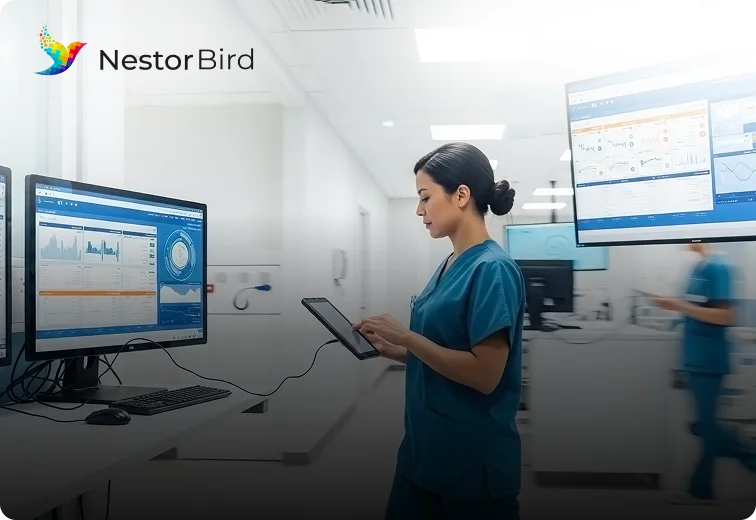
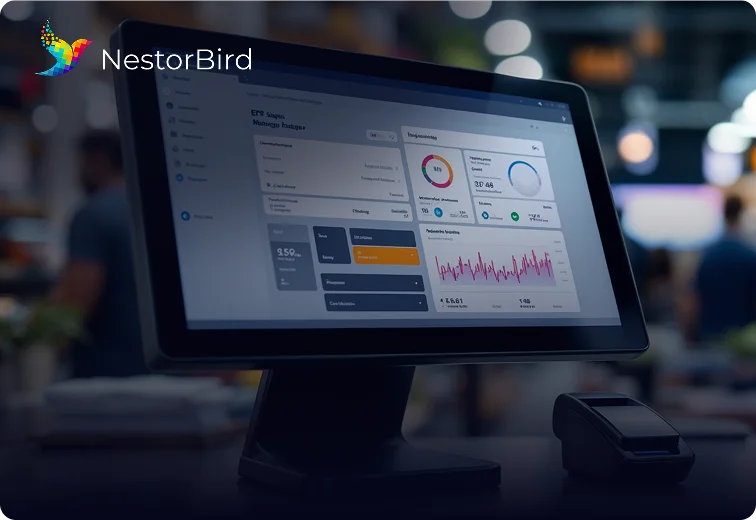
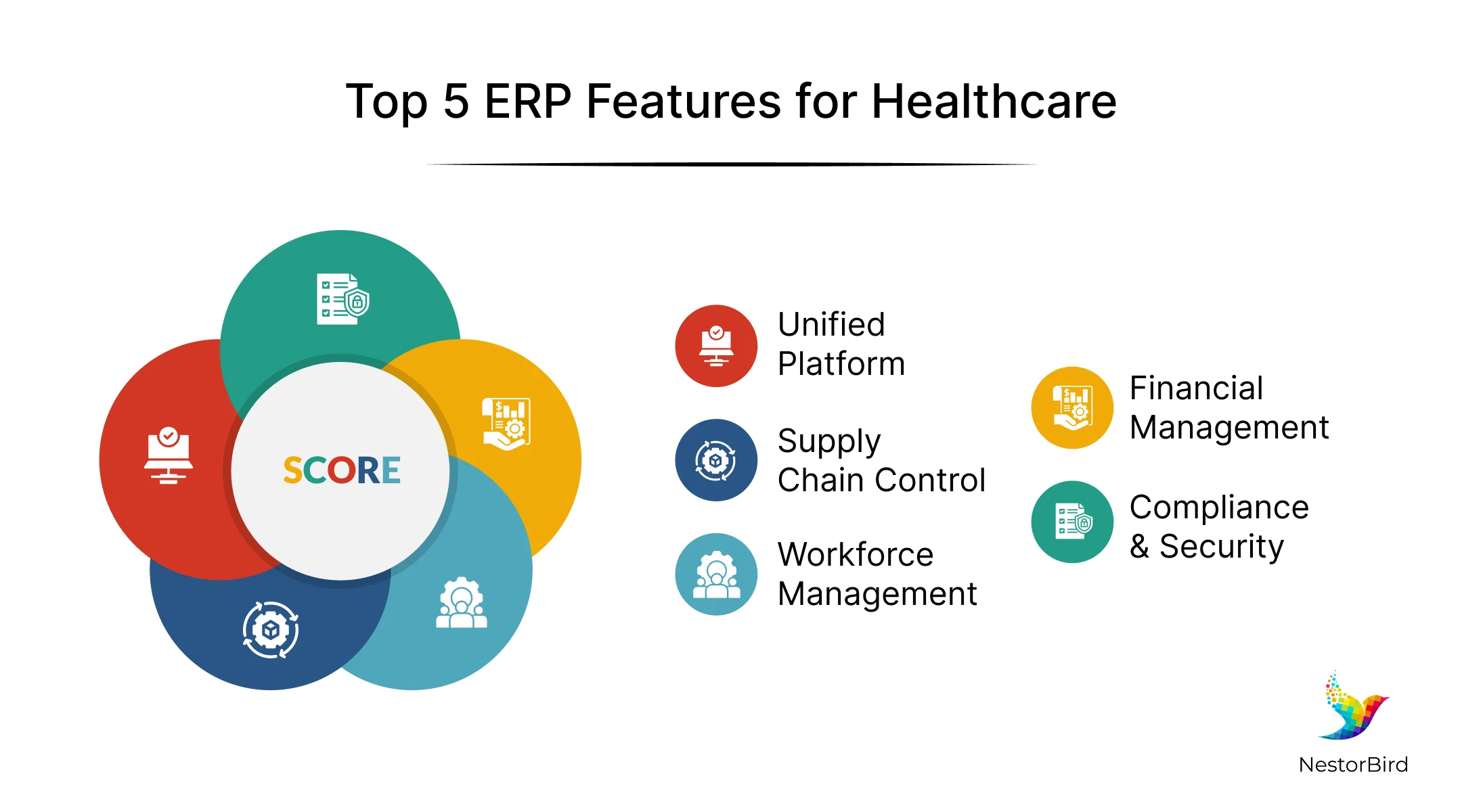
NestorBird brings together financial and operational data into one simple platform, helping organizations move away from disconnected systems. Leaders gain clear visibility into daily operations for faster decisions. This healthcare ERP software functions as true hospital management software that keeps all departments aligned and working efficiently.
2. Infor CloudSuite Healthcare- Best for supply chain management
This platform helps hospitals track medical inventory from order to patient use with great accuracy. It matches clinical needs with available supplies to reduce waste and ensure staff have what they need. Strong clinical workflow management features and healthcare enterprise software capabilities support large-scale inventory control across multiple facilities.
3. Oracle ERP Cloud- Best for academic medical centers
Oracle handles complex project accounting, grants management, and budget tracking in one place for large research hospitals. Institutions manage research funding without switching between applications. The patient data management software keeps research organized, while hospital resource planning supports effective allocation across clinical and administrative departments.
4. SAP S/4HANA- Best for large multi-site health systems
SAP manages complex financial reporting, procurement, and compliance for health systems across multiple locations. Organizations choose this when they need a system that scales with size and handles strict regulations. It ranks among the best ERP systems for healthcare and delivers comprehensive healthcare IT solutions for enterprise operations.
Check out this encounter-centric design in healthcare.
5. Sage Intacct- Best for community hospitals and clinics
It is a cloud-based financial management solution ideal for community hospitals and specialty clinics. Sage Intacct automates core accounting processes and gives finance teams real-time visibility into revenue and expenses. The medical practice management software helps smaller organizations run their finances efficiently without needing large IT teams.
6. Microsoft Dynamics 365-Best for organizations already using Microsoft tools
This platform connects finance, operations, and sales data into one view, working well with Microsoft products like Office and Teams. These healthcare automation tools scale easily as your organization grows. It functions as reliable hospital efficiency software and serves as strong ERP for medical organizations seeking familiar technology that teams already know.
7. Epic Systems (ERP Modules)- Best for Epic EHR users seeking integration
Epic offers ERP modules that integrate tightly with its electronic health records. Hospitals manage resources based on actual patient volumes and scheduled procedures. The healthcare software implementation process is smoother for existing users, and clinical workflow management benefits come from having clinical and operational data together.

8. Workday- Best for workforce and HR management
This software combines financial management and human resources into a single system for large healthcare organizations. It provides workforce analytics to manage staffing levels, track credentials, and control labor costs. This focus on hospital resource planning ensures staffing aligns with needs, supported by strong healthcare IT solutions for workforce management.
This is Why healthcare organizations need ERP system.
9. NetSuite- Best for growing hospital groups
NetSuite manages financials, inventory, and billing in one unified system for growing hospital groups and surgery centers. Organizations expanding across locations keep all operations under a single view. It serves as a complete healthcare enterprise software and includes strong medical practice management software features for multi-location oversight.
10. Avelios Medical / VRTCL Medical Suite- Best for combining clinical and ERP functions
These solutions combine clinical and operational functions into one integrated system built on SAP technology. They help organizations manage patient care and back-office operations without maintaining separate systems. The unified healthcare ERP software design and patient data management software capabilities ensure information flows securely between clinical and administrative teams.
How ERP Impacts Staff and Patients
For Clinicians: A good hospital management software system reduces the time nurses and doctors spend on paperwork. Instead of typing data into multiple screens, they can focus on patient care. Mobile-friendly interfaces help them check schedules and update records from anywhere.
When administrative tasks become simpler, clinicians experience less burnout and can dedicate more attention to those who need them most. This improvement in clinical workflow management directly benefits both staff satisfaction and patient outcomes.
For Finance Teams: Finance teams no longer need to spend hours matching data across spreadsheets. A unified healthcare ERP software platform gives them real-time visibility into cash flow, supply costs, and revenue.
This allows them to move beyond basic bookkeeping and become strategic partners who guide the organization toward better financial health. The result is improved hospital efficiency software capabilities that help control costs without compromising care quality.
For Leadership: Leaders need clear data to make decisions about where to invest resources. Real-time analytics powered by patient data management software show which services are profitable and where costs can be reduced.
This visibility helps leadership allocate staff, equipment, and budget more effectively across departments. Strong hospital resource planning ensures that decisions made at the top lead to smoother operations and better outcomes throughout the organization.
Conclusion
Choosing the right software for your hospital or clinic is a big decision. The right system helps you manage finances, track supplies, and reduce paperwork so your staff can focus on patient care. When looking for a solution that brings all your data together in one place without complexity, NestorBird offers a clean, intuitive platform built specifically for healthcare operations. A well-chosen system makes daily work easier for everyone and helps your organization run more smoothly.
Frequently Asked Questions
Cloud ERP offers lower upfront costs and automatic updates. On-premise gives full control. Most hospitals now choose the cloud for flexibility and reduced IT maintenance burden.
Your ERP must support HIPAA for data privacy, maintain audit logs, and provide role-based access controls. These ensure patient information stays protected and secure.
Yes, most modern ERP systems offer APIs and HL7 standards to connect with EHR platforms. This integration ensures patient and operational data flow seamlessly.