

Quick Summary
Doctors spend too much time on paperwork and jumping between different systems. This blog explains how encounter-centric design fixes these daily struggles. It shows how better clinical workflow management and modern hospital management software can automate routine tasks and bring all patient data into one simple view. The result is less burnout and more time with patients.
Table Of Contents
Introduction
If you take a look at a doctor’s chaotic and exhausting day, you will find them buried under paperwork and clicking through multiple screens instead of focusing on patients. This happens because the current clinical workflow management systems are outdated and fragmented. In this blog post, we will explain how encounter-centric design fixes this problem. We will show how modern hospital management software can simplify tasks and automate routine work through smarter healthcare workflow redesign.
Key Takeaways
Clinical workflow management is broken today.
Too many systems cause daily stress.
Encounter-centric design puts data in one view.
Healthcare automation software saves hours.
Better tools mean more time with patients.
Why Doctors Struggle With Daily Workflows
For doctors and physicians, it can be challenging to complete their daily tasks smoothly because the systems they use are not designed well. Understanding these daily struggles is the first step toward better doctor journey optimization.
Deal with Too Much Paperwork: Doctors spend hours typing notes and filling forms after seeing patients. This clerical work leads to exhaustion and less time with patients. The main reason is poor healthcare workflow redesign that still relies on manual data entry instead of smart automation.
Constantly Shuffling Between Different Systems: A doctor often uses one system for patient records, another for lab reports, and a separate tool for appointments. Constantly switching between these screens creates mental fatigue. These are common doctor workflow challenges that pull attention away from the person sitting in front of them.
Slow Manual Tasks: Simple tasks like getting approval for a test, renewing a prescription, or booking a follow-up visit take too long when done manually. These everyday delays add up quickly. Such repetitive work is a perfect fit for healthcare automation software to handle instantly.
Learn the benefits of ERP in the healthcare industry.
Why Quick Fixes Don't Solve the Real Problem
To improve efficiency and workflow, doctors need to take an honest look at why quick fixes keep failing. Many hospitals try to solve problems by adding a new app here or a new dashboard there. But this approach often adds to the confusion instead of fixing it. True clinical workflow improvement cannot happen with scattered tools. It requires a complete view of how work actually flows through the day.
What Encounter-Centric Design Really Means
A better way is to design hospital management software around the doctor-patient meeting itself. Instead of making doctors hunt for information, the right details appear automatically when needed. The system understands what happens during a visit and supports it naturally. This shift in thinking is a true example of healthcare process innovation that puts the doctor’s actual work first.
Always choose a unified patient journey in hospitals.

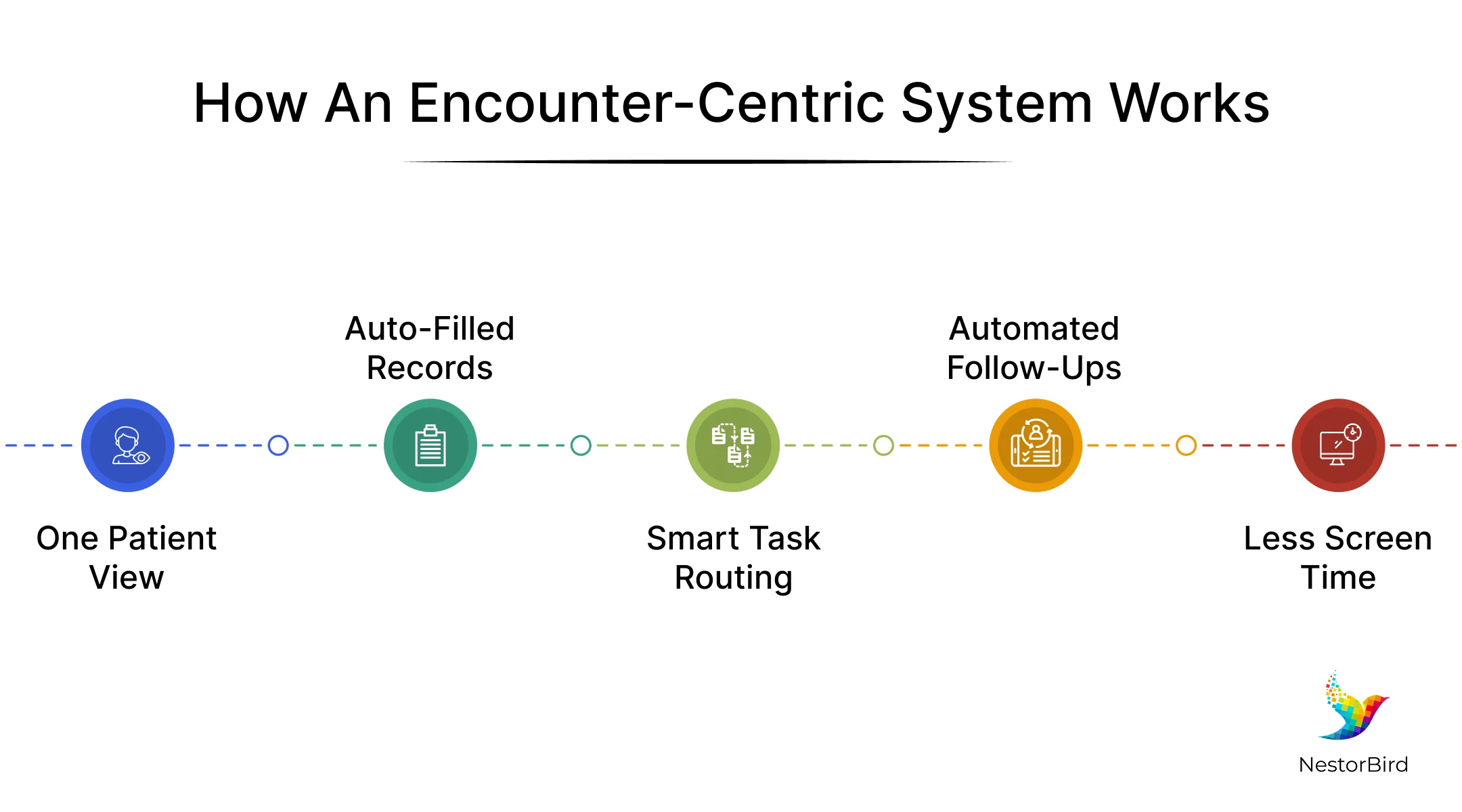
How an Encounter-Centric System Actually Works
This is how you can achieve an encounter-centric approach with the right technology. Modern tools bring everything together in one place so doctors can focus on patients instead of screens.
All Patient Information in One Place
Cloud-based hospital software pulls medical history, lab results, and reports into a single view. Doctors no longer need to open multiple tabs or search through old files. Everything appears automatically when they need it. This is what smarter clinical workflow management looks like in practice.
Tasks That Happen Automatically
When a visit ends, the system takes over routine work. Discharge instructions go to the patient, follow-up labs are scheduled, and prescriptions reach the pharmacy without manual effort. This is healthcare automation software working behind the scenes to save time.
Messages That Reach the Right Person
Patient messages no longer pile up in one inbox. The system reads and routes each query to the correct team member. Nurses handle basic questions while doctors only see complex medical issues. This smart healthcare system reduces inbox clutter and prevents delays.
Learn more about healthcare ERP.
Easy Ways to Make the Doctor Journey Smoother
Here are some easy tips for doctors to reduce daily stress and work more efficiently. These small changes can make a big difference in how care is delivered.
Choose hospital management software that keeps all patient data in one dashboard so you stop switching between different apps throughout the day.
Automate prescription refills and appointment reminders so routine tasks happen without you touching a keyboard. This is how healthcare automation software saves real time.
Set up message routing so patient queries go directly to nurses or front desk staff first. You only see what truly needs your medical attention.
Use templates for common visit types to cut down on typing the same notes repeatedly. This simple step improves clinical workflow management instantly.
Review your current tools every few months and remove anything that creates extra clicks or duplicate work. A cleaner system means a smoother day.
Conclusion
Understand that fixing the doctor journey means improving the doctor experience, which leads to better care for everyone. Modern hospital management software simplifies processes, allowing doctors to engage in medicine again. Design centered around the patient ensures they are prioritized while systems remain in the background as they should.
If you are looking for tools that actually understand how doctors work, explore solutions from NestorBird. Our platforms are built specifically for complex healthcare settings. The focus is on smoothing out daily workflows so doctors can implement and use the software better and start focusing on their patients.

Frequently Asked Questions
It means building software around the doctor-patient meeting. Everything the doctor needs appears automatically during the visit instead of requiring searches across multiple screens.
When doctors spend less time on paperwork and clicking through screens, they have more time to actually listen and talk to patients. This leads to better attention and fewer mistakes.
Yes. Cloud-based options have made powerful tools affordable for small practices too. Many vendors offer flexible pricing based on clinic size and needs.
Yes. Reputable providers follow strict security rules and use encryption to protect patient information. Always check for compliance with healthcare regulations.
You can start by listing your biggest daily challenges, then ask vendors specifically how their healthcare system solves those exact problems during a live demo.