
Quick Summary
The e-way bill for garment exporters is an important part of managing the movement of export goods within India. Garment businesses must coordinate GST invoices, e-invoicing, shipping documentation, LUT requirements and transport details accurately. A structured compliance process helps reduce errors, prevent delays and maintain consistency between commercial, GST and customs records.
Table Of Contents
Introduction
For garment exporters, moving goods from a factory or warehouse to a port, airport, inland container depot or other designated location involves more than simply arranging transportation. e-way bill for garment exporters requirements need to work alongside GST invoicing, e-invoicing, customs documentation and export procedures. The right process creates a connected compliance trail from dispatch to export. In 2026, keeping these records accurate and consistent is especially important as GST systems continue to become more digitally integrated. For exporters looking to connect production, inventory, documentation, and shipment processes, garment export ERP software can provide a centralized operational workflow.
Key Takeaways
Check whether an e-way bill is required before moving export-related goods.
Keep GST invoices, transport information and export documentation consistent.
Use the correct export treatment, including export under LUT where applicable.
Verify HSN codes, invoice values, quantities and transport details before dispatch.
Understand how the IRP, e-invoice and e-way bill systems interact.
Maintain a clear audit trail from manufacturing through shipment and export.
Use technology to reduce repeated manual data entry and compliance errors.
Understanding e-Way Bill Compliance for Garment Exporters
An e-way bill is designed to document the movement of goods and provide a digital trail associated with that movement. Under the GST rules, registered persons generally need to furnish prescribed information before movement when the consignment value exceeds ₹50,000, subject to applicable provisions and exceptions. The person responsible for the movement may need to generate the e-way bill, while the transporter must carry the relevant invoice or document and e-way bill details during transportation.
When Is an e-Way Bill Required?
The requirement depends on the nature and value of the movement and the applicable GST provisions. Before dispatch, exporters should verify the transaction type, consignment value, transportation mode, origin, destination and supporting documents.
Confirm the applicable GST document.
Verify the consignment value.
Check the movement details.
Confirm transporter information.
Generate the e-way bill before movement where required.
Ensure the invoice and e-way bill contain matching information.
e-Way Bill for Export of Goods
The e-way bill for export of goods should be viewed as one component of the larger export documentation chain. Exporters should avoid treating it as an isolated compliance requirement because discrepancies between the invoice, e-way bill, shipping documentation and other records can create avoidable operational problems.
Garment exporters should therefore establish a process where dispatch teams, finance teams, logistics teams and export documentation teams work from consistent transaction data.
GST Compliance for Garment Exporters
GST compliance for garment exporters involves several connected areas, including export invoicing, tax treatment, e-invoicing where applicable, LUT, refund documentation and record maintenance. A connected apparel ERP can help bring operational and financial information into a more centralized system. The export invoice must contain prescribed information, and GST invoice rules provide specific endorsement requirements for exports made with payment of IGST or under bond/LUT without payment of IGST.
Export Invoice Under GST
An export invoice under GST should contain the prescribed export-related particulars, including the destination and applicable export endorsement. HSN classification is also an important part of accurate invoicing because garment products can have different classifications depending on their characteristics.
Check These Details Before Finalising an Invoice
Before finalising an invoice, the exporter should check the product description, quantity, value, HSN code, buyer information, destination and applicable tax treatment. An accurate HSN code for garments is particularly important because misclassification can affect both the export invoice and any subsequent GST refund on exports.
Export Under LUT
Eligible exporters may make zero-rated exports without payment of IGST by furnishing a Letter of Undertaking (LUT), subject to the applicable rules and conditions. CBIC guidance states that an LUT is generally valid for the financial year in which it is furnished, subject to the prescribed requirements.
Exporters using LUT should maintain a clear record of the relevant LUT and export transactions. Online submission and acknowledgement procedures are also part of the GST framework for LUT, and zero-rated supply under GST remains the basis on which these exports are treated.
e-Way Bill Generation and Documentation
e-way bill generation should ideally happen through a controlled workflow rather than as a last-minute logistics activity. Before goods leave the premises, the responsible team should verify the invoice, transporter information, vehicle details and destination.
This is particularly useful for garment manufacturers handling multiple export orders simultaneously. A systematic process reduces the risk of selecting the wrong invoice, entering incorrect quantities or using outdated transport information. Manufacturing ERP software can help connect production, inventory, purchasing, and operational data in one system.
Documents Garment Exporters Should Keep Ready
Depending on the transaction, the documentation set may include the GST invoice, e-way bill, transport information, shipping-related documents, LUT documentation where applicable and supporting commercial records.
The person in charge of a conveyance is required to carry the applicable invoice, bill of supply or delivery challan and the e-way bill or its number as prescribed.
e-Way Bill Validity
Exporters should check e-way bill validity before scheduling transportation, especially when shipments involve long-distance movement or multiple logistical stages. The validity period is linked to the distance travelled and begins from the relevant time specified under the rules.
Connecting e-Invoice, IRP and e-Way Bill
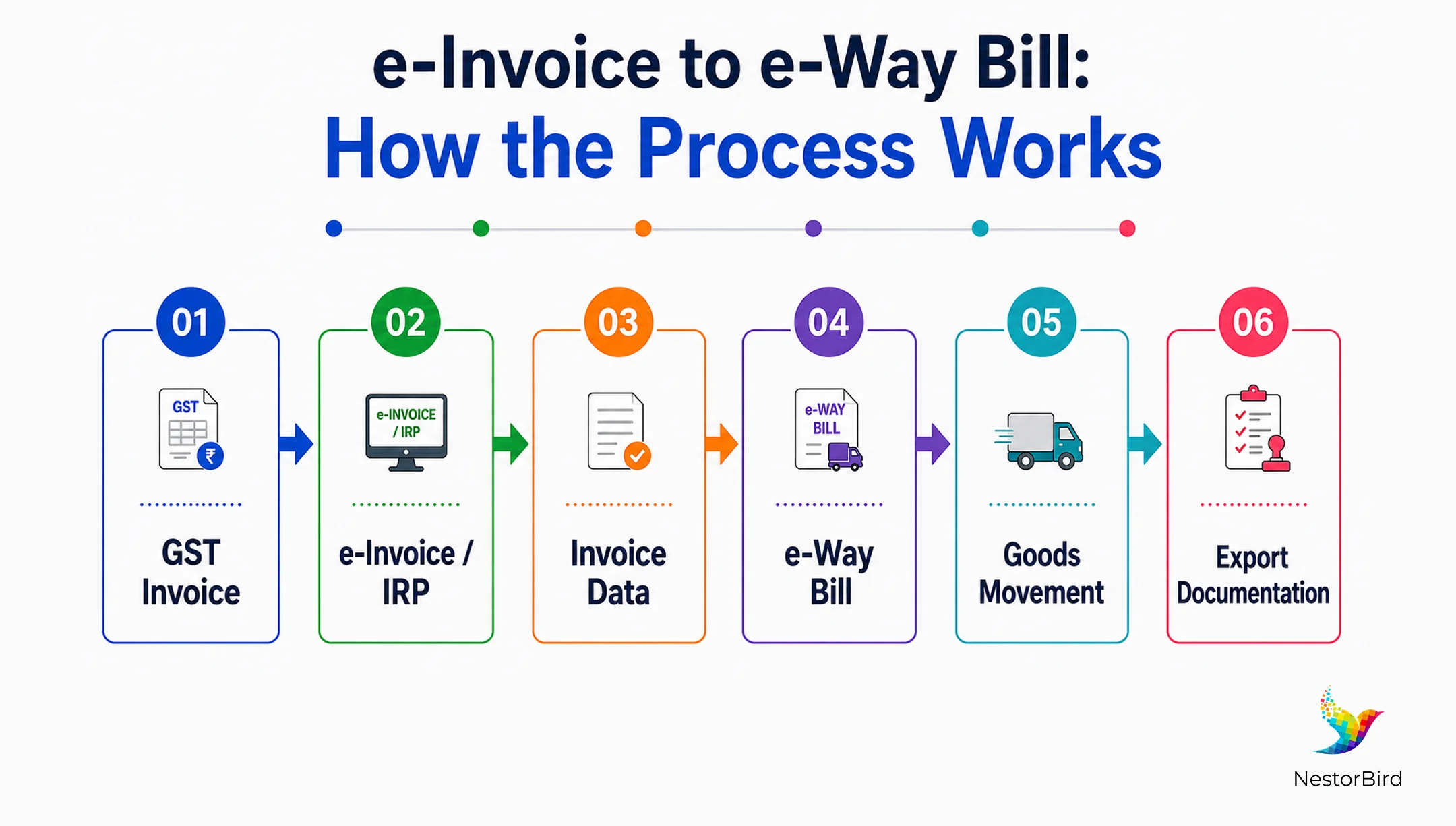
The GST technology ecosystem connects e-invoicing with e-way bill processes. Where applicable, invoice information reported to the Invoice Registration Portal can flow into the e-way bill system, reducing repeated manual entry. The e-invoice system documentation explains that Part A information can be auto-populated, while required transport details may still need to be supplied.
Why Accurate Data Matters
A digital connection does not remove the need for human verification. Incorrect HSN codes, quantities, values, buyer details, shipping information or transport data can still create downstream discrepancies.
In June 2026, GSTN also announced changes involving mandatory capture of Ship-to GSTIN in specified Bill-to/Ship-to flows when e-way bill generation is required, highlighting the importance of accurate transaction master data.
Common Compliance Mistakes
Garment exporters commonly face problems when compliance information is maintained separately by different teams. Typical risks include inconsistent invoice and transport information, incorrect product classification, incomplete export documentation, expired or incorrectly managed LUT records and last-minute e-way bill generation.
Another challenge is relying heavily on manual spreadsheets. As export volumes increase, manually copying transaction information between manufacturing, accounting, GST and logistics systems can introduce errors.
Building a Reliable Export Compliance Workflow
A better approach is to create a defined workflow from garment manufacturing workflow through invoicing, dispatch and export documentation. The same core transaction information should flow through each stage rather than being repeatedly recreated.
How Technology Can Simplify GST Compliance
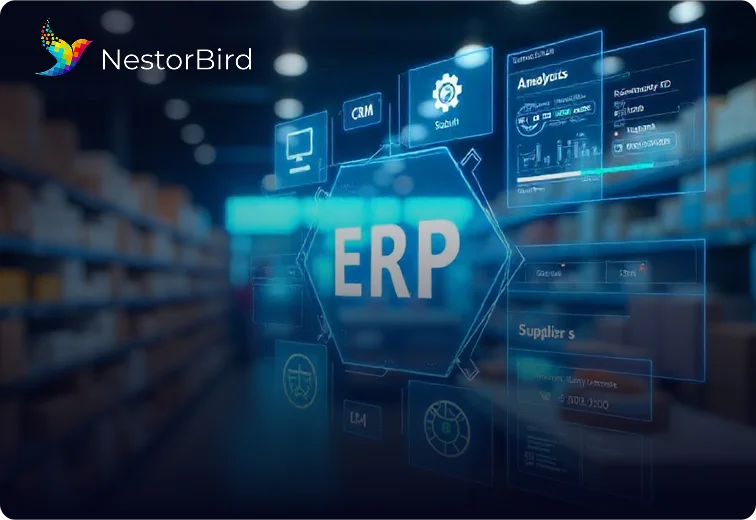
A connected manufacturing and ERP environment can help garment exporters bring production, inventory, invoicing and compliance information into one workflow. Instead of entering the same transaction repeatedly, teams can work with shared master data and controlled processes.
Choosing a System That Supports Operations and Finance
For manufacturers evaluating technology, understanding the difference between ERP vs MRP can also help when selecting a system that supports both production operations and financial processes.
An appropriate garment manufacturing ERP can also provide greater visibility into production and commercial transactions, helping businesses connect operational data with financial and GST processes.
For organisations already considering broader manufacturing digitisation, an integrated manufacturing ERP approach can help establish more consistent processes across departments.
Conclusion
For garment exporters, GST compliance and logistics documentation should not operate as disconnected activities. The e-way bill for garment exporters, GST invoice, LUT, e-invoice, transport information and export documentation should form one consistent compliance chain. By standardising data, assigning clear responsibilities and using connected technology, exporters can reduce manual errors and create better visibility across their operations. The goal is simple: make compliance a predictable part of the export workflow rather than a last-minute administrative task.

Frequently Asked Questions
Not necessarily. Applicability depends on the nature and value of the movement and the relevant GST provisions. Exporters should verify the specific transaction before dispatching.
It includes applicable GST invoicing, export tax treatment, e-invoicing where applicable, LUT requirements, e-way bill compliance, record maintenance and related reporting.
Eligible registered exporters may export without payment of IGST under LUT, subject to the applicable rules and conditions.
The e-invoice and e-way bill systems are interconnected. Depending on the information supplied during e-invoice reporting, relevant e-way bill information can be generated or populated, while required transport details may still need to be provided.
Integration reduces repeated data entry and helps maintain consistency between production, inventory, invoicing, logistics and compliance records. This can make the overall export workflow easier to control and audit.