

Quick Summary
This guide explains how to master inventory management in fashion retail. You will learn simple, practical steps to control your stock, avoid overstock and shortages, and make more money. It covers essential systems, key strategies, and useful tips for any clothing store owner.
Table Of Contents
Introduction
For the fashion retail industry, to manage inventory can be overwhelming for businesses because they usually have to juggle ever-changing trends, many sizes, and unpredictable customer demand. Poor inventory management leads to empty shelves or piles of unsold stock, which hurts your sales and profits. In this blog post, we will break down the simple, actionable steps you can take to master inventory management in fashion retail. You will learn how to gain control, reduce waste, and keep your fashion retail industry business running smoothly.
Key Takeaways
Effective inventory management is essential for fashion retail profit.
Use a dedicated system for accurate, real-time stock tracking.
Prioritize inventory accuracy with regular cycle counts.
Connect inventory data across all sales and warehouse operations.
Plan markdowns proactively to free up cash and space.
Why Fashion Inventory Management is Uniquely Challenging
With numerous different fashion trends and very short seasons, products can become outdated quickly. This creates a lot of pressure on your inventory turnover in fashion. You need to sell items quickly before the trend ends. Managing apparel inventory is also very complex because every item comes in many sizes and colors.
So, here if you don’t track this correctly, you can easily end up with too much of one size and not enough of another. This makes fashion retail inventory control a constant and difficult balancing act.
Get help from Consulting Services for Business Growth.
Achieve Better Modern Fashion Retail Inventory Control
When you are looking to have better management and control of your inventory, you must build it on three key pillars.
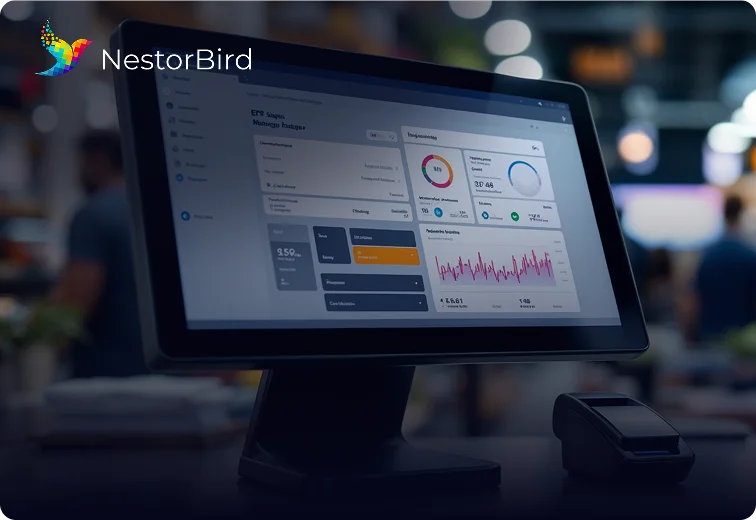
First, a good inventory management system is essential. This software automates inventory tracking for fashion stores, syncs with your sales system, and shows your stock levels in real time.
Second, you must ensure inventory accuracy is high. This means doing regular, small stock counts to correct errors.
Finally, your retail workflow must be connected. Your inventory data should flow smoothly between your buying, sales, and warehouse teams for efficient retail operations.

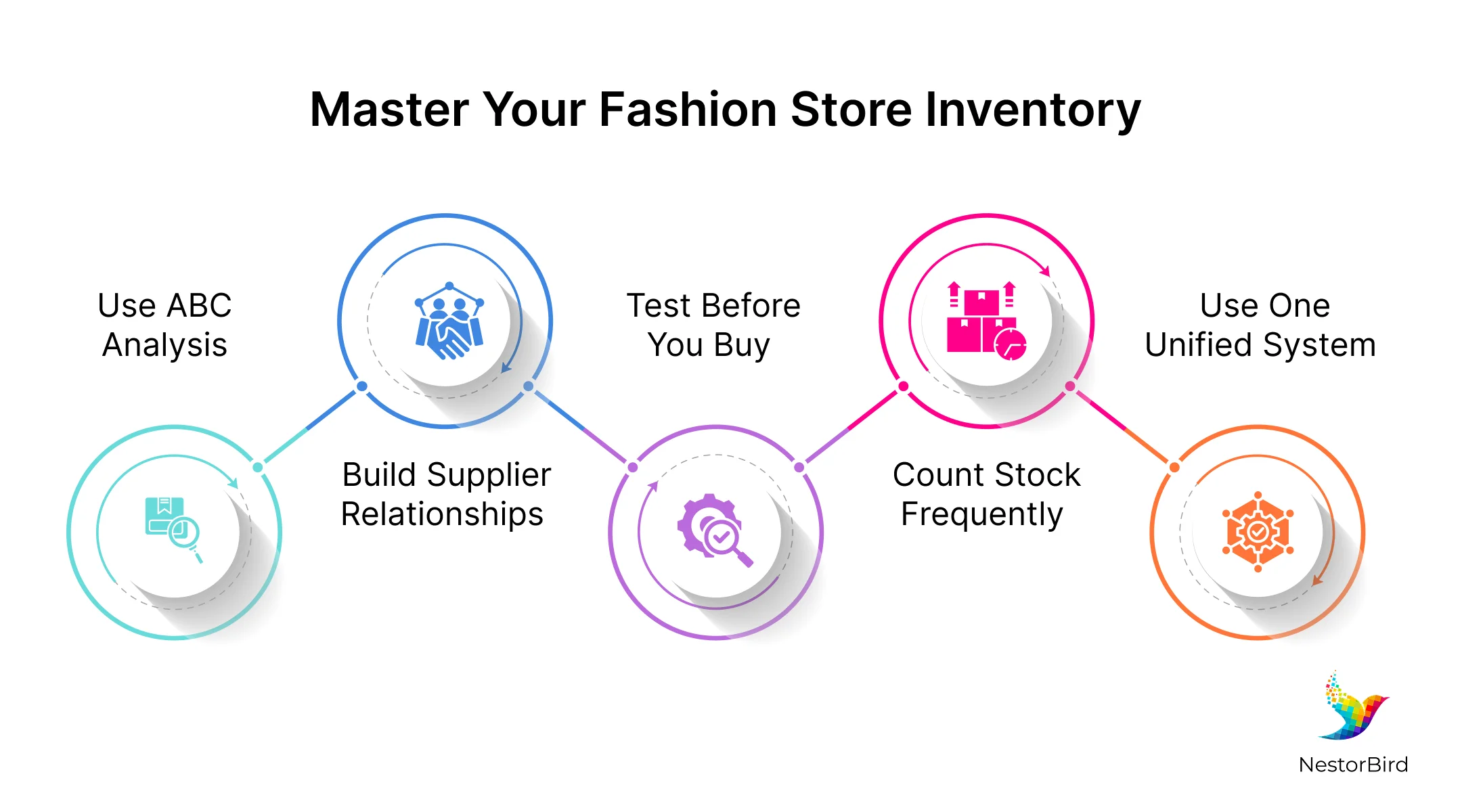
Tips to Master Inventory Management in Your Fashion Store
Include the ABC Analysis: Sort your stock into the most valuable and the least valuable items. This helps you focus your time and money on managing the products that truly drive your store’s sales and profit, leading to better inventory optimization and retail efficiency.
Maintain Strong Supplier Relationships: You can build good partnerships with your suppliers. Reliable partners who offer flexible terms enable agile supply chain management in fashion retail. This allows you to place smaller, quicker orders to test new items safely, reducing risk and improving your apparel inventory strategy.
Know more about cloud-based manufacturing ERP for small businesses.
Implement a Lean Replenishment Model: Instead of large, risky initial orders, buy small quantities of new items first. If they sell well, quickly reorder more. This “test and repeat” method is a core part of modern fashion store stock management and prevents costly overstock from guessing wrong on trends.
Conduct Regular Cycle Counts: Don’t wait for a full yearly stocktake. Frequently count small sections of your retail inventory. This ongoing process finds and fixes errors quickly, ensuring your inventory accuracy is always high and your sales data is trustworthy for making good decisions.
This is How ERP Can Fit into Retail Business.
Use a Unified System Across Channels: Your online and physical store must share one inventory management system. This gives you a single, true view of all your stock. It prevents overselling, improves the customer experience, and is vital for smooth retail operations in today’s connected market.
Analyze and Act on Inventory Turnover Ratios: This key metric shows how fast you sell your average stock. Calculate it regularly and compare it to industry standards. A higher ratio means your cash isn’t stuck in unsold goods, which is a sign of strong inventory management in the fashion retail industry.
Plan Strategic Markdowns Proactively: You can schedule markdowns in advance to clear old or slow-moving stock. This planned approach, based on your inventory tracking data, frees up cash and shelf space for new, profitable items. It turns markdowns from a loss into a smart tool for retail stock management.
This is How ERP Helps Retail Companies.
Conclusion
By focusing on accurate tracking, smart buying, and key metrics, you can turn inventory from a problem into a powerful tool for profit. This improves your retail operations and helps your business grow steadily. For a system designed specifically for the unique challenges of fashion, NestorBird provides an all-in-one inventory management system that simplifies tracking, purchasing, and reporting, saving you time and reducing costly errors.

Frequently Asked Questions
It is managing fast-changing trends and many product variations (sizes/colors). This leads to a quick overstock of unsold items and frequent shortages of popular styles, hurting profits.
You can choose to use a test and repeat buying model. Order small quantities of new items first. Only reorder more after you see strong sales data, preventing large overstock mistakes.
It is a good idea to use regular cycle counts. Frequently count small sections of your stock instead of one disruptive annual count. This maintains ongoing accuracy and finds errors quickly.
It ties up cash in unsold stock and forces profit-killing clearance sales. It also causes lost sales from stockouts, directly reducing your store's revenue and margin.
You can combine your past sales data with current trend research. Analyze what sold well before and monitor fashion trends to make smarter, data-informed purchasing decisions.