

Quick Summary
Quality control in garment manufacturing becomes more effective when ERP connects fabric inspection, production checkpoints, defect tracking, rework, rejection records and finished-goods inspection in one system. Earlier detection gives production teams more opportunity to correct problems before they become costly finished-goods rejections, while connected records make recurring defects easier to trace and analyze.
Table Of Contents
Introduction
Quality control in garment manufacturing is about more than finding defective garments at the end of production. It is about identifying where defects begin, controlling them during production and preventing repeat problems. When inspection records, material data, production activity, rework and rejection information sit in separate spreadsheets or registers, finding the real cause becomes difficult. ERP connects these processes so manufacturers can detect issues earlier, improve traceability and make quality decisions using connected production data.
Key Takeaways
ERP connects quality inspections with production, material, inventory and order data.
Digital inspection records make defect tracking and production traceability easier.
In-line quality checks help identify problems before defective work moves further through production.
ERP reporting can reveal recurring defects, rework patterns and rejection trends.
Connecting material batches with production and inspection records makes root-cause analysis more practical.
Quality KPIs such as rejection rate, defect rate, rework rate and first-pass yield help teams evaluate performance.
Why Quality Control Is Critical in Garment Manufacturing
A garment may look simple on a retail rack, but producing it consistently involves many connected activities. Fabric procurement, inspection, cutting, bundling, stitching, finishing, pressing, labeling, packing and final inspection can all influence the finished product.
A small issue in fabric shade, cutting accuracy, stitching, measurements, finishing or labeling can become a rejected garment, a rework job, a delayed shipment or a customer complaint. That is why garment quality control works best as a continuous process rather than a single final checkpoint. When a problem is discovered earlier, the factory has more opportunity to contain it before additional labour and materials are invested.
Common Quality Problems in Garment Production
Common garment defects can originate from materials, machines, methods, measurements, people or process conditions. Typical problems include fabric defects, incorrect measurements, stitching and seam defects, shade or colour variation, cutting inaccuracies, trimming and finishing problems, labeling mistakes, packing errors, incorrect size or colour combinations and general workmanship issues.
These defects do not all belong to the same production stage. Fabric problems should ideally be found before cutting, cutting problems before stitching, and stitching problems before finishing and packing. Staged quality checks therefore give manufacturers more opportunities to stop defects from travelling downstream.
Why Manual Quality Tracking Increases Rejection Risk
The main problem with manual garment quality control is that defect information often remains disconnected from the production and material data needed to identify its cause.
A quality inspector may record defects on paper, while the production supervisor maintains another register and the inventory team uses a spreadsheet. Each record may be accurate on its own, yet the factory still lacks one connected view of what happened. This creates practical questions that take time to answer: Which production line was involved? Which operation generated the defect? Was the issue linked to a material batch, style, size, colour or shift? How much rework resulted?
Quality information is most valuable when teams can act on it while the problem is still occurring. Digital records make it easier to compare inspection outcomes with production and material information instead of manually joining separate records.
How ERP Improves Quality Control in Garment Manufacturing
ERP can create a connected information flow between materials, orders, production, inspections, inventory, rework and finished goods. Instead of treating inspection as an isolated administrative task, the system can associate quality events with the manufacturing records surrounding them.
The practical benefit is not simply entering inspection results into software. The value comes from using those results alongside production and material information so teams can identify problems earlier and make faster decisions.
Digitizes Quality Inspections
Digital inspections replace fragmented paper records with structured information. Depending on the ERP configuration, teams can record inspection status, accepted quantity, rejected quantity, defect type, inspection stage, observations and corrective-action information.
For factories managing multiple styles, sizes, colours, orders and production batches, centralized inspection records can make quality history much easier to review. The quality team can spend less time consolidating paperwork and more time investigating the issues that matter.
Enables Quality Checks at Multiple Production Stages
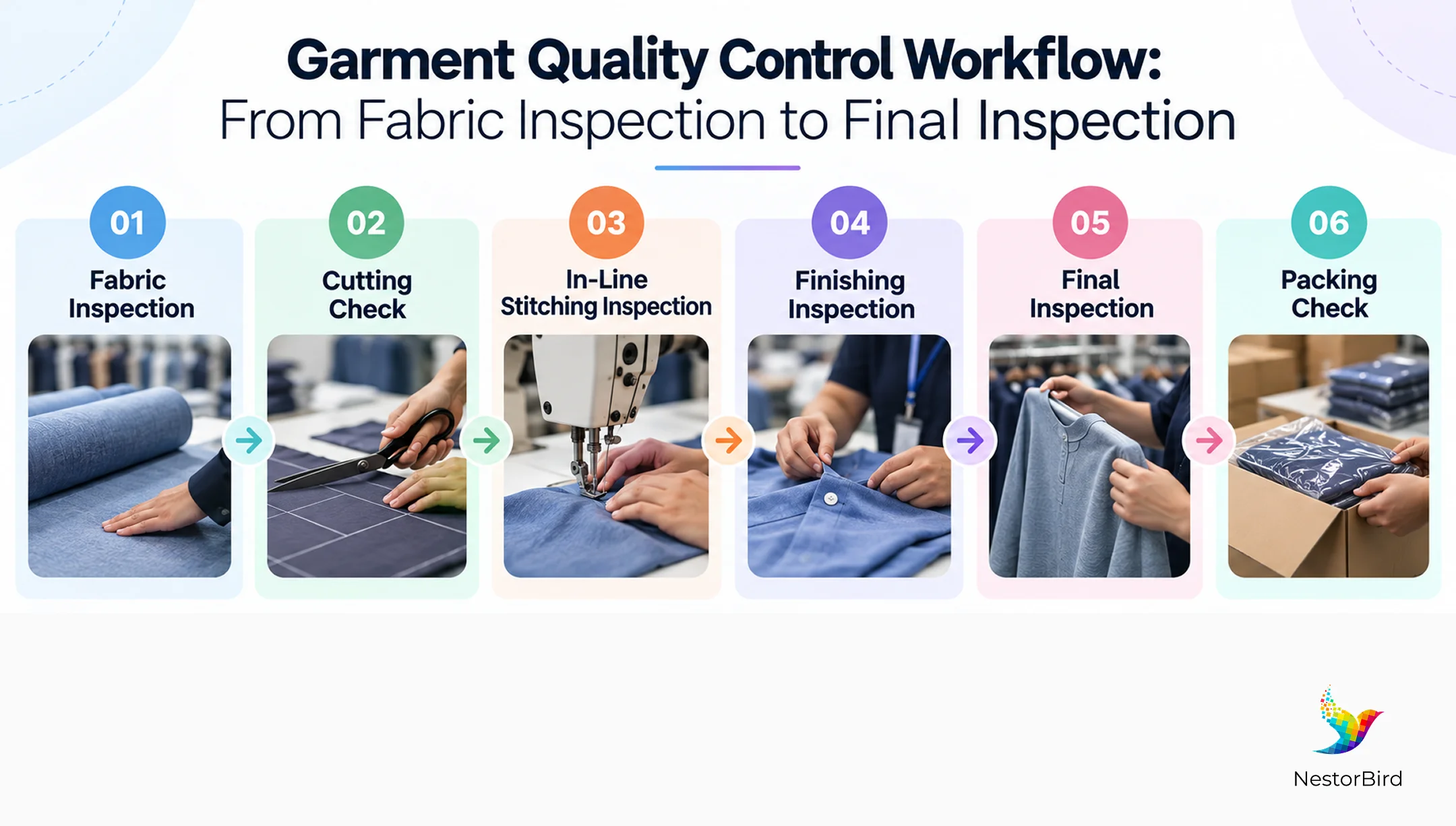
A practical garment quality workflow can include:
Fabric Inspection → Cutting → Stitching → Finishing → Final Inspection → Packing
Each checkpoint has a different purpose. Fabric inspection can identify material problems before production consumes labour. Cutting checks can confirm specifications, while in-line stitching inspection can identify workmanship issues while production is still active. The earlier a defect is identified, the more opportunities the factory has to contain it. This helps prevent avoidable defects from becoming downstream rework or finished-goods rejection.
Tracks Defects, Rework and Rejections
A rejection is an outcome; a defect is information. If a factory only counts rejected pieces, it misses the patterns that could explain why those rejections are happening.
ERP can centralize defect records so teams can compare defect categories, quantities, production stages, styles, batches and inspection outcomes. Over time, this creates a quality history that can support trend analysis and corrective action. For example, repeated sleeve corrections on one production line may point to a process issue rather than isolated garment-level failures. Likewise, repeated problems associated with one material batch can direct the investigation toward material quality.
Improves Production Traceability
A useful traceability structure can look like this:
Order → Style/SKU → Material/Batch → Production Order → Production Stage → Inspection → Finished Goods
When these records are connected, a quality issue becomes easier to investigate. Instead of knowing only that a finished garment failed inspection, teams can work backward through its production history and focus their investigation on the affected order, batch, stage or process.
How ERP Helps Identify the Root Cause of Garment Defects
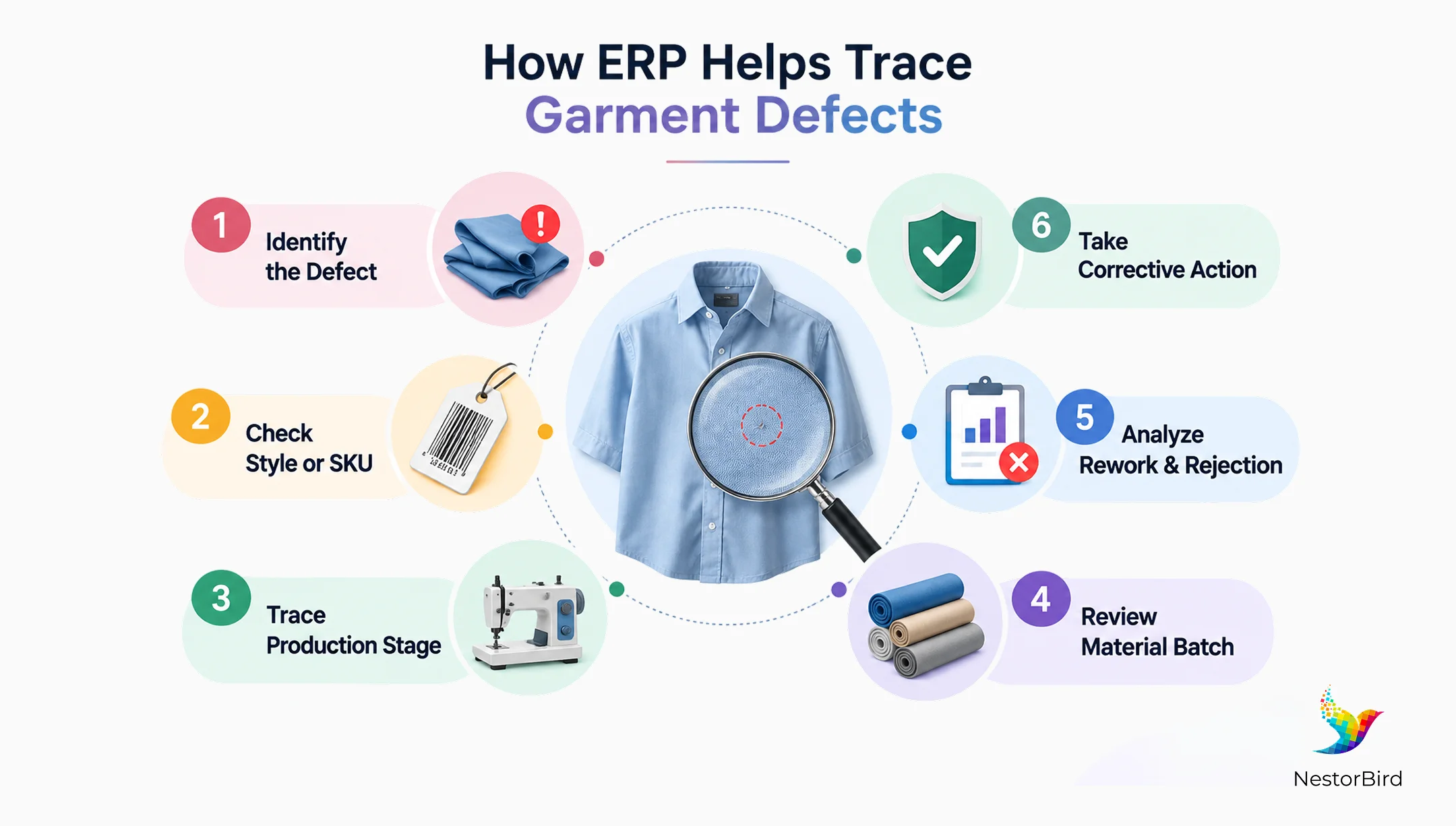
Recording a defect answers what went wrong. Root-cause analysis asks why it went wrong. Connected ERP data can help bridge that gap by allowing managers to compare quality information with production and material records.
Repeated defects on a production line
Problems linked to a particular material batch
Frequent defects at a specific production stage
High rework in a particular style or SKU
Recurring measurement or stitching issues
ERP helps with root-cause analysis by connecting defect records with production, material, order and inspection data. ERP does not automatically determine the root cause. Quality professionals still need to investigate, validate findings and select corrective actions. The advantage is that they have connected evidence to make that investigation faster and more structured.
Key ERP Features for Better Garment Quality Control
For manufacturers evaluating software, the most useful question is not simply whether an ERP has a quality module. A better question is how well quality communicates with production, inventory, purchasing and order data.
A garment-focused ERP can support this connected approach. For manufacturers evaluating garment ERP software, review the dedicated NestorBird solution page for centralized garment business management.
ERP Feature | Quality Benefit |
|---|---|
Digital quality inspections | Standardizes inspection records and results |
Defect and rejection tracking | Shows defect types, quantities and rejection patterns |
Batch/lot traceability | Connects quality issues with material history |
Production tracking | Links defects with production activity |
WIP visibility | Shows where affected goods are within production |
Rework tracking | Measures correction activity and recurring rework |
Quality dashboards | Helps managers monitor quality trends |
Inventory and production integration | Provides context around materials and manufacturing activity |
The goal is to create a single operational picture. When quality information sits beside production and material information, managers can investigate patterns without rebuilding the story manually from multiple spreadsheets.

How to Measure the Impact of ERP on Garment Quality
ERP implementation should be measured by more than whether employees successfully enter inspection records. The better question is whether the factory has stronger visibility into quality performance and whether teams can act on that information.
Useful quality KPIs include rejection rate, defect rate, rework rate, first-pass yield, defects by production stage, defects by style or SKU, inspection pass rate, and the cost of quality and rework.
Rejection Rate = Rejected Units ÷ Total Inspected Units × 100
Tracking these measures consistently gives managers a baseline for identifying trends and evaluating corrective actions. A single overall rejection number may hide a problem concentrated in one stage, style, SKU, material batch or production line.
Best Practices for Using ERP to Reduce Garment Rejections
Define quality checkpoints: Set clear inspection points for fabric, cutting, stitching, finishing, final inspection and other relevant stages.
Standardize defect categories: Use consistent defect names and inspection criteria so reports can be compared over time.
Train quality and production teams: Make sure users understand both how to record information and why consistent data matters.
Review quality dashboards regularly: Turn quality reporting into a recurring management activity instead of a one-time review.
Use trends to drive corrective action: Investigate recurring defects, implement corrective measures and monitor whether the issue improves.
These practices become stronger when quality is connected with the wider production workflow. The broader approach to digitise your garment workflow helps connect sourcing, production, quality, finished goods and downstream processes.
Material-related quality problems can also be investigated alongside waste and consumption records. Manufacturers can track fabric wastage with ERP to connect material management with production visibility.
Why Connected Manufacturing Data Matters for Quality
Quality is rarely caused by one isolated department. A fabric issue may originate with a supplier, a production problem may relate to a manufacturing process, and a packing error may result from incorrect order or SKU information. That is why quality data becomes more useful when it is connected with the wider manufacturing workflow:
Order → Material → Production → Quality → Inventory → Dispatch
When these records are connected, managers can make decisions using actual production information rather than isolated inspection records. This makes it easier to understand how decisions made earlier in the process affect quality later.
Production planning is another important part of that connection. The related manufacturing ERP resource explains how ERP can improve production planning and scheduling, which supports better operational visibility.
Conclusion
Quality control in garment manufacturing becomes more effective when quality information is connected to the rest of the production workflow. ERP can help manufacturers digitize inspections, track defects and rework, monitor quality at multiple stages, connect material batches with production records and analyze recurring rejection patterns.
Its real value is not simply replacing paper forms with digital screens. It is creating connected information that helps teams detect problems earlier, investigate their causes and take corrective action.
For garment manufacturers seeking better quality visibility, lower avoidable rework and stronger traceability, ERP can become an important part of a structured quality-management approach.

Frequently Asked Questions
Quality control in garment manufacturing is the process of inspecting materials, production stages, workmanship, measurements, finishing and finished garments against defined specifications. It includes fabric inspection, in-line inspection, defect identification, rework management and final inspection. The objective is to identify quality problems early and prevent non-compliant garments from reaching the customer.
ERP can help reduce rejection rates by connecting inspection, production, material, defect, rework and traceability information. Manufacturers can establish quality checkpoints throughout production instead of relying only on final inspection. Connected records also make recurring defects easier to investigate by style, SKU, material batch, production stage or line.
The main checks can include fabric inspection, cutting checks, in-line inspection, measurement and workmanship checks, finishing inspection and final inspection. The exact checkpoints depend on the manufacturer's products and quality requirements. The key principle is to inspect at appropriate stages rather than relying exclusively on the final inspection.
Yes. An ERP system with appropriate quality functionality can record defect types, rejected quantities, inspection stages, rework quantities and inspection status. When these records are connected with production orders and material information, quality teams can analyze recurring defects and understand where rework is being generated.
Important quality KPIs include rejection rate, defect rate, rework rate, first-pass yield, inspection pass rate, defects by production stage and defects by style or SKU. Manufacturers can also monitor the cost associated with rework and poor quality. Consistent tracking helps managers identify trends and evaluate corrective actions.