

Quick Summary
A standalone LIS forces your team to manually move data between systems, causing delays and errors. Moving to an integrated system connects your lab with EHR, billing, and instruments. This removes manual work, speeds up reporting, and helps your lab run smoothly every day.
Table Of Contents
Introduction
For your lab, if you are experiencing delays in reporting, constant manual data entry, and systems that do not communicate with each other, the challenge here is often your core technology. Many labs operate with a standalone LIS, which functions in isolation, creating data silos and slowing down operations. This isolated setup forces your team to spend valuable time on administrative work rather than on diagnostics. In this blog post, we will explore why moving away from isolated systems is essential for improving efficiency and maintaining accuracy in your daily lab operations.
Key Takeaways
A standalone LIS creates manual work that slows down your entire lab.
Data does not flow automatically when lab systems remain separate.
Staff waste hours moving information between disconnected platforms.
Integrated systems connect billing, EHR, and instruments in one place.
Moving to an integrated setup reduces errors and speeds up reporting.
What a Standalone LIS Costs You
When it comes to handling LIS integration with healthcare systems, your staff ends up doing work that software should do. They manually move data from the lab system to billing platforms, analyzers, and hospital records. This manual work takes hours each day and creates room for typing mistakes. One wrong number can lead to wrong results reaching a doctor or a claim getting denied. This is a clear limitation of standalone LIS that directly affects both patient care and lab revenue.
When fragmented lab systems do not connect to each other, information stays broken into pieces. Doctors cannot see the full patient history because the Laboratory Information System sits apart from the main hospital records. This means delays in diagnosis and repeated tests that waste resources.
Your IT team also faces extra work managing different systems with separate support contracts. Each vendor has its own update schedule, and fixing one problem often means calling multiple companies. This adds hidden costs that many labs do not track.
The Architecture Shift: From Silos to Efficient Ecosystems
When you update from the traditional architecture, you see why older systems cause problems. A standalone LIS is built as one large block of code. When sample volumes go up, everything slows down because all functions depend on each other. This is an important limitation of standalone Laboratory Information System that creates delays during peak hours.
How New Systems Handle Growth
Here, the new laboratory informatics solutions use cloud-based design. They break functions into small pieces called microservices. If order entry gets busy, only that part scales up. The rest of the system stays fast. Your team does not wait for screens to load while analyzers sit idle.
Connecting Everything Together
This new design allows real lab software integration. Data moves both ways between your Laboratory Management System, instruments, hospital records, and billing software. When a result is verified, it automatically reaches the doctor’s system without anyone re-entering it. This direct connection eliminates the delays that come with moving data manually. Your lab becomes one connected system instead of many separate pieces.
Understand the Fragmented HIS challenges.

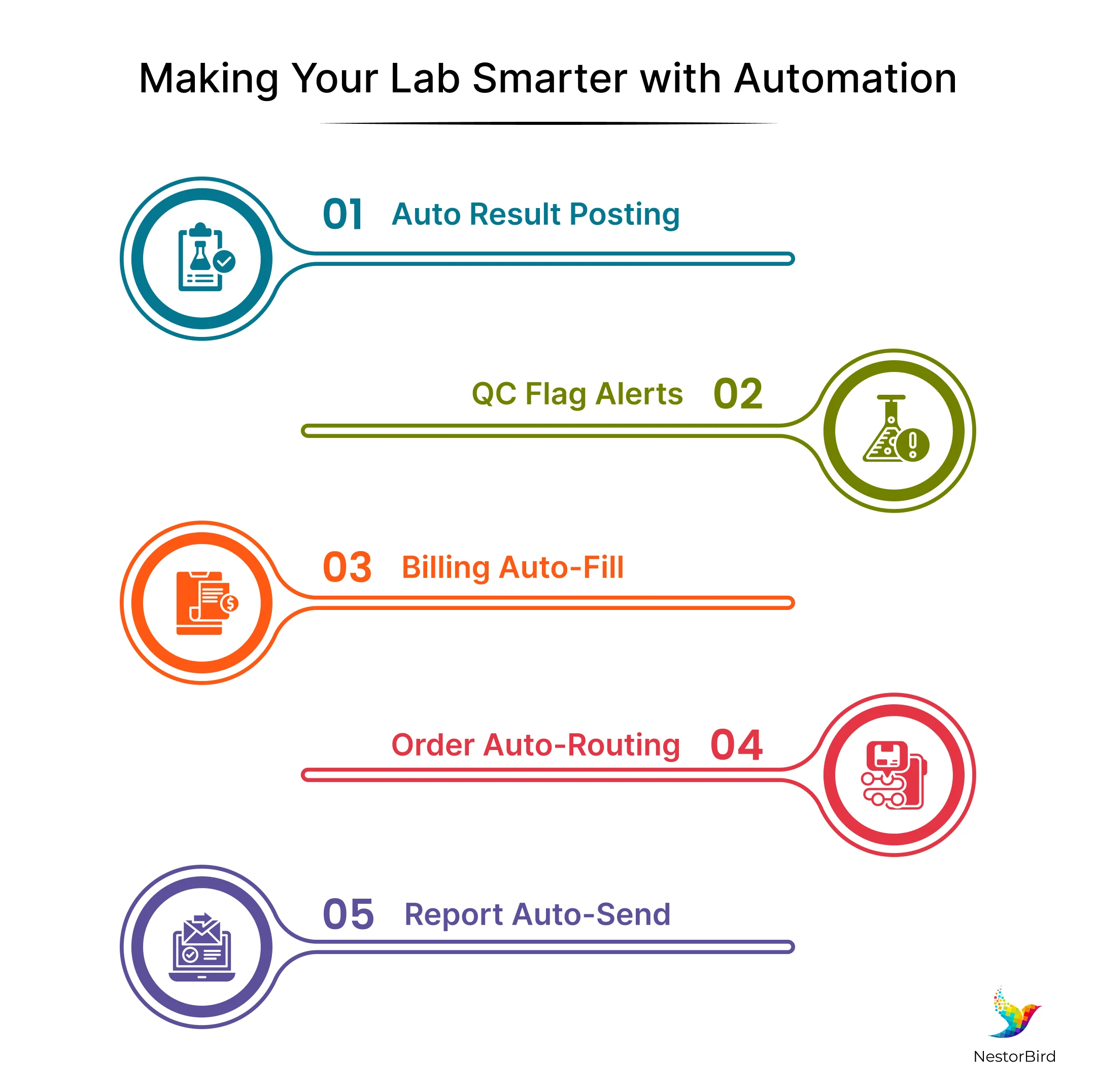
Making Your Lab Smarter with Automation
Once your labs choose to adopt integrated systems, you move beyond just storing data. An integrated laboratory system takes action on information automatically. This creates lab workflow automation that reduces manual steps across your daily operations.
How AI Helps Your Team
AI tools in modern laboratory informatics handle repetitive tasks. They take paper protocols and turn them into digital workflows. They also monitor quality control results and flag issues before they become problems. This is what smart lab management systems deliver.
A Real Example
When a pathologist reviews a slide, the system listens to voice notes. It suggests billing codes while the doctor works. This links clinical work with financial processes without extra effort from staff.
Check out the best Healthcare ERP Software 2026.
Why Integrated Systems Help Protect Your Lab's Income
You should look at how your technology affects revenue. A standalone Laboratory Information System often does not connect clinical work with billing, which also creates gaps where claims get denied or money gets left behind.
Connecting Clinical and Billing Work
With an integrated laboratory system, results and billing codes move together. When a test is completed, the integrated lab management software checks if all billing information is correct. This prevents denials before they happen and reduces revenue leakage.
This is Why healthcare organizations need ERP system.
Staying Ready for New Rules
New laboratory informatics solutions are built to handle changing regulations. Instead of fixing a standalone LIS every time rules update, integrated systems come ready with compliance tools. Your lab stays ahead of requirements without extra projects or delays.
Reducing Costs from Multiple Systems
Managing separate systems adds up. Each vendor charges separate fees for support, updates, and training. An integrated platform combines these into one cost. Your lab spends less on IT management and more on actual operations, improving your overall margins without adding new revenue.
Closure Note
A standalone Laboratory Information System creates problems that slow your lab down. It forces manual work, causes data gaps, and makes compliance harder. Moving to an integrated system fixes these issues. Your staff spends less time on manual data entry and more time on important work. If you want a system that connects everything without the challenges of managing multiple vendors, solutions from NestorBird provide the integration your lab needs to run smoothly and efficiently every day.

Frequently Asked Questions
A standalone LIS works alone and does not share data with other systems. An integrated system connects with EHR, billing, and instruments so information flows automatically without manual work.
Lab software integration removes manual data entry. Results go directly from instruments to reports, orders come from doctors automatically, and billing happens without staff retyping information.
Lab workflow automation means the system handles repetitive tasks automatically. Samples get tracked, results get validated, and reports get sent without staff intervention, saving hours each day.
ERP reduces costs, optimizes production, improves inventory, and ensures quality control.