

Quick Summary
Hospital gap analysis helps you find hidden problems in daily workflows that standard checks miss. The Swanity assessment maps every gap in patient flow, communication, and supply tracking. It gives you a clear plan to fix issues and improve care using the right tools.
Table Of Contents
Introduction
Inefficiency in a hospital can often go unnoticed, for instance, Woodlawn Health recently identified a significant gap in healthcare services when it found that over 40% of its local patients were leaving the system. Standard audits frequently overlook these problems because they concentrate solely on spreadsheets, ignoring daily operations. This is why conducting a hospital gap analysis is crucial. In this blog post, we present the Swanity assessment, a method that utilizes a specialized healthcare operations platform to identify workflow, communication, and resource gaps that others tend to miss.
Key Takeaways
Standard audits miss daily workflow problems.
Patient flow and supply tracking are common gaps.
Swanity assessment maps every hospital gap.
Fixing gaps requires clear plans and software.
Regular gap analysis boosts safety and revenue.
The Limits of Regular Hospital Checks and Audits
When you conduct the usual standard audits, they often work in silos. For example, a billing check might catch a coding mistake, but it never tells you why it happened. Often, the root cause is simply clinicians struggling with difficult hospital management software that slows them down.
Here, the research also shows that patient satisfaction drops because of things like long pharmacy wait times. These are issues rooted in daily process, not policy. The Swanity assessment is different because it maps the entire patient journey from start to finish. It connects failures in hospital workflow automation directly to their impact on revenue and quality scores.
The Seven Operational Gaps in Hospital Operations
Let us look at seven specific areas where the Swanity assessment finds gaps that other checks miss. Each of these issues affects patient care and hospital finances.
1. Patient Flow Problems
Patient flow is often reactive, meaning staff just respond to whatever happens next. The healthcare gap assessment finds delays in discharge and bed planning. A proper hospital risk assessment must look at patients stuck in the ED, which leads to higher risks. The fix often requires tools found in advanced hospital ERP software to forecast bed needs.
2. Supply Tracking Issues
Many clinics lose thousands of dollars because they track supplies manually and things expire. The Swanity assessment finds these gaps in tracking. It helps pave the way for a hospital inventory management system that automates reordering. This saves money and ensures doctors always have what they need for procedures.
Know more about unified patient journey in hospitals.
3. Poor Referral Handling
Providers often do not know all the services their own hospital offers. This creates a major healthcare service gap. The Swanity assessment maps how patient referrals leave the system simply because of poor internal visibility. Keeping referrals inside means better continuity of care and more revenue for the hospital.

4. Billing and Coding Disconnects
Errors at the front desk, like wrong patient details, cause denials later in billing. The assessment finds gaps between what clinicians document and what coders see. Having hospital billing software is not enough if the data feeding it is bad. The Swanity assessment ensures the healthcare operations platform connects billing to real clinical work.
5. Too Much Admin Work for Staff
Nurses and doctors spend too much time on manual data entry, which leads to burnout and less time with patients. The assessment looks for ways to use hospital workflow automation to reduce this paperwork. Automating routine tasks lets staff focus on what they trained for: caring for people.
This is why healthcare organizations need an ERP.
6. Disconnected Data Systems
When different departments use separate systems, communication breaks down. The NHS example shows how complexity hurts care. The assessment finds gaps where cloud-based hospital management software could create one source of truth. Unified data helps everyone, from lab techs to floor nurses, work from the same facts.
7. Slow Communication Risks
Delays in sharing lab results or specialist advice create real danger for patients. These delays are a serious hospital risk assessment concern. The Swanity assessment maps where communication slows down. It suggests digital tools that ensure alerts reach the right person immediately, improving safety and response times.
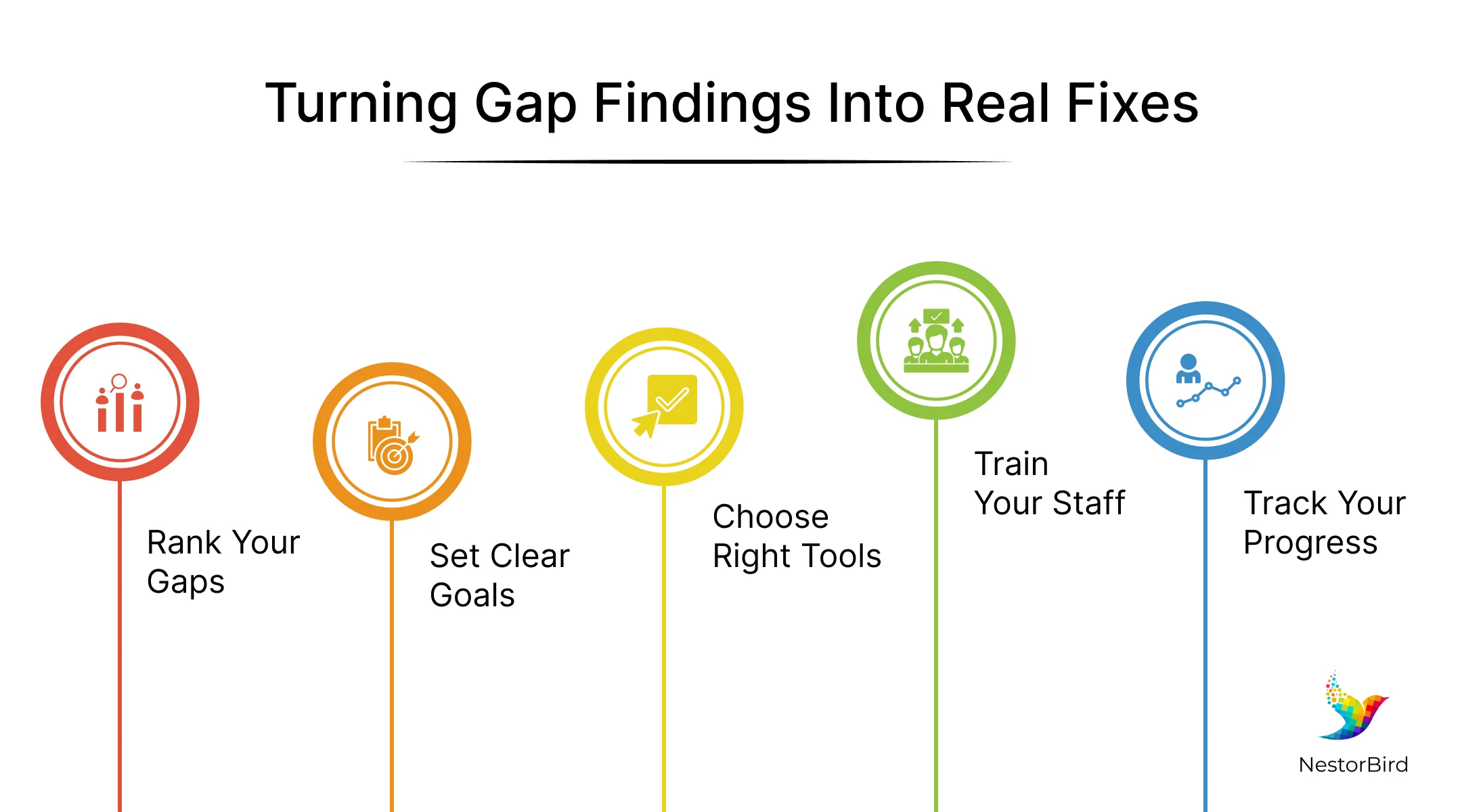
Turning Gap Findings into Real Fixes
The Swanity assessment requires effort, but it can be a smooth process if done correctly. It provides a clear guide for hospital process improvement. It evaluates each gap based on its effect on daily operations and finances. This allows leaders to move from constantly addressing urgent issues to making informed, data-driven choices. You need the right tools to make changes stick. The final output of the assessment is a custom plan that describes the ideal hospital management software setup for your specific hospital needs.
Check out the benefits of ERP in the healthcare industry.
Conclusion
Every hospital has gaps that cost time, money, and patient trust. The problem is that standard checks rarely find them. The Swanity assessment changes that by digging deep into your daily workflows, communication patterns, and resource use. It shows you exactly where the leaks are and what to fix first. Once you know your gaps, the next step is choosing the right tools to close them. This is where solutions from NestorBird help. Our tools are built specifically to address the real gaps uncovered during assessments like this. We help you move from spotting problems to solving them, so your hospital runs smoother and delivers better care every day.

Frequently Asked Questions
A hospital gap analysis is a method to compare your current performance against where you want to be. It finds the gaps in workflows, safety, and patient care so you know exactly what needs fixing.
Most experts suggest doing a full gap analysis once a year. You should also do one whenever you introduce new software, change major processes, or after any serious patient safety event.
It identifies risks before they cause harm. By examining things like delayed lab results or unclear discharge plans, a hospital risk assessment helps you put controls in place to prevent errors and protect patients.